
Planting
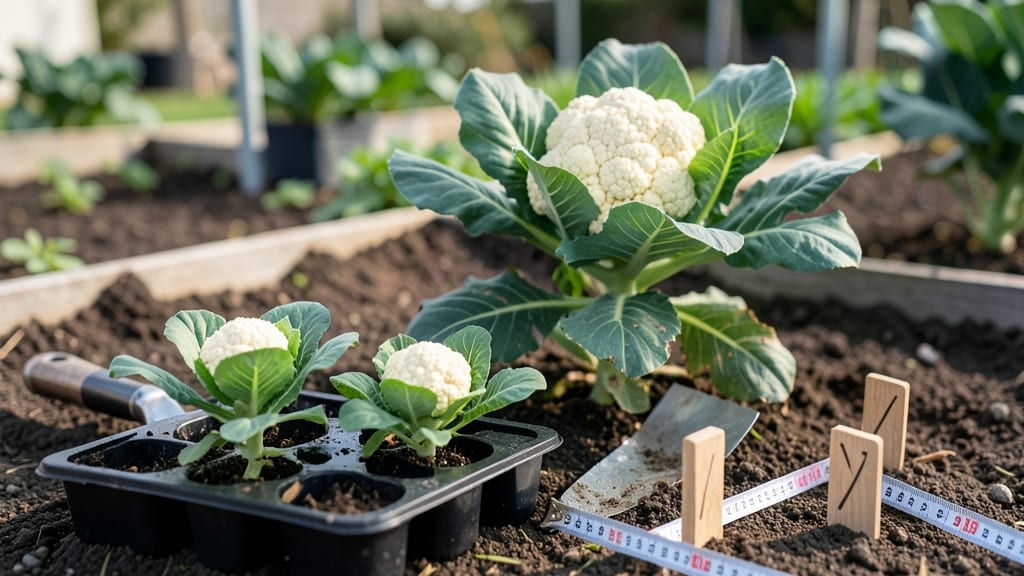
To grow cauliflower 🥬 with dense, market-ready heads, how far apart should cauliflower be planted is the foundation of success.
Struggling to grow perfect, dense cauliflower heads? The secret isn’t just sunlight or soil—it’s the spacing between plants. Get this wrong, and you’ll end up with stunted heads or wasted space in your garden.
Cauliflower thrives when given room to breathe, but too much space means fewer heads in your harvest. In USDA Zone 6a, where spring planting runs from April to May, proper spacing also prevents disease by improving airflow.
Below, I’ll break down the exact measurements for different varieties, how to adjust for raised beds, and why even 3 inches more can make the difference between a disappointing curd and a showstopper.
Optimal cauliflower plant spacing by variety type: head size matters
Cauliflower spacing isn't one-size-fits-all—your variety type determines everything from plant density to head size. Miniature varieties like 'Purple of Sicily' need tight spacing, while giant Romanesco types require room to breathe. I've grown all three and learned the hard way that cramming plants saves space but shrinks your harvest.
Let's break down the exact spacing for each type to maximize those bushy, market-ready heads.
The key to perfect cauliflower spacing lies in understanding how each variety grows. Standard varieties (like 'Snowball Y Improved') need the most room because their heads can reach 6-8 inches wide. Miniature varieties (like 'Graffiti') stay compact but still need proper spacing to prevent disease.
And Romanesco types (like 'Romanesco') grow in fractal patterns that require careful planning. Get this wrong, and you'll end up with small, loose heads or plants competing for nutrients.
| Variety Type | Plant Spacing (inches) | Row Spacing (feet) | Plants per Square Foot | Head Size Potential |
|---|---|---|---|---|
| Miniature (e.g., 'Graffiti', 'Purple of Sicily') | 12-18 inches apart | 1.5-2 feet | 4-6 plants | 2-4 inches diameter |
| Standard (e.g., 'Snowball Y Improved', 'White Magic') | 18-24 inches apart | 2-3 feet | 1-2 plants | 6-8 inches diameter |
| Romanesco (e.g., 'Romanesco', 'Veronica') | 24-30 inches apart | 3 feet | 1 plant | 4-6 inches diameter (fractal shape) |
| Giant (e.g., 'Mammoth', 'Early Snowball') | 30-36 inches apart | 3-4 feet | 1 plant | 8-12 inches diameter |
Note: Adjust spacing for raised beds by reducing plant spacing by 20-30% to maximize density.
For miniature varieties, I plant them 12-18 inches apart in rows 1.5-2 feet apart. This allows 4-6 plants per square foot, perfect for container gardens or small plots. The trade-off?
You'll get smaller heads (2-4 inches), but they're ideal for salads or garnishes. My 'Graffiti' plants produced 12 heads per plant when spaced this way—just don't expect grocery-store-sized curds.
Standard varieties like 'Snowball Y Improved' need 18-24 inches between plants and 2-3 feet between rows. This spacing gives each plant room to develop a 6-8 inch head without competition. I once overcrowded my 'White Magic' plants, and the heads only reached 4 inches—a lesson in patience!
If you're using square-foot gardening, limit to 1-2 plants per square foot for standard types.
Romanesco cauliflower is the diva of the bunch—it needs 24-30 inches between plants and 3 feet between rows. The fractal heads grow 4-6 inches wide but require more sunlight and airflow to prevent mold.
I planted mine 30 inches apart last year, and the heads stayed tight and vibrant all season. Never skimp on space with Romanesco, or you'll end up with loose, yellowing heads.
Giant varieties like 'Mammoth' demand the most space: 30-36 inches between plants and 3-4 feet between rows. These monsters produce 8-12 inch heads, but they need room to spread.
In my raised beds, I reduce plant spacing to 24 inches but keep rows 3 feet apart to allow for leaf spread. Pro tip: Stake the largest varieties to prevent head splitting from wind or rain.
Adjusting spacing for raised beds or containers requires a different approach. In raised beds, reduce plant spacing by 20-30% while keeping row spacing the same. For example, plant standard varieties 14-18 inches apart
Common mistakes that shrink cauliflower heads (and how to fix them)
One of the biggest reasons cauliflower heads stay small and loose is overcrowding. When plants compete for nutrients, sunlight, and water, they prioritize leafy growth over head formation. I’ve seen gardens where cauliflower was planted 12 inches apart—only to produce heads half the expected size.
Even worse is uneven spacing in rows. If you plant some too close and others too far apart, you create a patchwork of stunted plants and wasted space. This mistake is especially costly in raised beds or containers, where every inch counts.
Another common error is ignoring variety-specific spacing. Miniature varieties like 'Purple of Sicily' need 12-18 inches apart, while standard types like 'Snowball Y Improved' require 24-36 inches. Mixing these without adjusting spacing leads to uneven growth and poor yields.
Planting cauliflower closer than 12 inches forces plants to fight for resources, resulting in loose, underdeveloped heads. In raised beds, this also increases humidity, inviting fungal diseases like downy mildew.
For containers, spacing should be 18-24 inches—even if it means fewer plants. Cramming too many leads to yellowing leaves and stunted growth.
Poor airflow from tight spacing creates the perfect conditions for rot and pests. I once saw a garden where cauliflower was planted 10 inches apart—by harvest time, half the plants had black rot from trapped moisture. Always aim for at least 18 inches between plants to improve circulation.
For raised beds, reduce row spacing to 12-18 inches but keep plants 24 inches apart within rows. This maximizes head size while preventing overcrowding. In containers, limit to 1-2 plants per 12-inch pot—any more and you’ll sacrifice quality for quantity.
If your cauliflower heads are already small, prune lower leaves to redirect energy to the curd. Thin out crowded plants immediately to give remaining ones 24 inches of space. With proper spacing, you’ll see denser, larger heads in just a few weeks.