
Flowers
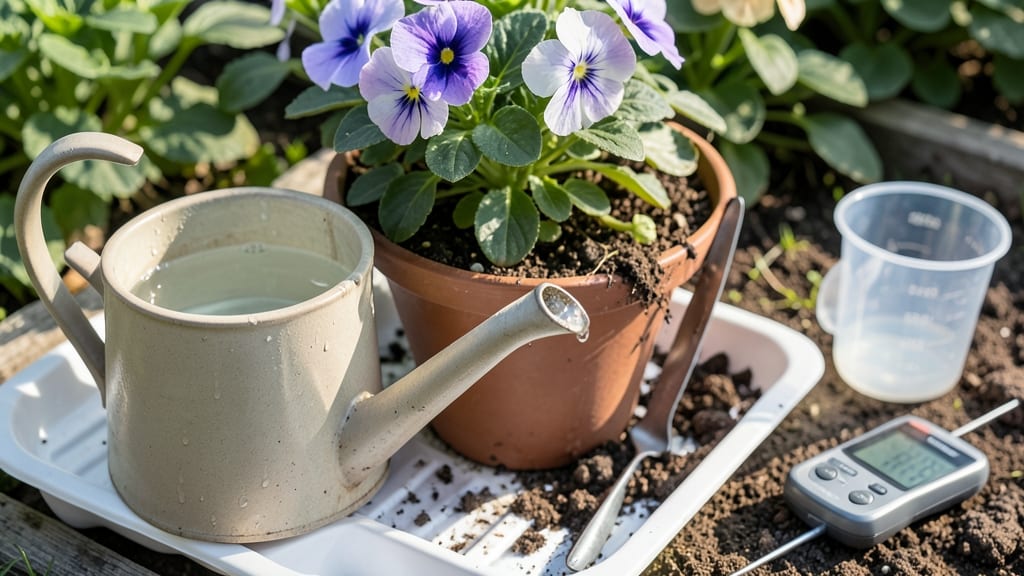
Watering flowers in pots the right way means checking soil moisture—not guessing—because even the hardiest 🌸 potted flowers can die from too much or too little water.
Overwatering or underwatering potted flowers can kill them faster than pests or disease—yet most gardeners guess instead of measuring. The secret to thriving blooms lies in a simple soil test you can do in under 30 seconds, saving you from wasted water and sad, wilted stems.
Here’s the game-changer: most potted flowers need water when the top inch of soil feels dry, but the real trick is adjusting for pot size, plant type, and even your local humidity.
A terracotta pot dries out faster than plastic, and a sun-drenched balcony demands more frequent watering than a shady corner.
Below, I’ll walk you through a foolproof method to track moisture levels, tweak your schedule for seasonal shifts, and spot the 5 telltale signs you’re watering wrong—before it’s too late.
The 3-Zone soil test method to determine watering frequency for potted flowers
Determining how often to water flowers in pots doesn’t require a guess—just a simple 3-zone soil test that reveals moisture levels at different depths.
This method works for every flower type, from delicate petunias to hardy geraniums, by analyzing the top 1/3, middle 1/3, and bottom 1/3 of the soil. The key? Understanding that moisture retention varies by pot material, flower species, and climate conditions.
Start by inserting a clean finger or a soil moisture meter into the soil—don’t just check the surface. The top 1/3 dries fastest, while the bottom 1/3 holds moisture longest. For example, a terracotta pot will dry out quicker than a plastic container because it breathes.
Adjust your watering schedule based on what you feel: dry soil means it’s time to water; damp soil means wait a day or two.
Here’s the science: Flower roots primarily grow in the middle 1/3 of the pot, where they access the most nutrients and moisture. If this zone stays dry, your plant will show stress—wilting leaves or yellowing foliage.
Conversely, if it’s soggy, you risk root rot. The bottom 1/3 acts as a reservoir; if it’s bone-dry, your plant is severely thirsty and needs immediate hydration.
| Zone | Moisture Check | Action | Example Flowers |
|---|---|---|---|
| Top 1/3 | Dry to touch | Water lightly | Petunias, Marigolds |
| Top 1/3 | Slightly damp | Hold off 1-2 days | Geraniums, Snapdragons |
| Middle 1/3 | Dry | Water deeply | Orchids, African Violets |
| Bottom 1/3 | Dry | Water immediately | Succulents, Cacti |
| Bottom 1/3 | Damp | Wait 3-4 days | Fuchsias, Impatiens |
For seasonal adjustments, remember that summer heat and low humidity dry out soil faster. In Zone 6 climates, I water my potted geraniums every 2-3 days in July but stretch it to 4-5 days in May or September.
Conversely, winter dormancy slows moisture loss—my pansies might only need water every 7-10 days when temperatures drop below 50°F.
Pot size matters too. A 5-gallon container retains moisture longer than a 1-gallon pot, so adjust your watering frequency accordingly. For instance, a large pot of roses might need watering every 5-7 days, while a small pot of pansies could dry out in 2-3 days.
Always water until excess runs from drainage holes—this ensures the bottom 1/3 gets hydrated.
Don’t ignore the type of soil mix either. A peat-based mix stays moist longer than a cactus blend, which drains quickly. If you’re unsure, test your mix: Scoop a handful and squeeze it. If it holds shape but crumbles when touched, it’s perfectly balanced.
If it stays clumpy, it’s too wet; if it falls apart, it’s too dry. Adjust your watering schedule based on these cues.
Pro tip: Keep a watering journal to track what works for your specific setup. Note the pot material, flower variety, and weather conditions. Over time, you’ll spot patterns—like how your terracotta pots dry out faster on sun
Watering frequency cheat sheet: adjustments for flower type, pot size, and weather
Not all potted flowers have the same thirst—annuals like petunias guzzle water while perennials like lavender prefer dry spells. Even the same plant in a 5-gallon terracotta pot needs water twice as often as one in a 10-gallon plastic container.
The key is matching your watering schedule to these three variables: plant type, pot material, and your local climate.
Terracotta pots dry out 2-3x faster than plastic because they breathe, while plastic traps moisture. In humid climates, water less frequently—sometimes every 7-10 days—while arid conditions may require daily checks. Below, I’ve broken down the exact adjustments for your most common potted bloomers.
| Flower Type | Pot Material | Climate | Watering Frequency | Pro Tips |
|---|---|---|---|---|
| Annuals (Petunias, Geraniums) | Terracotta | Sunny & Dry | Every 1-2 days | Check top inch daily |
| Perennials (Lavender, Succulents) | Plastic | Humid | Every 7-10 days | Let soil dry completely |
| Tropicals (Begonias, Fuchsias) | Self-Watering | Indoor | Every 5-7 days | Avoid soggy bottoms |
| Drought-Tolerant (Sedum, Snapdragons) | Clay | Arid | Every 3-5 days | Water deeply, then wait |
For terracotta pots, I recommend the "finger test": stick your finger 1-2 inches deep. If dry, water thoroughly until it drains from the bottom. Plastic pots hold moisture longer, so wait until the soil feels bone-dry at 2-3 inches down.
In summer heat, mulch with pebbles to slow evaporation—this can cut watering needs by 30-50%.
Watch for seasonal shifts: in winter, most potted flowers need water half as often as summer.
Move containers to sheltered spots to avoid frost damage, and reduce fertilizing to match slower growth. Indoor flowers like peace lilies thrive on a weekly watering schedule but hate soggy soil—always use pots with drainage holes.
Pro tip: Group plants with similar needs together. Place thirsty annuals in one tray and drought-tolerant perennials in another. This way, you’ll water efficiently without over- or underwatering. Always water in the morning to prevent fungal diseases from overnight moisture.