
Watering
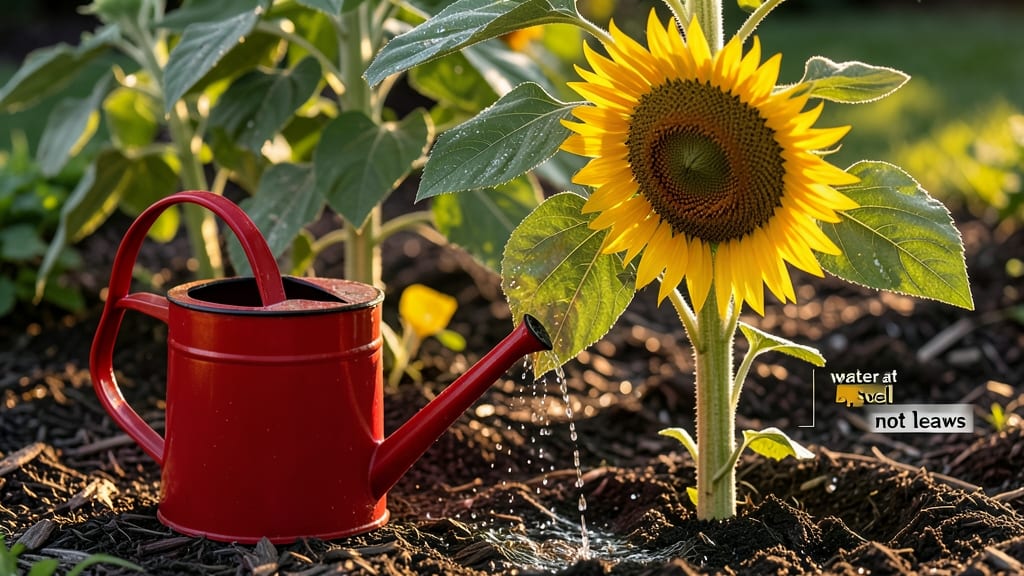
The proper watering of sunflower plants 🌻 is key to growing strong, towering stalks with vibrant blooms. You might think sunflowers are drought-tolerant, but skimp on water and you’ll end up with weak stems that flop over like overcooked spaghetti.
Too much water, and you risk root rot or powdery mildew creeping in.
This guide breaks down the exact watering schedule for each growth stage—from seedlings to flowering giants—plus how to adjust for drought or containers.
By the end, you’ll know when to water, how deep to go, and how to spot the signs of thirst (or drowning) before it’s too late.
How deep and how often to water sunflower plants for maximum growth
Sunflowers thrive when their roots dive deep into moist soil, but their watering needs change dramatically as they grow from tiny seedlings to towering giants. The key to maximum growth lies in understanding soil depth targets and adjusting your watering schedule by growth stage.
Too shallow or inconsistent watering leads to weak stems and stunted blooms—something no gardener wants when aiming for those 10-foot stalks.
Most gardeners make one of two critical mistakes: either they surface-water without reaching deep enough, or they water on a fixed schedule instead of responding to the plant's needs. Sunflowers need water to penetrate 6-12 inches deep to encourage strong root systems.
This means skipping the light sprinkle and opting for a thorough soak instead. Think of it like giving your sunflower a root massage—deep pressure builds resilience.
| Growth Stage | Watering Depth | Frequency | Soil Moisture Goal | Key Tips |
|---|---|---|---|---|
| Seedlings (0-4 weeks) | 2-3 inches | Every 2-3 days | Consistently moist | Use a spray bottle; avoid soggy soil |
| Vegetative (4-8 weeks) | 6-8 inches | Every 5-7 days | Deep moisture | Water at soil level, not leaves |
| Flowering (8-12 weeks) | 8-12 inches | Every 7-10 days | Moist but not waterlogged | Reduce frequency if rain occurs |
| Mature (12+ weeks) | 12+ inches | Every 10-14 days | Dry topsoil | Focus on deep roots, not foliage |
During the seedling stage, your sunflowers are tiny but fragile. Water lightly every 2-3 days to keep the top 2-3 inches of soil moist. Overwatering now causes root rot, while underwatering leads to stunted growth.
Use a spray bottle for gentle hydration, and avoid wetting the leaves to prevent fungal diseases like powdery mildew. Think of this phase as the foundation—get it right, and your sunflowers will reward you with strength later.
As your sunflowers enter the vegetative stage (around 4-8 weeks), their roots start diving deeper, and you’ll need to adjust your approach. Aim for 6-8 inches of soil moisture by watering every 5-7 days.
This is where most gardeners go wrong—they assume more water is better, but sunflowers hate soggy roots. Instead, focus on deep watering at the base of the plant. Use a trowel to create a small trench around the stem and pour water slowly until it seeps into the soil.
The flowering stage (8-12 weeks) is when your sunflowers demand the most attention. Their roots now need 8-12 inches of moisture, and you should water every 7-10 days. This is also when you’ll notice the biggest growth spurts.
If you see the flower buds wilting slightly in the afternoon, it’s a sign they need more water—but don’t drown them. The goal is to keep the soil moist but not waterlogged. Pro tip: Water in the early morning to reduce evaporation and fungal risks.
Once your sunflowers reach maturity (12+ weeks), their watering needs shift again. At this point, their roots are massive and can access moisture deep underground. Reduce your watering frequency to every 10-14 days, focusing on deep soaks rather than frequent light watering.
The topsoil should feel dry to the touch before you water again. This phase is all about maintaining stability—your sunflowers are now storing energy for seed production, not rapid growth.
Avoid these common watering mistakes that sabotage sunflower growth: watering only the leaves (which causes disease), using a fixed schedule (plants need flexibility), or overhead watering in hot sun (leads to scorched leaves).
Instead, always water at the base of the plant and use a soaker hose or drip irrigation for precision. If you’re unsure whether your sunflowers need water, stick your finger 2-3 inches into the soil—if it’s dry, it’s time to water.
For gardeners in drought
Signs your sunflowers are thirsty (or drowned) and how to fix it
Sunflowers 🌻 send clear signals when their water needs aren't met. Underwatered plants show droopy leaves by midday that don't spring back, while overwatered plants develop yellowing lower leaves and mushy stems. These visual cues appear differently at each growth stage—seedlings wilt faster than mature plants.
Don't rely on guesswork—test soil moisture by sticking your finger 2-3 inches deep. If it feels dry, it's time to water. For container-grown sunflowers, check daily since pots dry out faster than garden beds. The key is consistency without creating soggy roots.
⚠️ callout-warning ⚠️
🚨 Watering Warning Signs
Thirsty Sunflowers: Leaves curl upward, stems feel hollow when squeezed, and new growth appears stunted. Fix: Water deeply at soil level (avoid wetting leaves) and mulch to retain moisture.
Drowned Sunflowers: Yellowing leaves starting at the base, mushy stems, and a foul soil smell. Fix: Stop watering immediately, improve drainage, and consider transplanting if roots are rotting.
Critical Stage: During bud formation (6-8 weeks in), water stress causes buds to abort. Maintain consistent moisture—never let soil dry completely.
For seedlings, watch for crispy leaf edges—a sure sign of dehydration.
Gently press the soil around them; if it crumbles easily, water immediately. Mature sunflowers (over 4 feet tall) need deeper watering—aim for 1-2 inches of moisture per week—but let the top inch dry between waterings to prevent fungal diseases.
💧 Pro Tip: Water in the early morning (before 10 AM) to reduce evaporation and fungal risks. If your sunflowers are in full bloom, increase frequency to every 3-4 days—this is when they need the most hydration for those vibrant petals.
If you notice leaf scorch (brown, crispy patches), it's often a sign of underwatering combined with intense sun. Move plants to partial shade temporarily and water thoroughly. For container plants, ensure pots have drainage holes and use well-draining soil to prevent waterlogging.
Remember: Sunflowers hate soggy feet. Always water at the base of the plant and avoid overhead watering, which can spread diseases like powdery mildew.
Adjust your schedule based on weather conditions—hot, windy days mean more frequent watering, while cool, cloudy days allow the soil to stay moist longer.