
Planting
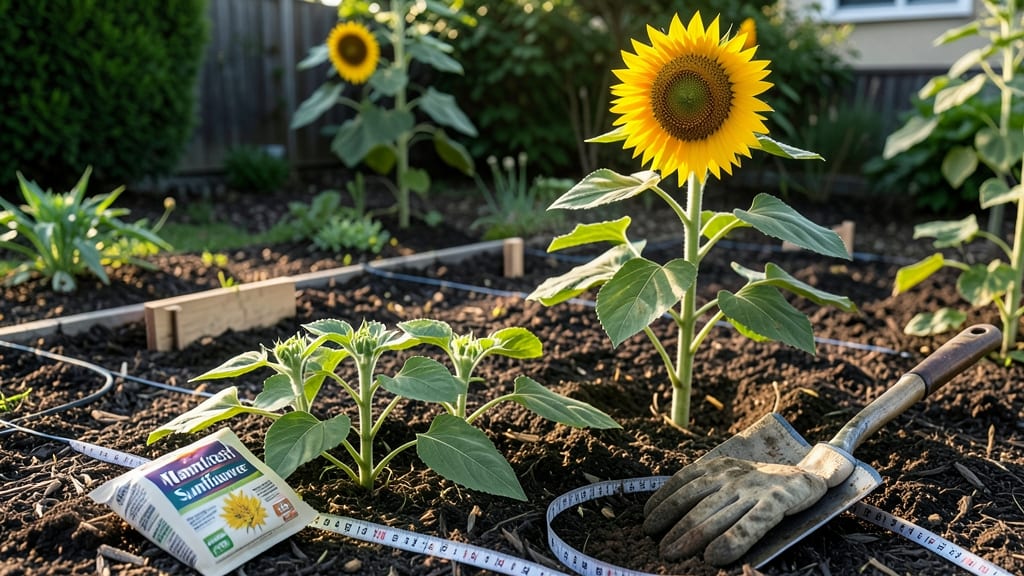
Spacing mammoth sunflowers correctly is the difference between 10-foot giants and stunted, leaning stalks that never reach their towering potential.
Picture this: You’ve waited all spring for those 🌻 stalks to shoot up—only to find them crowded, their heads drooping by midsummer. That’s the frustration of ignoring spacing, and it’s easier to fix before you plant than after.
These sunflowers aren’t just tall (we’re talking 10–14 feet of vertical drama); they’re competitive. Too close, and they’ll fight for nutrients, leaving you with weak stems and fewer blooms. Too far apart, and you waste space in your garden.
Below, I’ll break down the exact distances for your soil and layout, plus how to adjust for raised beds, companion plants, and even windy zones—so your mammoth sunflowers stand proud all season.
Optimal mammoth sunflower spacing by variety and soil conditions
When planting mammoth sunflowers, spacing isn't just about fitting them into your garden—it's about unlocking their full 10-14-foot potential. These giants need room to stretch their roots and stalks without competing for nutrients or sunlight.
The right spacing ensures stronger stalks, larger blooms, and fewer diseases caused by poor air circulation.
Your spacing strategy should adapt to three key factors: the sunflower variety, your soil conditions, and your local climate. For example, the Russian Giant variety might need more elbow room than Mammoth Russian because of its extra height.
Meanwhile, clay-heavy soil or dry climates can change how far apart you should plant them.
Here's the golden rule: Start with 18-24 inches between plants for most mammoth varieties, but adjust based on your growing conditions. Too close, and you'll get weak, leggy stalks. Too far, and you waste garden space. Let's break down the specifics so you can plant with confidence.
🌱
| Variety | Minimum Spacing (inches) | Ideal Spacing (inches) | Notes |
|---|---|---|---|
| Russian Giant | 24 | 30-36 | Tallest variety; needs extra room for root spread |
| Mammoth Russian | 18 | 24-30 | Standard mammoth; adjust for soil fertility |
| American Giant | 20 | 28-32 | Heavier blooms; wider spacing prevents stalk bending |
| Autumn Beauty | 16 | 20-24 | Smaller variety; good for tighter spaces |
Your soil fertility plays a huge role in how much space these sunflowers need. In nutrient-rich soil, roots can spread wider, so you can plant slightly closer—18-24 inches—without competition.
But in poor soil, increase spacing to 30-36 inches to give roots room to forage for nutrients deeper.
I once planted Russian Giants in my backyard with 24-inch spacing in average soil, and they reached 12 feet tall with 12-inch-wide blooms. When I tried the same spacing in clay soil the next year, the stalks barely hit 8 feet because roots couldn't penetrate easily.
The lesson? Test your soil first—a simple pH test and moisture check can save you from spacing mistakes.
Climate also changes the equation. In hot, dry regions, wider spacing (30-36 inches) helps reduce competition for water and nutrients.
Meanwhile, in cooler, wetter climates, you can plant closer (18-24 inches) because the soil stays moist longer, and roots don't need to spread as far.
For raised beds, reduce spacing by 2-4 inches because the soil warms faster and drains better, encouraging faster root growth. But in containers, increase spacing to 36 inches—these giants need at least 18-inch diameter pots to support their weight.
One pro tip: If you're growing mammoth sunflowers in rows, space rows 3-4 feet apart to allow for airflow and easier maintenance. This prevents powdery mildew, a common issue when stalks get too crowded and stay damp.
Finally, remember that thinning seedlings is just as critical as initial spacing. When your sunflowers are 3-4 inches tall, thin them to your target spacing. This might mean pulling some plants, but it's worth it—overcrowded sunflowers grow weak and are more prone to lodging (falling over).
🌻
Common spacing mistakes that stunt mammoth sunflower growth
When it comes to mammoth sunflowers, spacing mistakes are the silent growth killers. I’ve seen gardeners plant them too close, thinking more seeds mean more blooms—only to end up with weak stalks that flop by summer.
The truth? These giants need room to stretch their roots and compete for sunlight, or they’ll fight each other for survival.
Even worse, over-spacing can leave gaps in your garden where weeds take over. The sweet spot isn’t just about inches—it’s about balancing root competition, airflow, and nutrient access. Without this balance, your sunflowers might grow tall but top-heavy and disease-prone, collapsing under their own weight.
Let’s tackle the two biggest spacing blunders: overcrowding and over-spacing, and how to fix them before it’s too late.
⚠️ Warning: These Mistakes Cost You Towering Sunflowers
- Overcrowding: Roots tangle, stealing nutrients and causing weak stems that snap in wind.
- Over-spacing: Wasted garden space + increased weed pressure between sparse plants.
- Poor airflow: Leads to fungal diseases like powdery mildew, especially in humid climates.
Fix it now: Thin seedlings to 18–24 inches apart by the time they’re 3–4 inches tall. If already planted too close, transplant carefully or let one plant win and remove others.
First, let’s address overcrowding. Planting mammoth sunflowers too close—say, 12 inches apart instead of the recommended 18–36 inches—triggers a root war. Each plant scrambles for water and nutrients, leaving them malnourished and leggy.
You’ll notice smaller blooms and stalks that lean toward the sun like sun-worshipping worshippers.
To fix this, thin your seedlings early. Once they’re 3–4 inches tall, snip or gently pull the weakest stems, leaving the strongest 18–24 inches apart.
If you’re already dealing with a crowded patch, transplant the healthiest plants to a new spot, but do it before they’re 6 inches tall to minimize shock.
On the flip side, over-spacing is just as problematic. Planting them 3 feet apart in poor soil might seem safe, but you’ll end up with weedy gaps and underutilized space. Worse, the plants may grow too tall for their roots, leading to top-heavy collapse.
The fix? Adjust spacing based on your soil fertility—rich soil? Go for 24–36 inches. Poor soil? Stick to 18 inches and amend with compost.
Finally, don’t overlook airflow. Crowded sunflowers trap moisture, creating the perfect breeding ground for powdery mildew. If you notice white dust on leaves, it’s a sign your plants are suffocating. Space them wider and prune nearby foliage to improve circulation.
For extra defense, water at the base in the morning to let leaves dry quickly.