
Plants
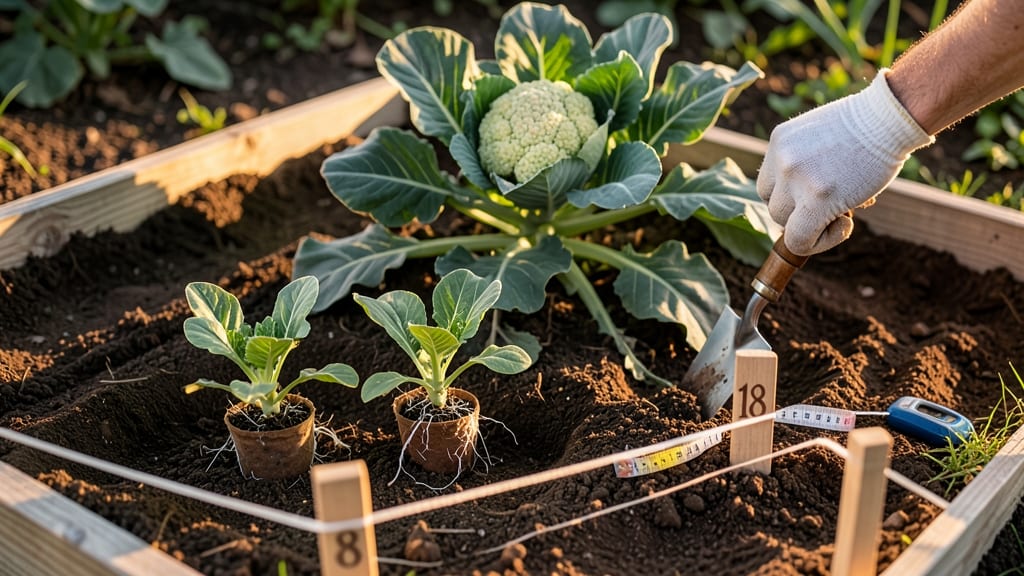
Spacing cauliflower plants correctly is the key to avoiding bolting and growing those perfect, tight curds you’ve been dreaming of 🥬.
Picture this: you’ve spent weeks nurturing your seedlings, only to watch them race toward flower stalks or produce tiny, misshapen heads. That’s not just bad luck—it’s a spacing problem. Too close, and your plants compete for nutrients and air; too far apart, and you waste precious garden real estate.
The right distance makes all the difference between a bountiful harvest and a frustrating flop.
In USDA Zone 6a, where spring planting kicks off in March, spacing isn’t just about numbers—it’s about airflow, sunlight, and even soil health. Whether you’re growing head cauliflower, broccoli raab, or Romanesco, the rules shift based on your variety and whether you’re planting in-ground or in containers.
Get it wrong, and you’re inviting disease, stunted growth, or early bolting.
Below, I’ll break down the exact spacing you need for each type, plus pro tips to squeeze more harvests into your garden without sacrificing quality. Ready to turn those crowded rows into a cauliflower powerhouse?
Ideal cauliflower plant spacing by variety and growing method
Cauliflower isn’t just one plant—it’s a family with three distinct types: head cauliflower, broccoli raab, and Romanesco. Each variety has unique spacing needs based on its growth habit and final size. Get this wrong, and you’ll end up with stunted heads, disease-prone foliage, or wasted garden space.
Let’s break down the perfect spacing for each type, whether you’re planting in-ground or in containers.
For head cauliflower (the classic curd variety), spacing directly impacts head size and yield. Broccoli raab (rapini) grows faster but needs tighter spacing, while Romanesco (the fractal-shaped beauty) requires more room to develop its signature cones.
Your growing method—traditional beds, raised beds, or containers—also changes the equation. Let’s dive into the specifics so you can plan your garden like a pro.
When planting head cauliflower in-ground, aim for 24-36 inches apart for standard varieties.
This gives their broad leaves room to spread without shading neighbors, which is critical for preventing black rot and other fungal diseases. Dwarf varieties can handle tighter spacing (18-24 inches), making them ideal for small gardens or interplanting with faster crops like lettuce.
For containers, reduce spacing by about 50%—so 18-24 inches apart for standard cauliflower. Use pots with at least 12-inch diameters to accommodate root growth. Raised beds let you squeeze plants closer (12-18 inches for standard varieties) because the soil warms faster and drains better, reducing disease pressure.
Always leave extra space around the edges to avoid border disease.
Broccoli raab is the rebel of the bunch—it thrives in tighter quarters (12-18 inches apart) and even does well in succession plantings.
Its rapid growth means you can harvest side shoots repeatedly, but don’t let it bolt—that’s when it goes from tasty to bitter. Romanesco, on the other hand, demands respect with its 24-30 inch spacing to develop those stunning fractal cones.
Pro tip: Mark your rows with
How overcrowding and under-spacing affect cauliflower growth
When cauliflower plants are packed too tightly, they don’t just compete for sunlight—they create a perfect storm of problems. Black rot, powdery mildew, and clubroot thrive in crowded conditions where air can’t circulate.
I’ve seen gardens where overcrowding led to plants producing tiny, deformed heads instead of the large, tight curds we all want 🥬.
The issue isn’t just about aesthetics—it’s a nutrient war. Roots tangle, stealing water and minerals from neighbors, while leaves block sunlight. In USDA Zone 6a, where summers can be humid, poor airflow makes fungal diseases even worse.
Even if your plants survive, they’ll bolt prematurely, sending up flower stalks before forming proper heads.
On the flip side, under-spacing wastes garden space and reduces yields. Plants that are too far apart may grow lanky, stretching toward sunlight they can’t share. The result? Smaller heads and fewer harvests per square foot. Finding that sweet spot is critical for both quantity and quality.
⚠️ Warning Signs of Poor Spacing
- Yellowing leaves between veins = black rot from poor airflow
- Stunted growth or small heads = nutrient competition
- Premature bolting = plants stressed by crowding
- White powder on leaves = powdery mildew from humidity
Fix it now by thinning seedlings to 18-24 inches apart for head varieties or 12-15 inches for broccoli raab. If already planted too close, transplant the strongest seedlings to new spots immediately.
One of the most common mistakes I see is ignoring variety differences. Romanesco cauliflower, for example, needs less space than head varieties like Snowball. Even within the same type, dwarf varieties can handle closer spacing than standard ones. Always check seed packets for mature plant width—that’s your guide.
Poor spacing also affects soil health. Crowded plants deplete nutrients faster, leaving behind weak, leggy stems that can’t support heavy heads. In my garden, I’ve noticed that overcrowded cauliflower often develops hollow stems because the plant diverts energy to survival instead of head formation.
The fix? Mulch heavily to retain moisture and nutrients, and consider side-dressing with compost every 4-6 weeks.
Don’t assume containers solve spacing issues—they don’t. In pots, roots compete even more aggressively for limited space. If growing cauliflower in containers, use large pots (at least 12 inches wide) and limit to one plant per container.
Smaller pots may work for dwarf varieties, but expect smaller yields due to restricted root growth ☀️.
Here’s the bottom line: Spacing isn’t optional—it’s the foundation of a healthy cauliflower garden. Whether you’re dealing with fungal diseases, stunted growth, or premature bolting, the solution often starts with giving your plants the room they need to thrive.
Next time you’re planning your garden, measure twice and plant once—your harvest will thank you!