
Flowers
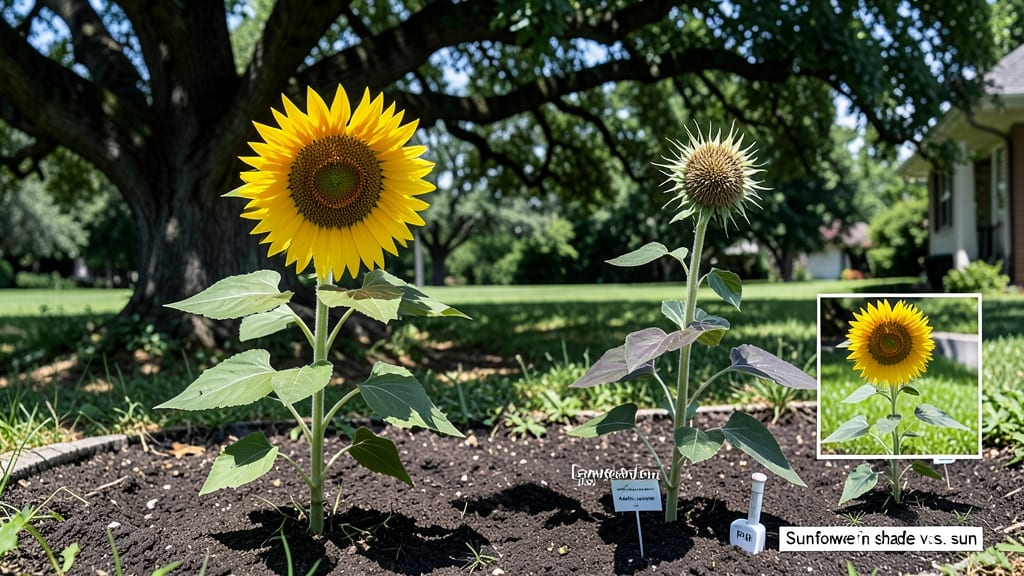
Sunflowers growing in shade may surprise you — these towering beauties can adapt with the right approach, even when sunlight is limited.
Picture this: your backyard is mostly shade, and you’re eyeing those bright yellow blooms you’ve always wanted. The good news? Sunflowers aren’t as picky as you think. While they love full sun, some varieties and smart tricks can help them thrive in partial shade or even dappled light.
Here’s the key: shade-tolerant sunflowers like 'Teddy Bear' or 'Moulin Rouge' can handle 4-6 hours of indirect light daily, while others may need creative solutions like reflective surfaces or artificial grow lights.
We’ll break down what works, what doesn’t, and how to maximize your shade-grown sunflowers without sacrificing those iconic blooms.
Ready to grow sunflowers in less-than-ideal light? You’ll discover 5 game-changing strategies, from soil prep to companion planting, so your 🌻 still reaches for the sky — even under a tree.


How much shade can sunflowers tolerate before struggling?
Sunflowers are sun-loving plants, but they’re tougher than you might think. While they thrive in full sun (6-8+ hours daily), they can survive in partial shade with some adjustments.
The key is understanding their photosynthesis limits—sunflowers need light to produce energy for growth and flowering. Without enough, they’ll struggle to reach their full potential.
In full shade (less than 3 hours of sunlight), sunflowers will likely fail to flower or grow tall. Their leaves may turn pale or yellow, and stems will become weak. However, partial shade (3-6 hours of sunlight) can work if you choose the right varieties and provide extra care.
The threshold for struggle is around 4 hours of direct light daily—below this, growth slows dramatically.
Here’s how to tell if your sunflowers are getting too little light: leaves turn yellowish-green, stems grow leggy and weak, and buds fail to open. These are clear signs of light deprivation.
Sunflowers also rely on sunlight to produce chlorophyll efficiently, so even partial shade can reduce their ability to photosynthesize properly.
Sunflowers use sunlight to produce energy through photosynthesis, which fuels their growth and flower production. In low-light conditions, their chloroplasts (energy producers in leaves) work harder but less efficiently. This leads to reduced sugar production, which stunts growth and prevents blooming.
Even with extra nutrients, sunflowers in deep shade will struggle to grow beyond 3 feet tall and may never flower.
If your sunflowers are in partial shade, watch for yellowing leaves or stretched stems—these are red flags. To help them thrive, place them in the sunniest spot available, even if it’s just a few hours a day.
Rotating pots or containers can also maximize light exposure. Remember, sunflowers are heliotropic, meaning they follow the sun, so positioning matters.
For container-grown sunflowers, consider using reflective surfaces like white walls or mirrors to bounce extra light onto the plants. This trick can simulate more sunlight and improve growth. However, even with these tricks, expect smaller flowers and slower growth compared to full-sun conditions.
The goal is to keep them alive and somewhat productive, not to replicate ideal conditions.
One common mistake is assuming all sunflowers are the same. Dwarf varieties like 'Teddy Bear' or 'Moulin Rouge' tolerate shade better than tall types. These smaller sunflowers can handle 3-4 hours of sunlight daily and still produce blooms, though they’ll be smaller.
If you’re growing sunflowers in shade, prioritize these shade-tolerant cultivars over standard varieties.
Finally, don’t forget that seasonal light changes affect sunflowers in shade. In winter, days are shorter, so even partial shade can become limiting. If you’re growing sunflowers in a shaded area, start them indoors under grow lights until they’re strong enough to handle outdoor conditions.
This gives them a head start before moving them to their permanent spot.
With the right approach, sunflowers can survive—and even thrive—in partial shade. But remember, they’re not shade plants by nature. The less light they get, the more care and attention they’ll need to compensate.
If your goal is big, bold blooms, full sun is still the best bet. For smaller gardens or shaded spots, focus on realistic expectations and enjoy the unique challenge! 🌱
5 Proven strategies to grow sunflowers in shade successfully
Growing sunflowers in shade might seem impossible, but with the right approach, you can still enjoy those iconic blooms. The secret lies in adapting their environment rather than forcing them into full sun.
I’ve grown shade-tolerant sunflowers in my own garden under a large oak tree, and these strategies work wonders.
Sunflowers need 6-8 hours of direct sunlight to reach their full potential, but some varieties and techniques let them thrive with just 3-4 hours of indirect light. The key is combining the right plant varieties, soil prep, and smart placement to maximize what little light your garden receives.
- 1 Choose shade-tolerant varieties like 'Teddy Bear' or 'Moulin Rouge'—these dwarf types handle partial shade better than standard sunflowers.
- 2 Optimize soil nutrients with compost and a balanced 5-10-10 fertilizer to boost growth in low-light conditions.
- 3 Place plants strategically near reflective surfaces like light-colored walls or mirrors to redirect indirect sunlight toward leaves.
- 4 Use companion planting with tall plants like corn or beans to create a microclimate that captures stray sunlight.
- 5 Adjust seasonal care by pruning lower leaves to improve airflow and using grow lights in early spring for extra energy.
Start by selecting dwarf or semi-dwarf varieties—these are naturally better at adapting to shade. 'Teddy Bear' sunflowers, for example, grow just 1-3 feet tall and produce bright yellow blooms even with minimal light. Their compact size also makes them easier to place in tight or shaded spots.
Soil health is your next ally. Amend your garden bed with well-rotted compost and a balanced fertilizer to give your sunflowers the nutrients they need to compensate for low light.
I mix in aged manure or worm castings to ensure my shade-grown sunflowers get the phosphorus and potassium they crave for flowering.
Strategic placement can make a huge difference. If your garden has a south-facing wall or a large window, position your sunflowers to catch reflected light. Even a white plastic tray placed under the plant can bounce extra light upward.
For extreme shade, consider using a small LED grow light for 4-6 hours daily to supplement natural light.
Companion planting is another clever trick. Tall plants like corn or sunflowers themselves can create a canopy that captures light and protects smaller plants below. I’ve seen marigolds or nasturtiums planted nearby improve growth by attracting pollinators and adding nutrients to the soil.
Finally, adjust your care routine seasonally. In early spring, when light is weakest, focus on watering deeply and removing lower leaves to direct energy upward.
By midsummer, when days are longer, you can reduce watering slightly but keep an eye out for pests like aphids, which thrive in shaded, humid conditions.
With these strategies, your shade-grown sunflowers might not reach the same height as their sun-loving cousins, but they’ll still reward you with vibrant blooms and a sense of accomplishment. Happy gardening! 🌻