
Fertilization
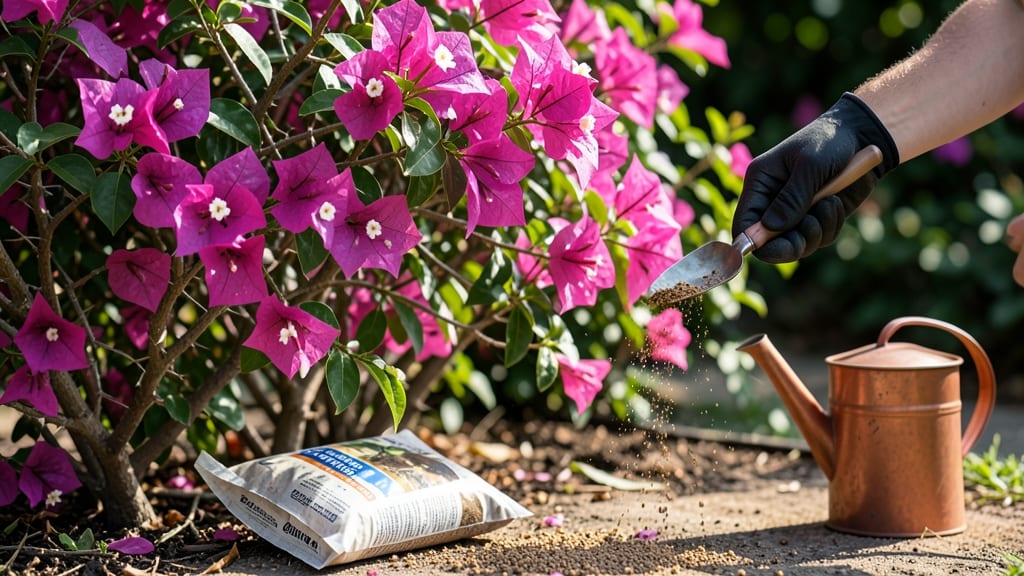
Mastering the bougainvillea fertilizer for flowering means choosing the right nutrients and timing to trigger those vibrant, papery bracts that steal the show 🌸.
Struggling to get your bougainvillea to burst into vibrant blooms? The right fertilizer schedule and nutrient ratios can transform a lackluster plant into a flowering powerhouse—here’s how to do it right.
Bougainvillea thrives in tropical and subtropical climates (USDA Zones 9b-11), where year-round warmth lets it flower continuously. But even in ideal zones, the wrong fertilizer throws off the balance between lush foliage and show-stopping blooms.
In this guide, you’ll learn the exact NPK ratios to use, when to feed for maximum impact, and how to avoid common mistakes that leave your bougainvillea looking green but bare. Let’s make those colorful bracts the star of your garden again.
Best fertilizer types and nutrient ratios for bougainvillea flowering
Your bougainvillea’s vibrant blooms depend on the right fertilizer mix and nutrient timing. Unlike many plants, bougainvillea thrives on a balanced approach—too much nitrogen leads to lush leaves but few flowers.
The key is phosphorus-rich formulas that trigger those iconic papery bracts we love. Let’s break down the best options to turn your plant into a flowering superstar.
First, understand that bougainvillea responds best to low-to-moderate nitrogen with higher phosphorus and potassium. A 7-7-7 or 10-10-10 NPK ratio is ideal for most stages, but high-phosphorus blends (like 5-10-5) can give a quick bloom boost during flowering season.
Organic options like fish emulsion or bone meal also work wonders for phosphorus-loving plants.
Here’s a quick comparison of what bougainvillea needs vs. what it hates in fertilizers:
| Fertilizer Type | NPK Ratio | Best For | Application Rate |
|---|---|---|---|
| Synthetic (e.g., Miracle-Gro) | 7-7-7 or 10-10-10 | Balanced growth & blooms | 1 tbsp/gal water (small pots) or ¼ cup/plant (ground) |
| High-Phosphorus (e.g., 5-10-5) | 5-10-5 or 3-9-6 | Flowering boost | ½ tbsp/gal water (every 4 weeks) |
| Organic (e.g., Bone Meal) | 3-15-0 (phosphorus-rich) | Root & bloom development | 1 tbsp per hole at planting or top-dress |
| Compost Tea | 0-0-0 (micronutrients) | Soil health & disease prevention | Weekly foliar spray (diluted) |
| Avoid: High-Nitrogen (e.g., 30-0-0) | 30-0-0 or 20-10-10 | Leafy growth, fewer blooms | Never use for flowering |
For potted bougainvillea, I recommend slow-release granules mixed into the soil at planting. These provide a steady supply of nutrients without the risk of root burn from over-fertilizing.
In-ground plants benefit from a spring top-dressing of compost or a balanced granular fertilizer worked into the top 2–3 inches of soil.
Don’t overlook micronutrients like magnesium, calcium, and iron. Bougainvillea often shows signs of deficiency (like yellowing leaves) when these are lacking. A chelated iron supplement can work wonders if you notice interveinal chlorosis (yellowing between leaf veins).
I’ve had great success with Epsom salt (magnesium sulfate) for general soil health—just mix 1 tablespoon per gallon of water and apply monthly.
Timing matters just as much as the mix. Feed lightly in early spring to encourage new growth, then switch to a higher-phosphorus formula when you see buds forming.
During peak flowering (summer), reduce fertilizer by half to avoid stressing the plant. Fall and winter are for rest—skip fertilizing entirely unless you’re in a frost-free zone with continuous blooming.
Pro tip: Always water thoroughly after fertilizing to help nutrients reach the roots. Bougainvillea hates soggy soil, so well-draining containers or amended garden beds are a must. If you’re unsure about your soil’s pH, aim for 6.0–7.0—bougainvillea thrives in slightly acidic to neutral conditions.
You can test with a simple soil pH kit from your local nursery.
Remember, less is more with bougainvillea. Over-fertilizing leads to burned roots and stunted blooms, while the right balance gives you year-round color. Start with a balanced 7-7-7 mix, monitor your plant’s response, and adjust based on growth and flowering patterns.
With the right nutrients, your bougainvillea will reward you with bold, vibrant blooms that last all season.
🌸
Monthly bougainvillea fertilizing schedule for maximum blooms
Your bougainvillea’s vibrant bracts depend on precise nutrient timing—too much fertilizer at the wrong time can leave you with lush leaves but no blooms 🌸. The key is adjusting NPK ratios and feeding frequency to match each season’s growth demands.
In spring, focus on root development and new growth, while summer demands phosphorus-rich feeds to fuel flowering.
For container-grown bougainvillea, reduce fertilizer amounts by half since roots can’t access nutrients in large soil volumes. Always water thoroughly before and after applying fertilizer to prevent root burn.
Organic options like compost tea or fish emulsion provide slow-release nutrients, while synthetic blends offer quick results—choose based on your plant’s current needs.
- 1 Spring (March–May): Use balanced 10-10-10 fertilizer every 4 weeks to promote new growth and root establishment.
- 2 Summer (June–August): Switch to high-phosphorus 5-10-5 every 6 weeks to trigger blooming. Reduce in extreme heat to avoid stress.
- 3 Fall (September–November): Light feed with 7-7-7 monthly to harden off plants before cooler weather. Skip in frost-prone zones.
- 4 Winter (December–February): No fertilizer in dormant zones. Resume feeding in Zone 9b+ with half-strength applications.
Start your spring feeding in March when you spot new leaf growth—this signals the plant is ready for nutrients. Use a slow-release granular fertilizer worked into the top 2 inches of soil for steady nutrient uptake.
For potted bougainvillea, dissolve water-soluble fertilizer in water and apply at half the recommended dose to avoid salt buildup.
During summer’s peak flowering, watch for yellowing leaves or burnt tips, which signal over-fertilization. If this happens, flush the soil with 3–4 gallons of water to leach excess salts. Organic options like bone meal (3-15-0) are excellent for phosphorus but apply sparingly—too much can suppress blooms.
As temperatures drop in fall, reduce feeding to half-strength applications every 6–8 weeks. This helps the plant store energy for next year’s growth. In Zone 9b, a light winter feed with fish emulsion can encourage early spring blooms, but avoid fertilizing if frost is expected.
Pro tip: Pair your fertilizer schedule with regular pruning after blooms fade. This removes spent growth and redirects energy to new flowering shoots. Prune in late winter or early spring for the best results—just before the active growing season kicks in.