
Light Requirements
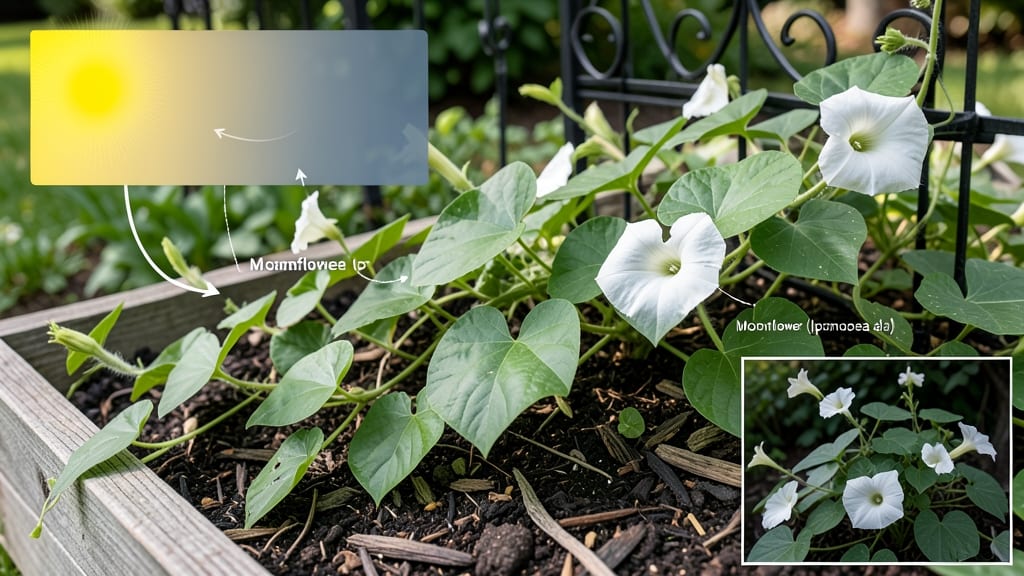
Moonflowers do need full sun? Not quite—they actually thrive best in partial shade rather than full sun, though they can tolerate some direct light, especially in cooler climates.
Picture this: your 🌙 moonflower vine sprawling up a trellis, its delicate white blooms unfurling only after the sun dips below the horizon. That night-blooming magic depends on light balance, and getting it wrong can mean fewer flowers or weak vines.
The truth is, these tropical climbers prefer dappled shade, but their needs shift depending on where you live.
In hotter zones like USDA 6a, afternoon sun can scorch their leaves, while cooler regions might handle a few hours of direct rays.
The key is replicating their natural habitat—think filtered light through trees or a south-facing trellis that lets them bask in morning sun but escapes the midday heat.
Below, I’ll break down exactly how much light moonflowers need, how to spot light stress, and the simple adjustments that keep your vines thriving—so you can enjoy those dreamy evening blooms all season long.

Moonflower sunlight requirements: how much light do they really need?
Moonflowers (Ipomoea alba) thrive under conditions that might surprise many gardeners. While they're often called "night-blooming," their sunlight needs during the day are more nuanced than you'd expect.
These vines actually prefer partial shade—especially in hot climates—to prevent leaf scorch while still needing enough light to fuel their nocturnal blooming cycle. The key lies in mimicking their natural tropical forest understory habitat, where they receive dappled sunlight rather than harsh midday rays.
In cooler climates (USDA zones 5-7), moonflowers tolerate morning sun with afternoon shade, but in hot, dry regions, even morning sun can be too intense.
Their night-blooming adaptation means they've evolved to conserve moisture during daylight hours, which explains why they wilt dramatically by midday only to revive at dusk. Understanding this helps explain why many gardeners see sparse blooms when they plant moonflowers in full sun.
The science behind their light needs is fascinating: moonflowers use circadian rhythms to time their blooming with cooler night temperatures. Too much direct sun disrupts this natural cycle, causing stress that manifests as yellowing leaves or stunted growth.
Their large, delicate blooms also require protection from windburn and excessive heat, which is why they thrive in sheltered, partially shaded spots.
Let's break down the ideal sunlight conditions for moonflowers in different climates:
In cool climates, moonflowers can handle slightly more sun because temperatures are gentler. I've seen them thrive with 4-6 hours of morning sun followed by afternoon shade in USDA zone 6 gardens.
The key is avoiding midday sun between 11am-3pm, when UV intensity peaks. Even in cooler regions, afternoon shade is critical to prevent leaf burn, which can stunt vine growth and reduce blooming.
For hot, dry climates, the rules are stricter. Moonflowers here need dappled sunlight—think of them growing under a light canopy rather than in open sun. In my zone 9b garden, I place moonflowers near a lattice trellis that casts moving shadows, mimicking their natural forest habitat.
Without this protection, the vines develop brown, crispy leaf edges within weeks, and blooming becomes sporadic.
The science of their night-blooming explains why they avoid full sun: their large, waxy leaves are adapted to reduce transpiration during daylight. When exposed to full sun, they lose moisture too quickly, triggering stress responses that divert energy away from flower production. This is why many gardeners report fewer blooms
How to mimic moonflowers’ natural shade conditions in your garden
Moonflowers (Ipomoea alba) thrive in their native tropical forests where they receive dappled sunlight through tree canopies—about 4-6 hours of morning sun with afternoon shade. Recreating this environment in your garden is easier than you think, and it’s the secret to those ethereal night-blooming displays.
The key lies in strategic placement, whether you’re in a urban patio or a rural backyard.
Start by choosing a south-facing trellis or fence, which captures gentle morning rays while shielding your vines from the harsh afternoon sun. In hotter climates like USDA Zone 9, even 3 hours of direct sun can stress moonflowers, so prioritize filtered light over full exposure.
Urban gardeners can use sheer curtains or lightweight shade cloth (30-50% blockage) for containers, while rural spaces benefit from tall trees or pergolas for natural shade.
- Plant near deciduous trees (like maple or oak) to block midday sun in summer while allowing winter sunlight when leaves drop.
- Use a trellis with afternoon shade—position it so the west side is partially obscured by a lattice or screen to diffuse harsh rays.
- Companion plant with taller sun-lovers (e.g., sunflowers or hollyhocks) to create a natural windbreak and shade canopy for your moonflowers.
- Adjust for seasons: In summer, reduce sun exposure by 20-30%; in winter, increase light by moving containers to sunnier spots.
- Water deeply in the evening to prevent leaf scorch—moist soil reflects less heat, mimicking the humid forest floor moonflowers prefer.
For container gardening, opt for terracotta pots (which breathe better than plastic) and place them on elevated stands to improve airflow while keeping roots cool. If your balcony faces west, rotate pots quarter-turns weekly to prevent one-sided sun damage.
In cooler climates (USDA Zones 4-6), moonflowers can handle morning sun + afternoon partial shade, but avoid east-facing spots where they’ll dry out too quickly.
Seasonal tweaks make all the difference. In summer, add a removable shade sail (50% blockage) over your trellis by 11 AM to protect blooms. In fall, when days shorten, let them bask in more sunlight to encourage late-season flowering. Urban gardeners can even hang sheer fabric from a pergola to diffuse light without blocking airflow—moonflowers need circulation to prevent powdery mildew, a common issue in stagnant shade.
Don’t overlook companion planting—pair moonflowers with fast-growing climbers like morning glories or clematis to create a living shade canopy. These plants compete for light while adding vertical interest.
If space is tight, interplant with ground covers (e.g., sweet potato vine) to reflect light upward and keep roots cool. The goal is to mimic the forest understory, where moonflowers evolved to thrive.
Finally, monitor your vines weekly for signs of stress—yellowing leaves or drooping blooms mean too much sun, while slow growth signals insufficient light. With these adjustments, your moonflowers will reward you with dramatic nighttime displays and strong, healthy vines all season long.
The secret? Think like a forest—balance light, airflow, and humidity for night-blooming perfection. 🌙🌿