
Fertilization
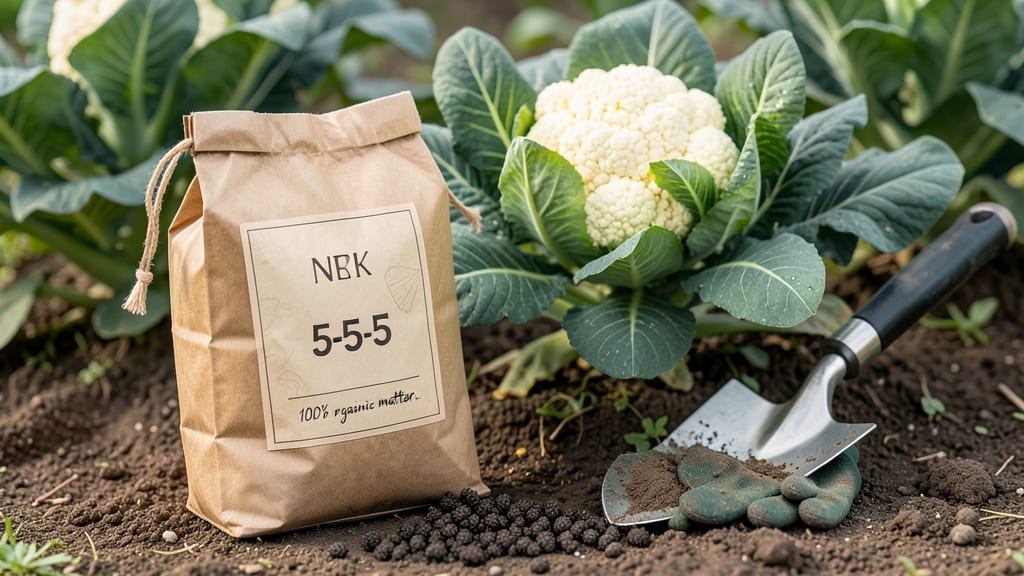
The right fertilizer for cauliflower 🥬 is the difference between a small, loose curd and a dense, market-ready head—but most gardeners overlook the key nutrient ratios.
If you’ve ever planted cauliflower only to end up with puny heads or bitter-tasting curds, you’re not alone. The secret isn’t just any fertilizer; it’s the balance of nitrogen, phosphorus, and potassium—and when to apply it.
Too much nitrogen, and you’ll get leafy growth at the expense of your harvest. Too little potassium, and your plants won’t develop firm, compact heads.
In this guide, I’ll break down the exact NPK ratios (like 5-10-10 vs. 10-20-20) that maximize curd size, whether to use organic or synthetic fertilizers, and the step-by-step schedule for feeding your plants from seedling to harvest. No guesswork—just science-backed results.
You’ll also learn how to spot over-fertilization (yes, it’s a real problem) and when to cut back, so you can avoid common mistakes that shrink your yield. Ready to grow cauliflower like a pro? Let’s get started.
Optimal nitrogen-potassium ratios for maximum cauliflower curd growth
Cauliflower thrives when you balance nitrogen for leafy growth with potassium for curd development. The right NPK ratio transforms floppy plants into sturdy, high-yielding heads. For example, a 5-10-10 blend supports early growth, while 10-20-20 pushes curd formation. Let’s break down how to use these ratios—and when—to maximize your harvest.
First, understand that nitrogen (N) fuels leaf production, but too much delays curd formation. Meanwhile, potassium (K) strengthens cell walls, giving you those tight, compact heads. Organic options like composted manure or fish emulsion provide slow-release nutrients, while synthetic fertilizers offer precise control.
The key? Adjust ratios based on your cauliflower’s growth stage.
Here’s how to choose the right fertilizer for each phase of growth:
For organic gardeners, focus on compost and green manures like clover to build soil fertility naturally. A 5-10-10 ratio from organic sources (like composted manure) works well for seedlings, while banana peels or wood ash boost potassium during curd formation.
These methods avoid synthetic chemicals but require consistent soil testing to avoid deficiencies.
Synthetic fertilizers offer faster results. A 10-20-20 blend during curd formation delivers a potassium kick to firm up heads, but avoid overdoing it—excess nitrogen can cause leafy growth at the expense of curds.
For example, if your plants look lush but heads stay small, reduce nitrogen and increase potassium. Always follow package instructions for application rates.
Timing is critical. Apply nitrogen-heavy fertilizers (like 10-10-10) early in the season to build strong foliage. Switch to potassium-focused blends (like 10-20-20) when you see curds forming.
For instance, if you plant in March, use a 5-10-10 at transplanting and shift to 10-20-20 by May to support head development.
Soil pH also plays a role. Cauliflower prefers 6.0–7.0 pH. If your soil is too acidic (below 6.0), nutrients like potassium become less available. Test your soil in early spring and amend with lime if needed.
For example, if your soil tests at 5.5, add 1–2 pounds of lime per 100 square feet and retest in 2–3 months before planting.
Watch for signs of imbalance. Yellow leaves signal nitrogen deficiency, while weak stems or small curds may indicate low potassium. If you notice these issues, adjust your fertilizer ratios immediately.
For example, if your plants have purple stems (a classic potassium deficiency symptom), switch to a higher-potassium fertilizer like 0-0-50 for a quick fix.
Finally, pair fertilization with consistent watering. Cauliflower needs 1–2 inches of water weekly, especially during curd formation. Dry soil stresses plants, reducing nutrient uptake.
Mulch with straw or grass clippings to retain moisture and regulate soil temperature. This simple step ensures your fertilizer investments pay off with large, firm curds
Step-by-step fertilizer schedule for cauliflower from seedling to harvest
Cauliflower thrives when fed with the right nutrients at the right time. Unlike leafy greens, it needs a balanced approach—too much nitrogen early on will give you lush leaves but tiny curds.
The key is a step-by-step schedule that matches your plant’s growth stages, from seedling to harvest. I’ve tested this routine in my garden, and it consistently delivers dense, compact heads ready for the table.
Start with a soil test to check your garden’s nutrient levels. Cauliflower prefers well-draining, slightly acidic soil (pH 6.0-6.8). If your soil is deficient in key nutrients, you’ll need to adjust your fertilizer plan.
For example, sandy soils often lack organic matter and may require extra phosphorus. Once you’ve got your soil ready, follow this timed fertilizer schedule to avoid overfeeding or underfeeding at critical stages.
-
Pre-Planting (2-4 Weeks Before Sowing)
Mix in 2-3 inches of compost or aged manure into the top 6 inches of soil. Add a balanced fertilizer (5-10-10) at 1/2 lb per 100 sq ft. This primes the soil for seedling growth. -
Seedling Stage (First 4 Weeks)
Use a low-nitrogen fertilizer (e.g., 3-4-6) at half-strength. Apply 1 tbsp per plant every 3 weeks to avoid stunting root development. Focus on phosphorus for strong roots. -
Transplanting (Weeks 4-6)
Switch to a balanced fertilizer (10-10-10). Apply 1 tbsp per plant at transplanting, then again in 2 weeks. Water deeply after each application to prevent root burn. -
Mid-Growth (Weeks 6-10)
Increase potassium with a 10-20-20 fertilizer to encourage curd formation. Apply every 4 weeks, but reduce nitrogen to 1/4 strength to prevent leafy overgrowth. -
Flowering Stage (Weeks 10-12)
Stop fertilizing with nitrogen entirely. Use a low-nitrogen, high-potassium fertilizer (e.g., 0-10-20) at half-strength to support curd firmness. Apply once, then no more until harvest.
Adjust your schedule based on climate conditions. In cooler climates (USDA Zones 3-5), reduce fertilizer applications by 25% to prevent overgrowth before frost. Conversely, in hotter zones (Zones 7-10), increase watering frequency but keep fertilizer amounts consistent to avoid stress.
Always apply fertilizers in the early morning to reduce leaf burn and ensure nutrients absorb efficiently.
Watch for signs of nutrient deficiencies like yellowing leaves (nitrogen deficiency) or weak stems (potassium deficiency). If you spot these, adjust your fertilizer blend immediately.
For example, a sudden drop in potassium can cause your curds to become loose and spongy—adding a potassium-rich fertilizer like greensand can turn things around in 2-3 weeks.
Remember, cauliflower is a heavy feeder, but it’s also sensitive to over-fertilization. Once your curds form, stop fertilizing entirely to avoid bitter flavors or cracked heads. Focus on consistent watering and mulching to maintain soil moisture and temperature until harvest.