
Trees
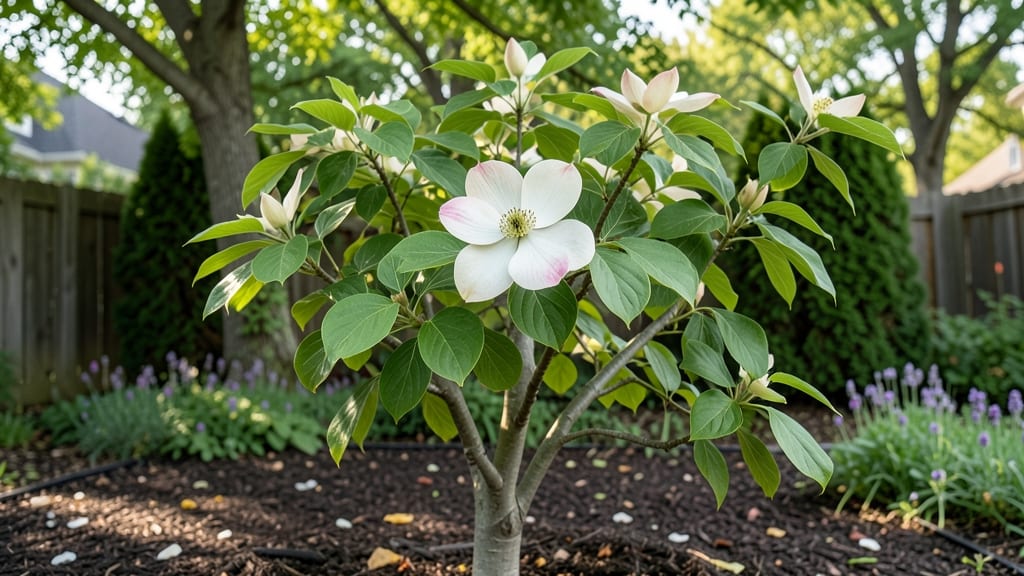
The flowering dogwood growth rate is moderate, with trees typically adding about 1–2 feet per year in ideal conditions, eventually reaching their mature height of 20–40 feet over 15–25 years—a slow but steady climb that rewards patience with stunning spring blooms 🌸.
If you're dreaming of a flowering dogwood but wondering how long it will take to reach its full majestic height, you're not alone—many gardeners overlook this critical factor before planting.
Understanding the growth rate helps you plan for shade, seasonal blooms, and long-term landscape impact, whether you're working with a standard variety or a dwarf cultivar like 'Cherokee Brave.'
Below, I break down the growth stages by variety, the factors that speed up or slow down development, and the simple steps you can take to encourage faster, healthier growth—without sacrificing those iconic spring flowers.


Flowering dogwood growth rate by variety: how fast do they mature?
Flowering dogwoods (Cornus florida) are prized for their stunning spring blooms and vibrant fall foliage, but their growth rate varies dramatically by variety. Some cultivars reach mature heights of 35 feet in just 15 years, while others grow more slowly.
Understanding these differences helps you choose the perfect variety for your landscape and set realistic expectations for shade and seasonal interest.
Growth rates also depend on your USDA hardiness zone and local climate. Southern gardeners often see faster growth in zones 7-9, while northern growers in zones 5-6 may experience slower development.
Let’s explore how popular varieties compare in terms of annual height gain, years to full bloom, and mature size.
The comparison table below breaks down growth metrics for six top varieties, including the 'Cherokee Brave' (disease-resistant), 'Rubra' (deep red blooms), and 'White Cloud' (compact form). This data will help you predict when your dogwood will provide shade, blooms, and that coveted fall color.
If you’re planting a 'Cherokee Brave', expect it to reach 10 feet in just 5 years and provide shade by year 7. In contrast, the 'Stella Compacta' stays under 15 feet tall, making it ideal for smaller yards.
These growth differences also impact when you’ll see those showstopping spring blooms—some varieties like 'White Cloud' may bloom in as few as 4 years, while others take closer to 8 years.
Climate plays a huge role in growth speed. Dogwoods in warmer southern zones (7-9) often grow 20-30% faster than those in cooler northern zones (5-6).
For example, a 'Rubra' in Zone 8 might hit 15 feet in 6 years, while the same tree in Zone 5 could take 8-10 years to reach that height. Humidity and rainfall also matter—drier climates may require additional watering to maintain optimal growth rates.
One common misconception is that dogwoods grow slowly in their first few years. While this is true, the first 3 years are critical for establishing a strong root system. Planting in
Key factors affecting flowering dogwood growth speed
Flowering dogwoods (Cornus florida) grow at a moderate pace, typically gaining 12–24 inches per year under ideal conditions. However, their growth speed varies dramatically based on environmental factors and care practices. Understanding these key elements helps you create optimal conditions for faster, healthier development and earlier blooms.
The soil quality plays a foundational role in dogwood growth. These trees thrive in well-draining, slightly acidic soil (pH 4.5–6.0). Heavy clay or compacted soil restricts root expansion, slowing growth by up to 50%.
Amending soil with organic matter like compost or peat moss can transform growth rates within the first growing season.
⚠️ callout warning
- Over-pruning: Removing more than 25% of branches at once stresses the tree, reducing growth by 30–40%.
- Poor drainage: Waterlogged roots lead to root rot, halting growth entirely in severe cases.
- Excessive fertilizer: High nitrogen promotes leafy growth but delays flowering and weakens wood structure.
- Full sun exposure: While dogwoods tolerate partial shade, direct afternoon sun causes leaf scorch, stunting growth.
Sunlight exposure is another critical factor. While flowering dogwoods tolerate partial shade, they grow 2–3 times faster with 3–6 hours of morning sun. Avoid planting in areas with hot afternoon sun, which can stress the tree and reduce growth by 20–30%.
Dappled sunlight (like under tall trees) is ideal for balanced growth and vibrant blooms.
Watering needs directly impact growth speed, especially in the first 2–3 years after planting. Young dogwoods require deep watering weekly during dry spells, while established trees need watering every 10–14 days.
Underwatering causes stunted growth, while overwatering leads to root suffocation. Always water at the base of the tree to encourage deep root development.
Pruning techniques significantly influence growth patterns. Minimal pruning (removing only dead or crossing branches) maintains the tree's natural shape and encourages faster vertical growth. Avoid heavy pruning in late summer or fall, as this can delay next year's blooms by 1–2 months.
The best time to prune is late winter or early spring, just before new growth begins.
Regional climate also affects growth rates. In warmer USDA Zones 7–9, flowering dogwoods grow 15–20% faster than in cooler Zones 5–6. However, they’re more susceptible to dogwood borer infestations in humid climates, which can stunt growth if not managed.
Mulching with 3–4 inches of organic mulch helps regulate soil temperature and retain moisture, supporting consistent growth year-round.