
Vegetables
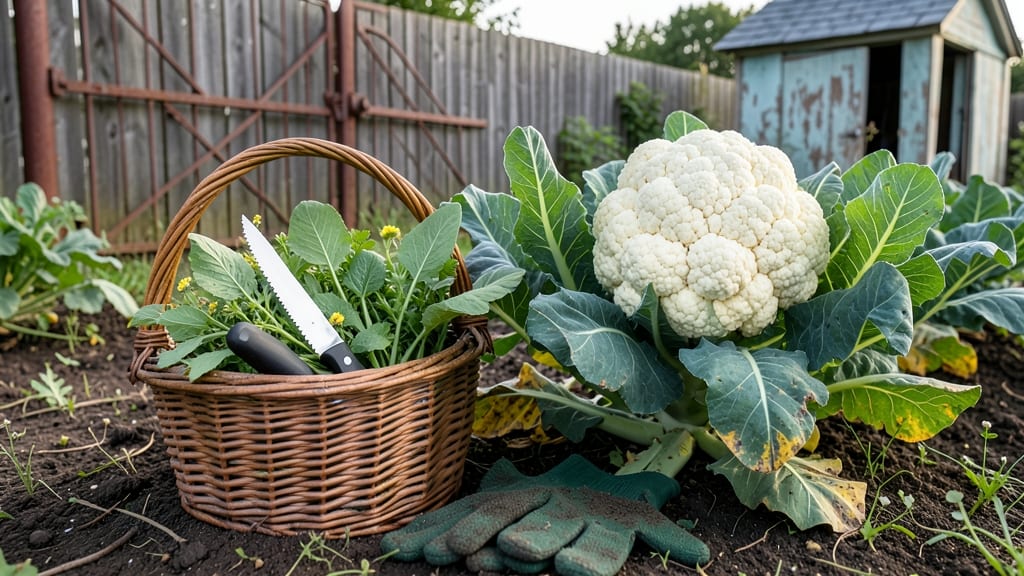
The time to harvest cauliflower 🥬 is when the head reaches 6-8 inches and the outer leaves start turning yellow—a telltale sign the curd is ready for picking.
If you’ve ever sliced into a cauliflower that’s gone woody or bitter, you know timing is everything. That subtle shift in leaf color is your cue to act before the head loosens or the buds open, turning your harvest into a disappointment.
In USDA Zone 6a, most varieties hit peak harvest between June and August, but cooler weather can delay it. The key is watching the head’s firmness and color consistency, not just the calendar.
Below, I’ll walk you through how to spot the perfect moment, cut it cleanly, and store it to keep it fresh—so you never waste another harvest again.

How to identify the perfect cauliflower harvest time by leaf color
Cauliflower leaves whisper clues about harvest readiness through subtle color shifts—yellowing, browning, or even purpling—that tell you when to act. Ignoring these signals can turn your crisp curds into tough, bitter heads.
The key lies in understanding how leaf color changes correlate with maturity, while accounting for weather variations and cauliflower varieties that mature at different rates.
Most home gardeners focus on head size, but the outer leaves reveal more about timing. For example, yellowing leaves at the base signal the head is nearly ready, while purpling leaves in cold weather indicate stress—not necessarily ripeness.
These visual cues, combined with head firmness and bud development, create a foolproof system for perfect harvests every time.
🌱 Visual Cues Matter Most: The leaf color gradient around your cauliflower’s base is your best indicator. Start by checking the lowest leaves—they’ll yellow first as the head matures. For white varieties, this yellowing appears as a golden halo around the stem, while purple or orange varieties may show deeper color saturation before harvest.
Weather plays a surprising role in leaf color. Hot, dry conditions can cause premature yellowing, while cold snaps may trigger purpling—neither means your cauliflower is ready. Always cross-reference leaf color with head firmness and bud tightness to avoid mistakes.
For instance, a head that’s 6-8 inches wide with yellowing leaves is ideal, but the same leaf color in a smaller head means it needs more time.
🌿 Variety-Specific Timing: Different cauliflower types mature at distinct rates. Early varieties like 'Snowball Y' may show leaf color changes in 60-70 days, while late varieties like 'Romanesco' take 90-100 days. Always check your seed packet for days to maturity and adjust your color-watching schedule accordingly. Pro tip: Orange varieties often mature slightly faster than white ones due to their higher beta-carotene content.
| Leaf Color Indicator | What It Means | Head Condition | Action Required |
|---|---|---|---|
| Bright green leaves | Immature plant | Small, loosely formed head | Wait 1-2 weeks |
| Yellowing at base | Nearly ready | Firm, 6-8" diameter | Harvest in 2-3 days |
| Purpling leaves | Cold stress | May be firm or woody | Check head firmness |
| Brown/yellow leaves | Overripe or stressed | Woody texture | Harvest immediately |
| Green leaves with buds | Too late | Bitter, tough head | Not edible |
Cold weather can trick your timing by causing leaves to purple before the head is ready. If temperatures drop below 50°F (10°C), your cauliflower may show stress signals like darkening leaves or stunted growth.
In these cases, focus on head firmness rather than leaf color. For example, a purple-leafed head that’s still soft needs more time, while a firm purple head is harvest-ready.
Heat waves also affect leaf color. During 90°F+ (32°C+) days, cauliflower leaves may yellow prematurely due to water stress. To compensate, increase watering to 1-2 inches per week and harvest when the head is fully formed, even if leaves show early yellowing.
Shade cloth can help prevent heat-induced color changes while maintaining optimal growing conditions.
Don’t overlook the stem test—a quick way to confirm readiness. Gently bend the stem near the base; if it snaps cleanly, your cauliflower is ready
Step-by-step guide to harvesting cauliflower without damaging the plant
Harvesting cauliflower at the right moment ensures a tender, flavorful curd while keeping your plant healthy for future harvests. The key is timing—cut too early, and the head won’t reach full size; wait too long, and it turns woody or bitter.
I’ve perfected my technique over years of gardening, and I’m sharing it with you to save you from those common mistakes.
Once your cauliflower head reaches 6-8 inches in diameter and the outer leaves begin yellowing at the base, it’s ready. But don’t rush—check the firmness by gently pressing the curd.
If it feels solid and the buds haven’t started opening, you’re golden. Now, let’s dive into the step-by-step process to ensure a clean, damage-free harvest.
- Step 1: Gather your tools—a sharp knife or pruning shears, gardening gloves, and a bucket for storage. Sterilize your tools with rubbing alcohol to prevent disease spread.
- Step 2: Hold the cauliflower stem firmly with one hand while positioning your knife at a 45-degree angle about 1-2 inches below the head. This angle prevents water from pooling on the cut surface.
- Step 3: Make a single, smooth cut to avoid crushing the head. For large heads (8+ inches), use a serrated knife to slice through the stem cleanly. For smaller heads (6 inches), a quick snip works best.
- Step 4: Leave the outer leaves attached to the plant—this protects the developing side shoots. If your variety produces multiple heads, like ‘Cheddar’ or ‘Purple of Sicily’, these leaves shield the new curds from sun damage.
- Step 5: Place the harvested head in a shaded, cool spot (ideally 32-40°F) for up to 5 days to slow aging. For immediate use, rinse under cool water and store in the crisper drawer of your fridge.
- Step 6: After harvesting, water the plant deeply and apply a balanced fertilizer (5-10-10) to encourage side shoots. If your plant is healthy, you may get 2-3 smaller heads within 4-6 weeks.
If you’re harvesting in hot weather (above 85°F), work early in the morning or during the evening to avoid stressing the plant. The temperature drop after harvest helps the curd retain moisture and crispness.
Pro tip: Trim any yellowed or damaged leaves from the plant after harvesting to improve airflow and reduce disease risk.
For container-grown cauliflower, be extra gentle—roots are confined, so avoid tugging the plant. Instead, cut the head while still in the pot, then replant the remaining plant in fresh soil to coax out side shoots. This method works wonders for small-space gardens or balconies.
Remember, every cauliflower plant is unique. If your head starts to loosen or split, it’s past its prime—harvest it immediately, even if it’s not perfect. With practice, you’ll develop an eye for the ideal moment, turning your garden into a cauliflower powerhouse. Happy harvesting! 🥬