
Light Requirements
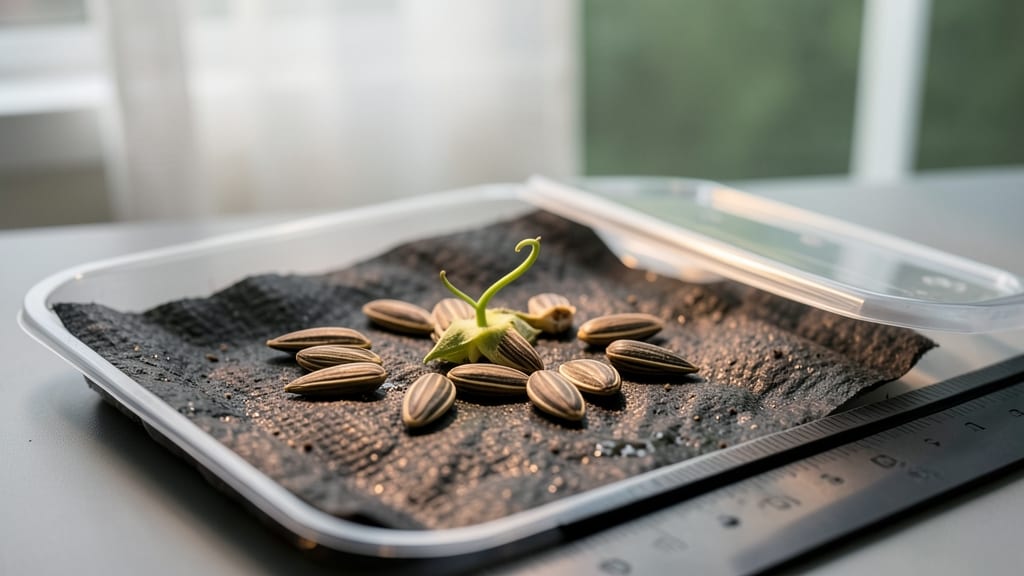
Do sunflower seeds need light to germinate? The surprising answer is no—they thrive in darkness, and planting them too shallow or in bright soil can actually stunt their early growth.
Struggling to get your sunflower seeds to sprout?
The answer might lie not just in soil quality, but in how much light they receive—or don’t. Sunflower germination is surprisingly sensitive to light exposure, and getting it wrong can mean the difference between a towering summer bloom and a wasted seed packet.
Here’s the science: sunflower seeds need to stay buried in the dark until they’ve sprouted their first leaves. Light exposure too early triggers a stress response, slowing growth or even preventing germination entirely. The key is keeping them in moist, dark soil until they’ve broken through the surface.
Below, I’ll walk you through the ideal planting depth, soil conditions, and light strategies to ensure your sunflower seeds sprout reliably—even if you’re working with less-than-perfect sunlight.

How light exposure affects sunflower seed germination (and what happens without it)
Sunflower seeds (Helianthus annuus) are classified as photoblastic, meaning their germination process is directly influenced by light exposure. Unlike some seeds that sprout in darkness, sunflowers require light to trigger the production of light-dependent enzymes that break down seed dormancy.
When planted too deep or in complete darkness, they often fail to sprout—or produce weak, leggy seedlings that struggle to reach the surface.
Inside the seed, the hypocotyl (the stem-like structure) is what first emerges during germination. This delicate growth stage is highly sensitive to light cues. Without adequate light, the hypocotyl may grow erratically, using up the seed's energy reserves before it can reach the soil surface.
This explains why many gardeners see their sunflower seeds "rot" underground or produce only sparse sprouts.
The seed coat contains phytochrome pigments that detect light wavelengths. When exposed to light, these pigments activate gibberellin production, a hormone that signals the seed to break dormancy. In darkness, this process stalls, leaving seeds in a state of suspended animation.
This is why even pre-soaked seeds may fail to sprout if buried too deeply or planted in shaded containers.
When sunflower seeds are planted in complete darkness, they experience a phenomenon called etiolation. This occurs when the hypocotyl stretches abnormally to reach light, becoming thin and pale. Without light, the seed cannot produce chlorophyll, the pigment essential for photosynthesis.
As a result, the seedling exhausts its energy reserves trying to reach the surface, often leading to death before emergence.
Even in partial light conditions (like under shade cloth), germination rates drop significantly. Sunflowers planted under 30% sunlight may take 2-3 times longer to sprout compared to those in full light.
The hypocotyl grows more slowly, and the seedling is more susceptible to fungal infections due to prolonged contact with moist soil. This is why gardeners often see moldy or rotting seeds when using thick shade covers.
For optimal germination, aim to plant sunflower seeds in well-draining soil with direct light exposure from the moment they sprout. If starting indoors, use grow lights positioned 2-3 inches above the soil surface to simulate sunlight.
Replace fluorescent bulbs with full-spectrum LED grow lights (6400K color temperature) for best results, as they mimic natural sunlight more effectively.
One common mistake is assuming that pre-sprouting seeds eliminates the need for light. While soaking seeds in water can soften the seed coat, they still require light to trigger the gibberellin cascade.
Plant pre-soaked seeds no deeper than 0.5–1 inch in loose, aerated soil to ensure they receive light as soon as they begin to grow. Deeper planting increases the risk of hypocotyl exhaustion before emergence.
In low-light environments, such as north-facing windows or shaded patios, supplement natural light with reflective surfaces (like white trays under seed trays) to maximize light penetration. Alternatively, use compact fluorescent grow lights on a 14-hour daily cycle to mimic summer sunlight.
Avoid placing seeds near heat-emitting bulbs, as excessive warmth can dry out the soil before germination occurs.
If you're experimenting with deep planting (e.g., in heavy clay soil), consider stratifying seeds by chilling them for 1-2 weeks before planting. Cold stratification can improve germination rates slightly, but it won’t compensate for total light deprivation.
Always prioritize shallow planting (≤1 inch) for sunflowers, especially in cooler climates where soil stays damp longer.
Remember: sunflowers are not like tomatoes or peppers, which can germinate in darkness and then be hardened off. Their light dependency is a fundamental part of their growth cycle.
By understanding this, you can avoid common pitfalls—like planting too deep or using opaque containers—and set your sunflowers up for strong, healthy starts that grow into those iconic summer blooms you love.
Best soil depth and light conditions for sunflower germination (with visual guide)
Sunflower seeds don’t need light to germinate—they actually prefer darkness during their early stages. Planting them too shallow or in bright soil can confuse their growth signals, leading to weak sprouts or even failure to emerge.
The key is finding the right balance between moisture, darkness, and warmth in the soil.
For optimal germination, aim to plant sunflower seeds at a depth of 0.5 to 1.5 inches. This depth keeps them in the dark while providing enough moisture to kickstart growth. Loose, well-draining soil is ideal—compacted or waterlogged soil can suffocate seeds and prevent sprouting.
Here’s a quick visual guide to help you plant sunflower seeds correctly, covering depth, soil types, and light exposure strategies:
- 🌱 Ideal Planting Depth: 0.5–1.5 inches (1.25–3.75 cm)
- 🌿 Best Soil Type: Loose, well-draining (sandy loam or compost-amended soil)
- ☀️ Light Needs During Germination: None—keep seeds in darkness until sprouts emerge
- 💧 Moisture Requirement: Consistently damp (not soggy) until germination
- ⚠️ Common Mistake: Planting too deep (>2 inches) or in bright soil
- 🌞 Post-Germination Light: Move to full sun (6+ hours/day) once sprouts appear
If you’re planting in a low-light area, like a shaded garden bed, use shade cloth (30–50%) for the first 2–3 weeks to mimic darkness while allowing indirect light. Once sprouts break the soil, remove the cloth and transition them to full sun gradually.
Overwatering or letting soil dry out are also common pitfalls—keep the soil consistently moist but not waterlogged.
For container gardening, use a well-draining potting mix and plant seeds in small pots before transplanting. This gives you better control over moisture and depth. If you notice slow germination after 2 weeks, check for rot (dark, mushy seeds) or dry soil (hard, cracked surface)—both can signal planting issues.
Remember, sunflowers are resilient once they sprout, but getting their early stages right is half the battle. With the right depth, soil, and light strategy, you’ll see those first green shoots in 7–14 days—and soon, you’ll be watching them reach for the sky! 🌻