
Flowers
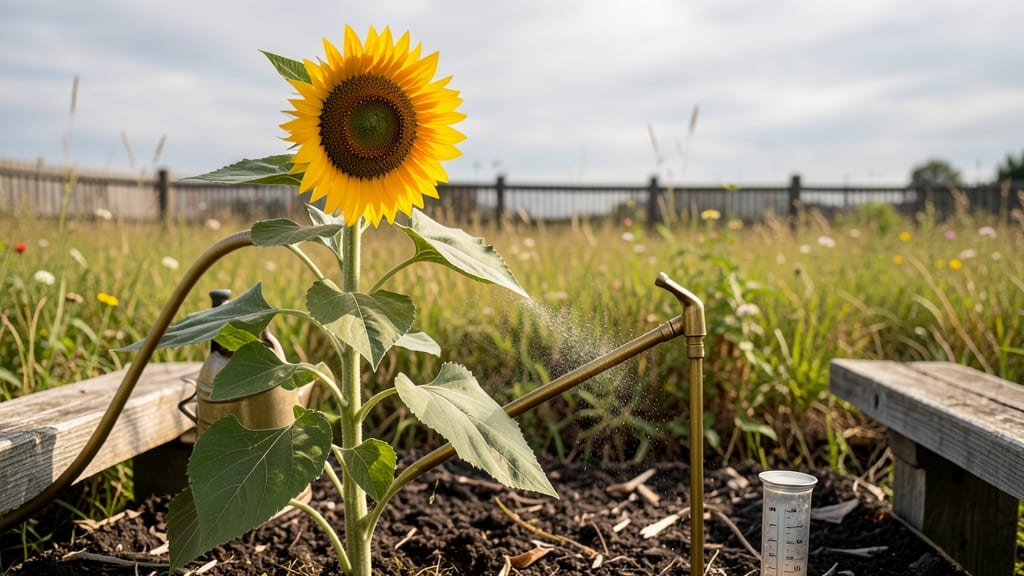
How often to water sunflowers the right way keeps them thriving from seedling to towering bloom—1-2 inches of moisture per week is the magic number for most gardens.
Sunflowers may seem low-maintenance, but their towering growth depends on precise watering—too much or too little can stunt their development or invite disease. Mastering the right watering schedule transforms your garden into a sunflower paradise with blooms reaching their full potential.
Here’s the trick: young plants need consistent moisture, while mature stalks can handle brief dry spells. I’ll break down the exact schedule by growth stage, plus how to adjust for your soil type and climate—because what works in Zone 6a won’t cut it in a desert summer.
You’ll also learn to spot the telltale signs of overwatering (yellowing leaves) or underwatering (wilted stems) so you can fix problems before they derail your harvest. Ready to grow sunflowers that shatter expectations?
Optimal watering frequency for sunflowers by growth stage
Watering sunflowers isn't a one-size-fits-all task—each growth stage demands a unique approach to moisture. Young seedlings need consistent dampness, while mature plants crave deep but infrequent hydration. Understanding these shifts prevents root rot or stunted growth, ensuring your sunflowers reach their towering potential.
Your sunflower's watering needs evolve alongside its height. A 1-inch seedling requires daily checks, while a 10-foot giant thrives with weekly deep watering. The key lies in monitoring soil moisture and adjusting for weather extremes—whether it's a scorching heatwave or unpredictable rainfall.
| Growth Stage | Watering Frequency | Soil Moisture Check | Adjustments |
|---|---|---|---|
| Seedling (0-4 weeks) | Every 1-2 days | Top 1 inch dry | Use shallow tray for even moisture |
| Vegetative (4-8 weeks) | Every 3-5 days | Top 2-3 inches dry | Deep water at base, avoid wetting leaves |
| Flowering (8-12 weeks) | Every 5-7 days | Top 3-4 inches dry | Reduce frequency if blooming |
| Mature (12+ weeks) | Every 7-10 days | Top 4+ inches dry | Water deeply during drought |
During the seedling stage (first 4 weeks), sunflowers need daily moisture checks. Let the top 1 inch of soil dry between waterings to prevent fungal diseases. Use a spray bottle for delicate sprouts and avoid overhead watering to reduce leaf mildew risks.
As your sunflowers enter the vegetative stage (4-8 weeks), shift to deep watering every 3-5 days. Focus on soaking the root zone—aim for 1-2 gallons per plant—to encourage strong root development. This stage is critical for stem thickness, which supports their eventual height.
When flower buds form (8-12 weeks), reduce watering to every 5-7 days. Overwatering now can dilute nutrient uptake and cause bud rot. Instead, let the top 3-4 inches dry out before watering again. Morning watering is ideal to prevent evening moisture from lingering on petals.
Mature sunflowers (12+ weeks) are drought-tolerant but still need deep watering every 7-10 days. Check soil moisture by inserting a finger 4 inches deep. If dry, water until moisture reaches 6 inches down. This supports seed development and prevents premature wilting.
Adjust your watering schedule based on weather conditions. During heatwaves, increase frequency to every 2-3 days and water early in the morning to reduce evaporation. After heavy rain, skip watering for 3-4 days to avoid waterlogged soil, which suffocates roots.
For container-grown sunflowers, water daily during hot weather since pots dry out faster. Use well-draining soil and terracotta pots to prevent root rot. Add mulch around the base to retain moisture and regulate soil temperature, especially in arid climates.
Pro tip: Use a moisture meter for accuracy, especially in sandy soil (dries faster) or clay soil (retains moisture longer). This tool eliminates guesswork and ensures your sunflowers get just the right amount of water at every stage.
By tailoring your watering routine to each growth phase, you’ll cultivate healthier stalks, larger blooms, and stronger seeds. Remember, sunflowers are resilient—consistency is more important than perfection. With this schedule, your garden will soon be adorned with sunflower giants reaching for the sky! 🌻
Signs of overwatering vs underwatering in sunflowers
Sunflowers are surprisingly sensitive to water balance—too much can suffocate roots, while too little stunts growth. Learning to read their visual cues saves time and ensures those towering stalks reach their potential. Here’s how to spot the difference between water stress and ideal hydration.
Start by inspecting the soil moisture and leaf condition. Healthy sunflowers have firm stems and crisp leaves, while stressed plants show yellowing or wilting.
Overwatered sunflowers often develop mushy stems and foul-smelling soil, signaling root rot. Underwatered plants, on the other hand, droop dramatically and feel dry and brittle.
Pro Tip: Stick your finger 1-2 inches into the soil—if it feels damp but not soggy, you’re on track. If it’s bone-dry, it’s time to water; if it’s waterlogged, hold off and improve drainage.
- Yellowing leaves
- Mushy, rotting stems
- Foul-smelling soil
- Slow, stunted growth
- Dry, crispy leaves
- Wilting or drooping
- Brittle stems
- Slow recovery after watering
- Let soil dry out
- Improve drainage
- Avoid watering at night
- Prune affected leaves
- Water deeply in morning
- Mulch to retain moisture
- Adjust watering schedule
- Check soil drainage
If your sunflowers show yellowing leaves or mushy stems, reduce watering immediately. Let the top 2 inches of soil dry out before watering again. For underwatered plants, water deeply in the morning to avoid evaporation and fungal risks.
Mulching with straw or wood chips helps retain moisture and regulates soil temperature.
Pay attention to the growth rate too—sunflowers should grow 1-2 inches per day in ideal conditions. If growth slows or stops, reassess your watering routine. Adjust based on weather conditions: water more frequently during hot, dry spells and less during cool, rainy periods.
Reviving a struggling sunflower often means a combination of proper watering and soil adjustments. If roots are waterlogged, transplant to a well-draining spot and reduce future watering. For drought-stressed plants, a deep soak followed by mulch application can revive them in 3-5 days.
With these visual cues and corrective actions, your sunflowers will thrive—producing bold blooms and tall stalks without the guesswork. Happy gardening! 🌻