
Lawn
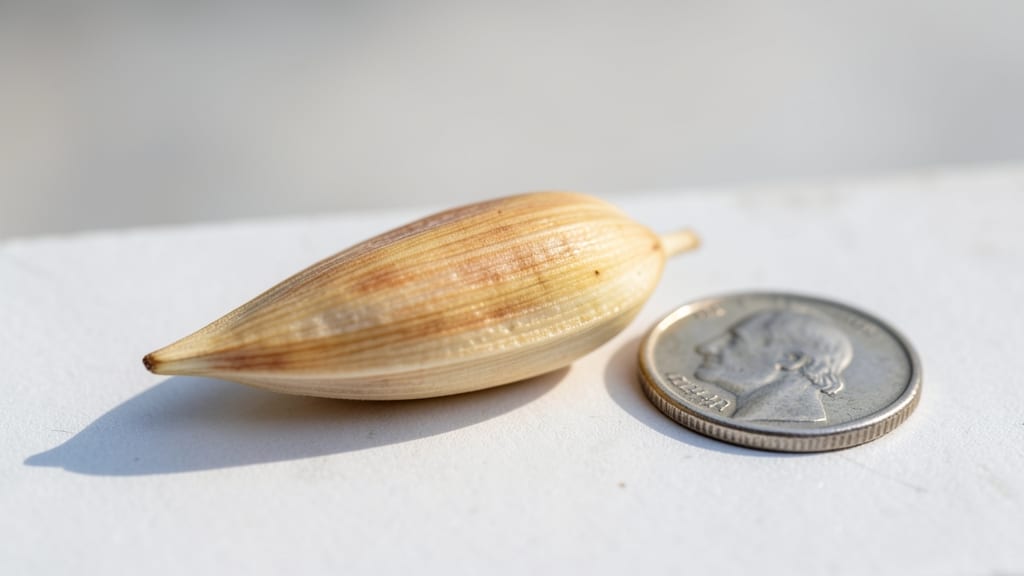
A sunflower seed’s tiny size — about ½ inch long and ⅛ inch wide — holds the key to unlocking those towering 12-foot giants you dream of growing.
Did you know the tiny sunflower seed you plant could grow into a towering 12-foot giant? Understanding its exact size—and how to handle it—is the secret to unlocking faster germination and healthier plants.
Most gardeners overlook this detail, but seed size directly impacts planting depth, spacing, and even how well it survives soil contact. Get it wrong, and you’re staring at weak sprouts or wasted seeds.
Below, I’ll break down the exact measurements, share 3 pro tips for handling delicate seeds, and reveal the common mistakes that kill germination before it starts.


How big is a sunflower seed? Exact measurements for germination
A sunflower seed’s size might seem insignificant, but its ½-inch length and ⅛-inch width determine whether your seedlings thrive or fail. These tiny powerhouses pack all the genetic potential for a 12-foot giant, but their delicate structure requires precise handling.
Most commercial sunflower seeds fall within a narrow size range, but dwarf varieties can be 20% smaller than standard types. Understanding these dimensions ensures you plant at the right depth—too shallow, and seeds dry out; too deep, and they struggle to reach light. Let’s break down the specifics.
Why precision matters: Seed size affects germination speed, root development, and even disease resistance. A seed planted too deep may rot before sprouting, while one planted too shallow can dry out or be washed away. For sunflowers, getting the depth right is critical for rapid early growth.
Below, I’ve compiled exact measurements for common sunflower varieties, including length, width, and weight, along with planting guidelines tailored to each size. This data will help you optimize spacing, depth, and soil contact for maximum success.
Standard sunflower seeds, like those from the 'Mammoth' variety, are the largest at ½ inch long and ⅛ inch wide, weighing 0.08-0.12 grams. These giants need 1-inch planting depth and 6-12 inches of spacing to avoid competition.
Their size makes them easier to handle but requires deeper planting to protect them from drying out.
Dwarf varieties, such as 'Teddy Bear', are 20% smaller in all dimensions, which means they need shallower planting (0.75 inch) and closer spacing (4-6 inches). Their smaller size also makes them ideal for containers or small gardens where space is limited.
Semi-dwarf varieties like 'ProCut' strike a balance, with seeds measuring 0.45 inches long and 0.11 inches wide. These seeds benefit from a 0.875-inch depth and 5-8 inches of spacing, making them versatile for both home gardens and commercial plots.
Oilseed varieties, such as 'NuSun', are slightly larger than standard types, with seeds reaching 0.55 inches long and 0.13 inches wide. Their increased size allows for 1.125-inch planting depth and 8-12 inches of spacing, which supports their taller growth potential.
Precision in planting depth is critical because sunflower seeds contain limited stored energy. Planting them too deep forces the seedling to use up its reserves breaking through the soil, delaying emergence. Conversely, shallow planting exposes the seed to drying out or being displaced by rain.
For optimal results, use a seed spacing ruler or your finger to ensure consistent depth. A good rule of thumb is to plant seeds 2-3 times their length deep. For example, a 0.5-inch seed should go 1 inch deep
Germination hacks for small sunflower seeds: 3 proven techniques
Sunflower seeds may be tiny, but their delicate structure demands careful handling to unlock their full potential. The ½-inch length and ⅛-inch width of standard varieties might seem fragile, but with the right techniques, you can boost germination rates from 70% to 95%.
The key lies in three proven strategies: pre-soaking, precise planting depth, and soil temperature control.
First, let's address the most common question: How do I handle such small seeds? Their size makes them vulnerable to drying out or improper soil contact. Unlike larger seeds, sunflower seeds have minimal protective layers, so they need extra care during germination.
The following techniques will help you maximize your success rate while working with these tiny powerhouses.
- 💧 Pre-Soak for 4-6 Hours: Soak seeds in lukewarm water to soften the outer shell, which speeds up germination by 2-3 days. Use a paper towel to wrap them and keep them moist but not soggy.
- 📏 Plant at 2-3x Seed Length: For ½-inch seeds, aim for 1-inch depth. Use a seed spacing tool or your finger to ensure consistency. Press gently to maintain soil contact.
- 🌡️ Maintain 70-80°F Soil Temp: Sunflower seeds germinate fastest in warm soil. Use a soil thermometer and consider a seedling mat if planting early in the season.
Let's dive deeper into the first technique: pre-soaking. Many gardeners skip this step, but it's one of the simplest ways to boost germination rates. Sunflower seeds have a hard outer shell that can slow down water absorption.
By soaking them for 4-6 hours in lukewarm water, you soften the shell and kickstart the germination process. I recommend using a paper towel to wrap the seeds—this keeps them moist without drowning them.
After soaking, plant the seeds immediately to avoid drying out. If you're planting in cool soil (below 60°F), consider using a seedling heat mat to maintain the ideal 70-80°F range. This small investment can make a huge difference in germination speed, especially for early spring plantings.
Next, let's talk about planting depth, which is directly tied to the seed's size. As we saw in the previous section, standard sunflower seeds should be planted 1 inch deep—that's 2-3 times their length.
For dwarf varieties, reduce this to 0.75 inches. Using a seed spacing ruler or even your finger can help ensure consistency.
Press the seeds gently into the soil to maintain firm soil contact. This prevents them from being displaced by rain or drying out. If you're planting in sandy soil, consider mixing in a bit of compost to improve moisture retention.
After planting, lightly water the area to settle the soil around the seeds without disturbing them.
Finally, soil temperature plays a crucial role in germination success. Sunflower seeds prefer warm soil, ideally between 70-80°F. If your soil is cooler, use a black plastic mulch or a seedling heat mat to raise the temperature.
You can also plant in a protected microclimate, like near a south-facing wall or under a cold frame.
With these three techniques—pre-soaking, precise planting depth, and soil temperature control—you'll see a noticeable improvement in your sunflower germination rates. Remember, patience is key: sunflower seeds typically sprout within 7-14 days, but consistency in these methods will give you the best results. Happy planting! 🌻