
How To
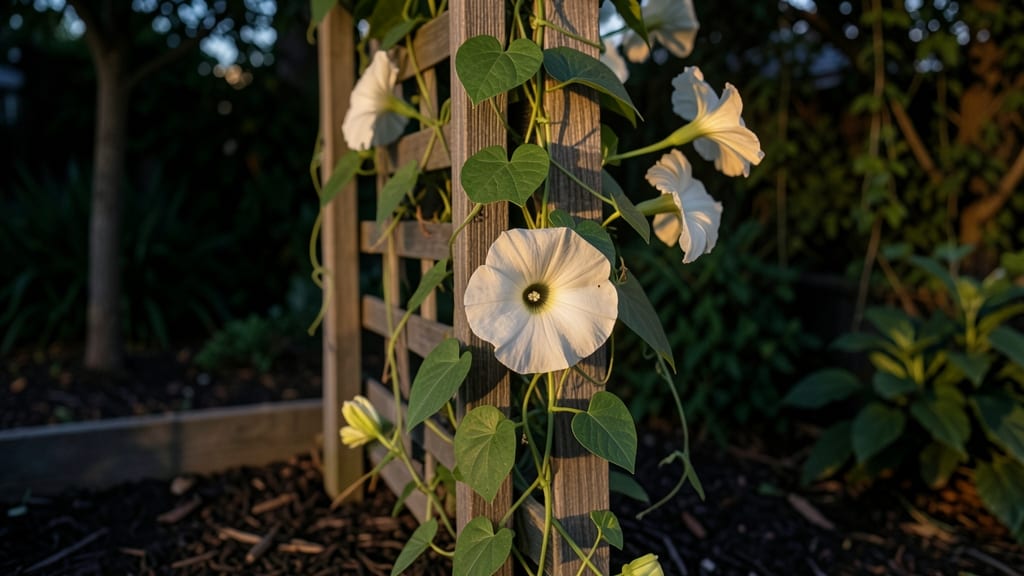
A moonflower 🌙 can grow between 10 and 20 feet tall, turning your garden into a fragrant vertical wonderland if you give it the right support.
If you’ve ever dreamed of a lush, fragrant privacy screen or a dramatic vertical garden, the moonflower (Ipomoea alba) could be your perfect plant—but first, you need to know how tall it will grow to plan your trellis or support structure correctly.
This fast-growing vine thrives in full sun and can shoot up 6 to 12 inches per day, so choosing the right trellis or fence is key to managing its impressive height without sacrificing its stunning blooms.
In this guide, I’ll cover everything from expected growth rates to the best trellis options and pruning tips to keep your moonflower climbing beautifully—no matter how tall it gets.


Moonflower growth height: expected vining length & speed
The moonflower (Ipomoea alba) is a fast-growing annual vine that can reach stunning heights between 10 to 20 feet in a single growing season. If you're planning a privacy screen or trellis garden, understanding its growth potential is key to designing the right support structure.
This dramatic climber thrives in warm climates and can transform bare walls or fences into lush, fragrant canopies within weeks.
What makes moonflowers so exciting is their rapid growth rate—they can shoot up 6 to 12 inches per day under ideal conditions. That means a vine can grow over 10 feet in just 30 days!
However, their final height depends on several factors, including sunlight exposure, soil quality, and your local climate. Let’s break down what influences their vertical reach so you can estimate how tall your moonflower will grow.
🌱 Key Growth Factors:
- Sunlight: Full sun (6+ hours daily) maximizes height and flowering.
- Soil: Well-draining, rich soil with compost encourages faster growth.
- Climate: Warmer zones (USDA 9-11) see taller vines than cooler areas.
- Support: Strong trellises prevent sagging, allowing vines to reach full potential.
Here’s a quick reference for moonflower growth expectations based on your growing conditions:
| Growth Factor | Expected Height Range | Growth Speed | Ideal Conditions |
|---|---|---|---|
| Full Sun Exposure | 15–20 ft | 6–12 in/day | 6+ hours direct sun |
| Partial Sun | 10–15 ft | 3–6 in/day | 3–5 hours sun |
| Cool Climates (USDA 6-8) | 10–14 ft | 4–8 in/day | Longer growing season |
| Warm Climates (USDA 9-11) | 18–20 ft | 8–12 in/day | Hot summers, no frost |
| Container Growth | 8–12 ft | 3–6 in/day | Large pot (15+ gallons) |
If you’re growing moonflowers in containers, expect slightly shorter vines (8–12 feet) because root growth is restricted. However, with a large pot (15+ gallons) and regular pruning, you can still achieve impressive vertical coverage.
For ground planting, moonflowers will naturally climb to their full potential, often exceeding 15 feet if given proper support.
One of the most exciting aspects of moonflower growth is how quickly they cover trellises and fences. In just 4–6 weeks, a well-supported vine can create a dense, fragrant privacy screen. To encourage this rapid growth, focus on consistent watering and regular fertilization during the growing season.
A balanced fertilizer (like 5-10-10) applied every 4–6 weeks will give your vines the nutrients they need to reach their maximum height.
For gardeners in cooler climates (USDA zones 6–8), moonflowers may grow more slowly but can still reach 10–14 feet if planted early and given a long growing season. In these areas, start seeds indoors 4–6 weeks before the last frost to give your vines a head start.
If you live in a shorter growing season, consider growing moonflowers as annuals each year rather than trying to overwinter them.
To estimate your moonflower’s height, consider these real-world examples:
- In Florida (USDA 10), moonflowers often exceed 18 feet in a single season.
- In California (USDA 9), vines can reach 20 feet with consistent care.
- In New York (USDA 6), expect 10–14 feet unless you extend the season with row covers.
If you’re planning a moonflower privacy screen, aim for a trellis or fence that’s at least 15–20 feet tall to accommodate full growth. For smaller spaces, prune vines regularly to keep them under control while still enjoying their stunning evening blooms.
With the right conditions, your moonflower could become the showstopper of your garden—and the envy of your neighborhood!
🌿
Best trellis & support options for moonflower vines
With moonflowers capable of reaching 15–20 feet, choosing the right trellis or support structure is essential to prevent sagging, breakage, and maximize their dramatic vertical growth.
Since these vines are heavy when fully bloomed, your support system must be sturdy enough to handle 10+ pounds of weight per vine once mature.
For privacy screens, I recommend installing a 15–20 foot tall trellis or fence to accommodate full growth. If you’re working with limited space, opt for a 10–12 foot structure and prune regularly to control height.
The key is selecting materials that won’t rot quickly, like powder-coated metal, cedar, or PVC, which resist moisture and pests.
Here’s a comparison of the best trellis and support options for moonflowers, including their pros, cons, and ideal use cases:
| Support Type | Max Height | Weight Capacity | Best For | DIY Difficulty |
|---|---|---|---|---|
| Metal Trellis (Powder-Coated) | 20+ ft | Heavy vines | Privacy screens, fences | Moderate |
| Cedar Arbor | 15–20 ft | Medium-heavy | Vertical gardens, pergolas | Hard |
| PVC Pipe Trellis | 12–15 ft | Light-medium | Containers, small spaces | Easy |
| Chain Link Fence | 6–10 ft | Heavy (if reinforced) | Budget privacy screens | None (pre-built) |
| DIY Wooden Lattice | 10–15 ft | Medium | Rustic gardens, trellises | Moderate |
For DIY solutions, I love using PVC pipes or wooden stakes for smaller gardens. Simply insert 10-foot PVC pipes into the ground, space them 3–4 feet apart, and weave twine between them for the vine to climb.
This method is lightweight, affordable, and easy to assemble. If you’re aiming for a privacy screen, a chain-link fence or metal trellis is your best bet—just ensure it’s reinforced with stakes or concrete footings to prevent leaning.
When installing any trellis, space your support structures 3–5 feet apart to distribute the vine’s weight evenly. Moonflowers have twining stems, so they’ll naturally spiral around any vertical surface. If you notice sagging, add horizontal crossbars every 3–4 feet to provide additional support.
For container growth, use a 5-gallon bucket or hanging basket with a trellis to guide the vine upward without taking up ground space.
Pro tip: If you’re planting moonflowers near a fence or wall, attach a wire mesh or netting to the surface first. This gives the vine something to grip immediately, preventing it from flopping over until it’s strong enough to support itself.
With the right trellis, your moonflower will climb beautifully, creating a fragrant, lush canopy that’s perfect for evening strolls.
🌿