
Light Requirements
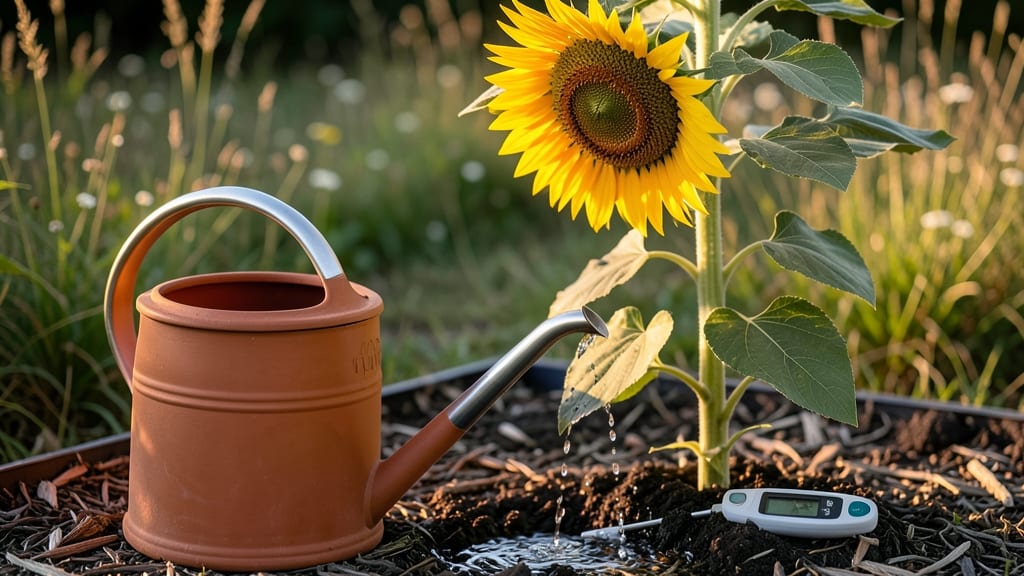
Your sunflowers’ water requirements are the secret to growing those towering 🌻 blooms—too little and they wilt, too much and their roots rot.
Picture this: you’ve just planted your seeds in April, and the soil is still cool. Watering them like thirsty desert plants will drown the tender sprouts before they even stand tall.
But skip the water entirely, and you’ll be left with stunted, sad stalks that never reach their full glory.
Here’s the truth: sunflowers need deep, infrequent watering—about 1-2 inches per week—but the timing and technique change as they grow. Germination needs gentle moisture, flowering demands consistency, and mature plants can handle dry spells once their roots run deep.
In this guide, I’ll break down the exact schedule for each stage, plus how to spot overwatering (yellowing leaves!) or underwatering (drooping heads) so you can keep your sunflowers thriving from seed to harvest.
How much water do sunflowers need by growth stage?
Sunflowers are thirsty giants that need consistent moisture to support their rapid growth, but their water needs change dramatically as they mature. Germination demands precise hydration, while mature plants develop deep roots that make them surprisingly drought-resistant.
Understanding these stages helps you avoid wilting seedlings or rotting roots—both deadly for sunflowers. Let’s break down their water needs by growth phase so you can keep your plants thriving from seed to sun.
Newly planted sunflower seeds require daily moisture checks to prevent drying out, but overwatering at this stage can suffocate tender roots. Once seedlings emerge, their shallow root systems need frequent light watering—think of it like giving them a daily sip rather than a deep drink.
As they grow taller, their roots dive deeper, reducing the need for frequent watering but increasing the importance of deep soaking to encourage strong root development.
Here’s the critical rule: Sunflowers hate soggy soil but despise drought even more. The key is balancing frequency and depth at each stage. Let’s dive into the exact watering schedule your sunflowers need to reach their full, glorious height.
| Growth Stage | Water Frequency | Water Depth | Key Notes |
|---|---|---|---|
| Germination (0-7 days) | Daily (keep soil moist) | ¼ inch per watering | Use spray bottle or fine mist; avoid flooding |
| Seedling (1-3 weeks) | Every 2-3 days | ½ inch per watering | Water at soil level to prevent stem rot |
| Vegetative (4-8 weeks) | Every 3-5 days | 1-2 inches deep | Encourages deep root growth; mulch to retain moisture |
| Flowering (9-12 weeks) | Every 5-7 days | 2-3 inches deep | Critical for bud development; reduce if rain occurs |
| Maturity (13+ weeks) | Every 7-10 days | 3+ inches deep | Drought-tolerant; water only if soil is bone-dry |
The flowering stage is the most critical period for watering—this is when your sunflowers are putting all their energy into producing those iconic blooms. Underwatering now can cause buds to drop before they open, while overwatering may lead to fungal diseases like powdery mildew.
Aim for deep watering every 5-7 days, adjusting based on rainfall. If your region experiences hot, dry summers, you may need to water more frequently, but always check soil moisture first.
Once sunflowers reach maturity, their deep taproots make them surprisingly resilient to drought. Established plants can go 10-14 days without water in well-draining soil, especially in cooler climates.
However, if you’re growing dwarf varieties or in container gardens, they’ll still need regular watering since their root systems are more limited. Always prioritize deep, infrequent watering over shallow, frequent sessions to encourage strong root development.
Mulching is your secret weapon for maintaining consistent moisture levels. Apply a 2-3 inch layer of mulch around the base of your sunflowers (but keep it 6 inches away from the stem to prevent rot). Organic mulches like straw or wood chips help retain soil moisture, reduce evaporation, and regulate soil temperature—all of which contribute to healthier, happier sunflowers. Plus, it saves you time by cutting down on how often you need to water.
One of the biggest mistakes gardeners make is watering at the wrong time. Sunflowers need morning watering to allow foliage to dry quickly, preventing fungal diseases. Evening watering leaves moisture on leaves overnight, creating the perfect conditions for mildew.
If you must water in the evening, do it before sunset and avoid overhead sprinkling. For container-grown sunflowers, check soil moisture daily—containers dry out much faster than garden beds.
Regional climate plays a huge role in sunflower water needs. In arid climates like Arizona
Smart watering schedule for sunflowers: when and how to water
Timing your watering is just as important as how much you give your sunflowers. Watering at the wrong time can lead to fungal diseases or wasted moisture, while the right schedule ensures deep root growth and vibrant blooms.
Morning watering is ideal because it allows foliage to dry before evening, reducing the risk of powdery mildew—a common sunflower nemesis.
For young seedlings, keep the soil consistently moist but never soggy. Use a spray bottle or gentle watering can to avoid disturbing the delicate sprouts. Once your sunflowers reach 6 inches tall, switch to deep watering—soaking the soil 6-8 inches deep—to encourage strong root development.
This mimics natural rainfall and prevents shallow roots that can't support those towering stems.
- 1 Seedling Stage (0-3 weeks): Water lightly daily to keep soil consistently moist. Use a mist sprayer to avoid displacing seeds.
- 2 Vegetative Growth (3-6 weeks): Water deeply every 3-4 days (1-2 inches per week). Focus on the root zone, not the leaves.
- 3 Flowering Stage (6-10 weeks): Increase frequency to every 2-3 days in hot climates. Test soil moisture—if top 2 inches are dry, it's time to water.
- 4 Mature Stage (10+ weeks): Reduce to weekly deep watering unless in drought conditions. Mature plants store water in their stems.
💧 Pro Tip: Always water at the base of the plant to avoid wetting leaves, which attracts pests.
Adjust your schedule based on your climate. In hot, dry regions like Arizona or California, you may need to water daily during peak summer months, while cooler areas like the Pacific Northwest can stretch watering to every 5-7 days once established.
Always check the soil moisture—stick your finger 2 inches down; if it's dry, water.
Mulching is a game-changer for sunflowers. Apply a 2-3 inch layer of mulch (straw or wood chips) around the base to lock in moisture and regulate soil temperature.
This reduces evaporation by up to 30%**, meaning fewer watering sessions and happier plants. Just keep the mulch away from the stem to prevent rot.
Container-grown sunflowers dry out faster than in-ground plants. Check soil moisture daily in summer and water when the top inch feels dry. Use a self-watering pot or add a moisture meter to avoid guesswork. Remember, sunflowers in containers need 20-30% more water than their in-ground counterparts.
Never water at night or late afternoon—this traps moisture on leaves, inviting fungal infections. Instead, aim for early morning watering (6-9 AM) when temperatures are cooler and evaporation is minimal. Your sunflowers will thank you with larger blooms and stronger stems that can support their own weight.