
Vegetables
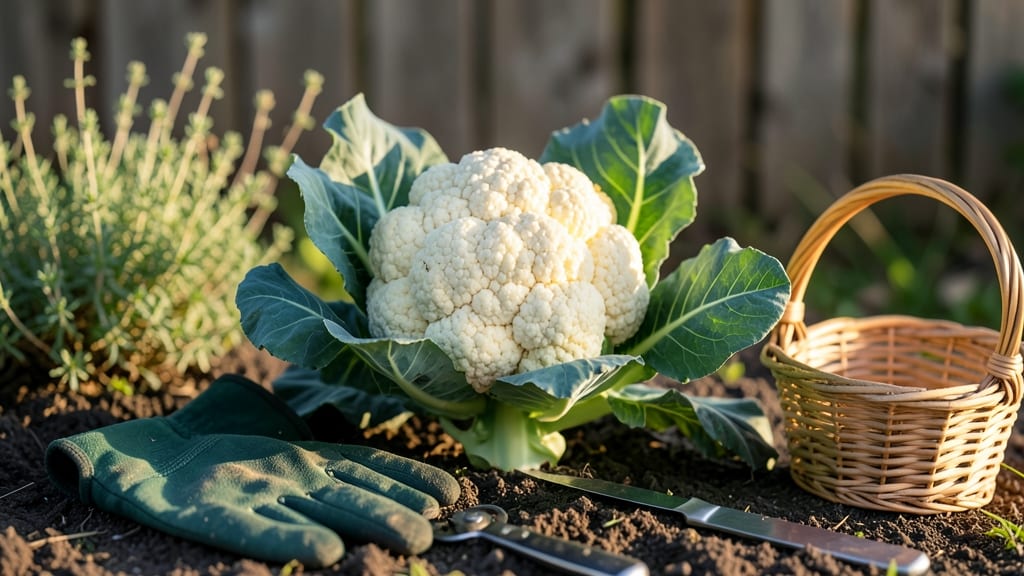
To pick cauliflower at the perfect moment, watch for a firm, compact head with a creamy white hue—this is when flavor and texture peak.
One wrong day, and your 🥬 turns bitter or woody, ruining months of effort. I’ve seen gardeners miss the window by just a few days, only to end up with tough curds that taste like cardboard. The key? Mastering the curd color and stem snap test before it’s too late.
You’ll learn how to spot ideal maturity—when the head reaches 6–8 inches and the outer leaves start yellowing—along with how sunlight, temperature, and even variety (purple or orange!) change the rules.
By the end, you’ll avoid common mistakes like waiting too long or harvesting too early, ensuring every head you pick is tender, flavorful, and ready for the table.


How to identify perfect cauliflower ripeness by curd color and size
Cauliflower ripeness hinges on two key visual cues: head size and curd color. A perfectly ripe head should measure 6–8 inches in diameter with a tight, compact structure.
The color shifts from pale green to a creamy white, signaling peak flavor. I’ve learned that even slight variations—like a yellowish tint—can mean overmaturity or stress.
Sunlight plays a surprising role in color. Too much direct sun can cause green-tinged curds, while partial shade keeps them pure white. My garden’s purple cauliflower varieties, like ‘Graffiti,’ deepen to a rich violet hue at maturity—completely different rules than white types.
These color clues help me avoid tough, bitter harvests.
Don’t ignore the outer leaves either. When they start yellowing or dying back, it’s your plant’s way of saying, “Pick me now!” I’ve seen gardeners wait too long, only to find their cauliflower heads splitting open or turning woody.
The window for perfect harvest is narrow—just 3–5 days between ideal and overripe.
Color-coded maturity is your best friend. White curds should be uniformly creamy, never green or brown. Pale yellow edges mean it’s past its prime. I keep a small chart by my garden gate to compare shades—it’s saved me from multiple bitter harvests. For orange varieties like ‘Cheddar,’ the color actually lightens as it matures!
Head size matters just as much. A 6-inch head is ideal for most varieties, but dwarf types like ‘Snowball Y’ stay perfect at 4–5 inches. I measure with a tape measure (yes, really!) to track growth.
Oversized heads often develop a loose, stringy texture—a common mistake I see in beginner gardens.
Temperature also affects ripeness. Cool nights (50–65°F) keep cauliflower sweet and tender, while heat stress causes premature bolting or off-flavors. My garden’s late-summer harvests often suffer from this—now I prioritize shade cloth during peak heat. The right conditions make all the difference in texture and taste.
Here’s my foolproof checklist for perfect ripeness:
- Head size: 6–8 inches (or variety-specific range)
- Color: Uniform creamy white (no green/yellow/brown)
- Texture: Firm and compact (no loose florets)
- Leaves: Yellowing outer leaves (not still lush green)
- Stem: Thick and sturdy (not hollow or fibrous)
| Maturity Stage | Head Size | Curd Color | Leaf Condition | Action |
|---|---|---|---|---|
| Early | 3–5 inches | Pale green | Lush green | Wait 1–2 weeks |
| Ideal | 6–8 inches | Creamy white | Yellowing outer leaves | Harvest immediately |
| Overripe | 8+ inches | Yellow/brown edges | Dying back | Use quickly or discard |
| Stressed | Any size | Green-tinged | Wilting | Check soil/water |
I’ve learned that morning harvests are best—curds stay crisp and flavorful. Cut the stem 1–2 inches below the head with a sharp knife. If you see small side buds forming, it’s a sign the plant is ready to bolt. These buds turn bitter fast, so don’t delay!
For purple varieties, the rules flip: deeper color means ripeness. My ‘Graffiti’ cauliflower goes from light lavender to rich violet at peak maturity. Orange types like ‘Cavaliere’ actually lighten to a pale yellow—another trick I use to time harvests perfectly. Variety matters just as much as the basics!
One final tip: Don’t wash cauliflower before storage—moisture speeds up spoilage. I wrap harvested heads in a damp paper towel and store them in the fridge for up to a week. Proper handling keeps that fresh-picked taste, even after harvest. Now I never waste a single head!
The stem snap test: proven method to avoid woody cauliflower
When your cauliflower head looks perfect but the stem feels suspicious, that’s where the stem snap test saves the day. This simple trick tells you whether your curd is ready to harvest or still needs time.
I’ve used it for years to avoid the heartbreak of woody, overripe cauliflower that’s nearly inedible.
The test works by gently bending the stem near the base—if it snaps cleanly with a slight resistance, your cauliflower is ready. But if it bends without breaking or feels spongy, it’s either too early or too late.
Let me walk you through the exact steps so you never guess again.
Overripe cauliflower develops a fibrous, bitter texture. If the stem bends like wet cardboard or smells slightly off, it’s past its prime. Cut it down immediately to prevent the plant from wasting energy on an unusable head.
Start by selecting a healthy-looking head with tightly packed curds. Hold the stem about 1–2 inches from the base between your thumb and forefinger. Apply gentle, even pressure—don’t squeeze too hard, or you’ll bruise the stem. The goal is to feel for resistance, not force a break.
A ready-to-harvest stem will snap cleanly with a sharp, crisp sound—almost like snapping a carrot. The break should be smooth, not jagged. If it snaps with a dull thud or feels mushy, your cauliflower is overripe. This test works best in the morning when stems are firmest.
Common mistakes include testing stems that are too thick (older plants) or too thin (young plants). Always test the main stem, not the smaller side shoots. If multiple stems snap well, harvest all ready heads—cauliflower won’t regrow once cut, so don’t wait for perfection.
Pro tip: Pair the snap test with checking the curd color. A creamy white head with a snap-ready stem is your golden ticket. Purple or orange varieties may need slight adjustments—we’ll cover those in the next section!
Practice this test a few times, and you’ll never waste another harvest again.