
Flowers
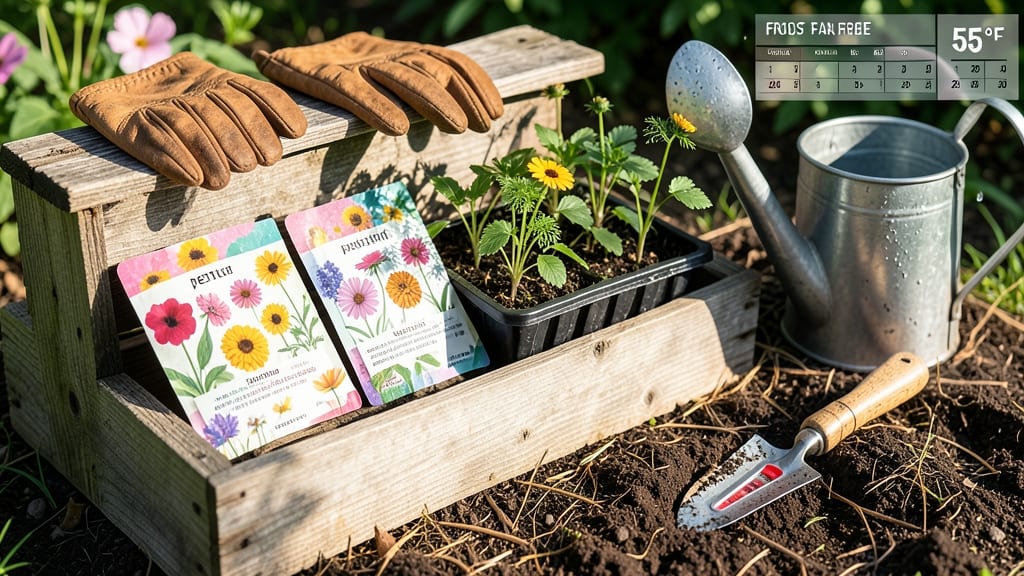
To plant flower seeds in Wisconsin, aim for after the last frost date—typically mid-May in most zones, but earlier near lakes or in urban heat pockets.
Wisconsin’s unpredictable spring weather can leave gardeners wondering: Is it safe to plant those delicate flower seeds yet? Timing is everything—plant too early and frost will kill your blooms, but wait too long and you’ll miss the growing season.
From Zone 3’s chilly north to Zone 5’s milder south, frost dates shift by weeks. I’ll show you how to use the 10-day rule—waiting two weeks after the average last frost—to guarantee your seeds sprout safely.
You’ll also discover the best flowers for direct sowing (like hardy marigolds) versus those that need an early indoor start, plus pro tips to stretch your blooming season until fall.
Wisconsin’s last frost dates by Zone: critical timing for flower seed planting
Wisconsin’s USDA Hardiness Zones 3-5 create a diverse planting landscape, with northern areas like Duluth (Zone 3-4) facing later frosts than southern cities like Milwaukee (Zone 5). Understanding these last average frost dates helps you time flower seed planting perfectly—avoiding frost damage while maximizing your bloom season.
The key? Wait until 10 days after your zone’s average last frost before planting tender seeds outdoors.
For Zone 5 (southern WI), like Madison or Milwaukee, the last frost typically arrives between mid-April and early May. Meanwhile, Zone 4 (central WI), including Green Bay and Stevens Point, sees frosts lingering until late April to mid-May.
In Zone 3 (northwest WI), such as near Duluth or Hayward, gardeners often wait until late May for safety. These dates shift 1-2 weeks earlier in sheltered microclimates (like south-facing slopes) and 2 weeks later in colder valleys.
Here’s how to use this data: If your last frost date is May 15, plant heat-loving flowers like marigolds or zinnias on June 1 (10 days later). For cool-season flowers like snapdragons or pansies, you can start 4-6 weeks before your last frost.
Always check weekly forecasts—late frosts happen even after the average date!
🌱
Pro tip: Use the 10-day rule for all tender annuals (like petunias or geraniums) to avoid frost damage. For hardy perennials (e.g., coneflowers or black-eyed Susans), you can plant seeds 2-4 weeks earlier—they’ll survive light frosts.
Always monitor soil temperature: Most flower seeds need 50°F+ soil to germinate reliably.
Regional variations matter! Lakeside areas (like Green Bay or Lake Geneva) may have 1-2 weeks later frosts due to lake-effect cooling. Urban areas like Milwaukee often warm up faster, while rural farmlands can stay colder longer.
Check your local Cooperative Extension Service for hyper-local data—every 10 miles inland can shift frost dates by 3-5 days.
For indoor seed starting, begin 6-8 weeks before your last frost date. This gives cool-season flowers (like pansies or sweet alyssum) a head start. Use grow lights if natural light is limited—these seedlings need 12-16 hours of light daily to avoid leggy growth.
Harden off seedlings 1 week before transplanting outdoors to toughen them up.
Don’t forget succession planting! In Zone 5, you can plant fast-growing annuals like cosmos or sunflowers every 2 weeks through early June for continuous blooms.
In Zones 3-4, stick to one planting window in June and focus on perennials for long-term color. Always keep a frost cloth handy for late surprises!
🌷
Need extra protection? Row covers can push back frost dates by 2-3 weeks, letting you plant earlier. For high-value flowers (like tulips or dahlias), use black plastic mulch to warm soil faster.
And remember: Evening frost (common in May) is more dangerous than morning frost—always check overnight lows in your planting decisions.
Finally, track your own data! Record your actual frost dates for 2-3 years to adjust future planting. Wisconsin’s climate shifts yearly—what worked in 2023 might not fit 2025. Happy planting, and may your garden bloom frost-free and fabulous!
☀️
Best flower seeds to plant directly in Wisconsin soil (and when to start indoors)
Wisconsin gardeners know timing is everything when planting flower seeds. Direct-sowing saves time and reduces transplant shock, but some flowers thrive better when started indoors. For annuals like marigolds and perennials like coneflowers, the right approach depends on your last frost date and the flower's cold tolerance.
In Wisconsin's USDA Zones 3-5, soil temperatures and frost risks vary dramatically. Northern areas like Duluth (Zone 4) often wait until mid-May for direct sowing, while southern Milwaukee (Zone 5) can plant as early as late April.
Indoor starts give you a 4-6 week head start for heat-loving varieties.
Direct Sowing vs. Indoor Starts in Wisconsin
- ✅ Best for: Cold-hardy flowers
- ✅ Saves time on transplanting
- ✅ Lower risk of shock
Ideal for cosmos, zinnias, and sunflowers planted after last frost.
- ✅ Best for: Heat-loving annuals
- ✅ Longer growing season
- ✅ Controlled conditions
Perfect for petunias, geraniums, and snapdragons started 6-8 weeks before last frost.
- ❌ Frost risk if planted too early
- ❌ Slower growth for late-season blooms
- ❌ Requires space and equipment
- ❌ Transplant shock risk if not hardened off
For cold-hardy annuals, direct sowing is ideal. Marigolds and cosmos can handle Wisconsin's early May soils, while zinnias and sunflowers prefer warmer conditions. Start these indoors 4-6 weeks before your last frost date for earlier blooms.
Perennials like coneflowers and black-eyed Susans benefit from indoor starts in March for Zone 4, or direct sow in April for Zone 5. These tough plants thrive with minimal care once established, making them perfect for Wisconsin gardeners.
Pro tip: Use row covers to extend your direct-sowing window by 2-3 weeks in spring. This protects tender seedlings from late frosts while still allowing early planting of hardy varieties like snapdragons and lobelia.
Remember, Wisconsin's microclimates matter. Urban areas may warm up faster than rural spots, while lakeshore regions can experience delayed springs. Always check your local frost-free date and adjust planting times accordingly for reliable blooms all season long. 🌱