
Flowers
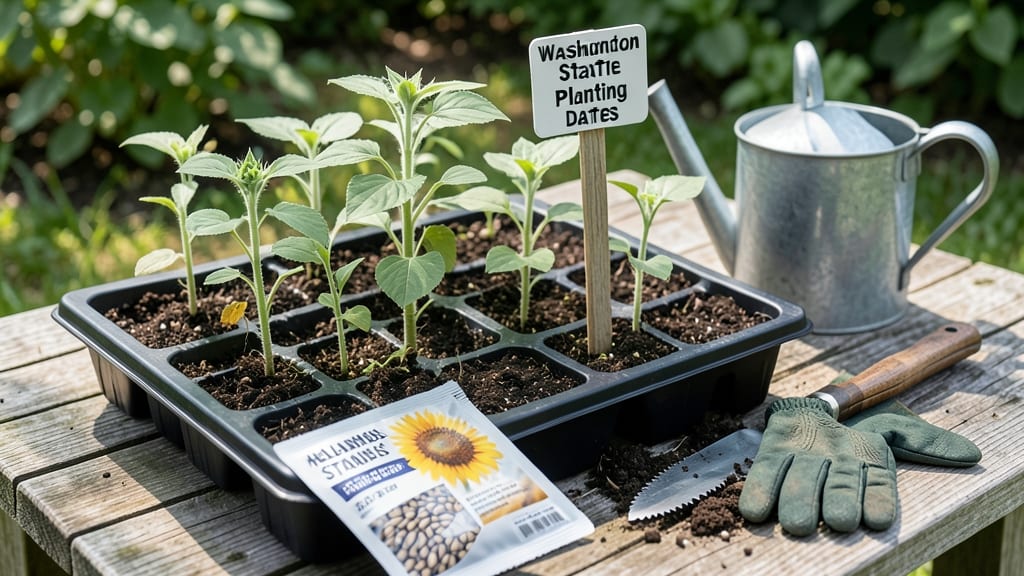
Planting sunflowers in Washington State at the right time means the difference between 12-foot giants and sad, stunted stalks 🌻.
Sunflowers thrive in Washington’s varied climates—but planting them at the wrong time means wilted dreams before they even bloom. Get the exact dates for your microclimate to ensure zero-frost success and towering sunflower stands this season.
Washington’s climate ranges from the cool, damp Puget Sound to the hot, dry Columbia Basin, so timing matters. Most gardeners should aim for late April to early May, but coastal areas can start earlier, while high-altitude spots like the Cascades need a later push.
Below, I break down the best planting windows by region, whether to start seeds indoors or sow directly, and how to stretch your growing season with simple tricks like row covers—so you can enjoy those golden blooms from summer through fall.
Washington State sunflower planting zones: last frost dates by region
Washington’s diverse climate—from the cool Puget Sound to the hot Columbia Basin—means your sunflower planting timeline depends entirely on where you live. Sunflowers (Helianthus annuus) need warm soil (70°F+) and frost-free growing conditions to thrive, so timing is everything.
Get it wrong, and you’ll end up with leggy, frost-bitten stalks instead of those iconic 12-foot giants you’re dreaming of.
Most Washington gardeners fall into USDA Zones 5-8, but even within these zones, microclimates create 2-4 week differences in last frost dates. For example, Spokane (Zone 6) might have its last frost in early May, while Yakima (Zone 7) could see frost-free soil by mid-April.
Meanwhile, Seattle’s marine layer often delays spring warmth until June—so don’t rush those seeds!
Below is your region-by-region guide to last frost dates, ideal planting windows, and how to adjust for high-altitude areas like the Cascades. Pro tip: Use a soil thermometer to confirm warmth before planting—sunflowers won’t germinate in cold soil, no matter how eager you are.
If you’re in the Cascades or high-altitude areas, your growing season is shorter and cooler, so opt for dwarf varieties like ‘Teddy Bear’ (3-4 feet) or ‘Moulin Rouge’ (5-6 feet).
These mature faster and handle cooler soils better than giant varieties like ‘Russian Giant’ (12+ feet), which need at least 90 days of warmth.
For Puget Sound gardeners, the marine layer can create a 10°F temperature swing between morning and afternoon. Plant sunflowers in sheltered microclimates like south-facing slopes or near buildings to capture extra heat.
If frost threatens after planting, cover seedlings with frost cloth or a black plastic mulch to warm the soil faster.
In Eastern WA and the Columbia Basin, where soil warms quickly, you can start planting as early as March for early blooms. However, avoid planting too soon—cold soil (below 50°F) can cause seeds to rot.
Test your soil with a thermometer and wait until it hits 70°F+ for 2+ inches deep.
Pro move: Use black plastic mulch or straw mulch to raise soil temperature by 5-10°F, especially in cooler zones. This trick lets you plant 2-3 weeks earlier without risking frost damage. Just remove the mulch once flowers appear to prevent overheating.
Direct-sow vs. starter plants: timing strategies for Washington’s short growing season
Washington’s short growing season forces tough choices: direct-sow sunflower seeds or transplant seedlings? The answer depends on your soil temperature and last frost date.
Most WA gardeners should direct-sow after May 1, when soil hits 70°F+—but starter plants can give you a 2-week head start in cooler zones.
Sunflowers are fast growers (60-90 days to maturity), but they need warm soil to sprout. Starting seeds indoors in late March lets you transplant after frost, but ‘Moulin Rouge’ and other cold-tolerant varieties can handle direct sowing in April if you use row covers.
Here’s the key decision matrix for Washington gardeners:
Direct-Sowing Sunflowers in WA
Pros
- ✅ Hardier plants (less transplant shock)
- ✅ No indoor setup needed
- ✅ Better for large batches (cheaper seeds)
Cons
- ❌ Risk of late frost if planted too early
- ❌ Slower to mature in cooler zones
- ❌ Requires warm soil (wait for 70°F+)
Transplanting Seedlings in WA
Pros
- ✅ Earlier blooms (2-week advantage)
- ✅ Works in cooler microclimates (e.g., Cascades)
- ✅ Control over spacing (avoid overcrowding)
Cons
- ❌ Higher cost (seedlings vs. seeds)
- ❌ Transplant shock risk if not hardened off
- ❌ Limited variety selection at nurseries
To extend your season, use floating row covers over direct-sown seeds until soil warms. These raise temperatures by 5-8°F, letting you plant 2-3 weeks earlier in Zone 6-7 areas (e.g., Spokane, Wenatchee). Remove covers once sprouts emerge to prevent overheating.
For coastal WA (Zones 7-8), like Seattle or Bellingham, direct-sow as early as mid-April—the marine layer keeps soils cooler longer. Inland areas (e.g., Yakima, Tri-Cities) can direct-sow by late April once nighttime temps stay above 50°F consistently.
Pro tip: Test soil temp with a soil thermometer—sunflowers won’t germinate below 60°F. If your soil is still chilly, opt for transplants or wait another week for direct-sowing. Patience here means healthier stalks and bigger blooms by summer’s end.