
Shrubs
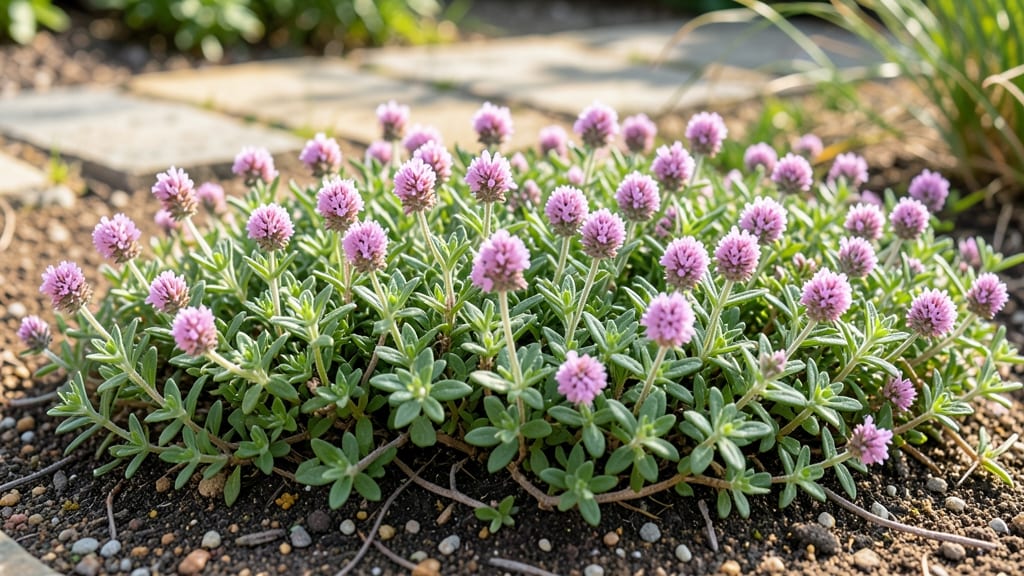
Flowering creeping thyme brings a burst of color and fragrance to sunny gardens 🌿 while demanding almost no effort from you.
Picture this: a drought-proof ground cover that thrives in poor soil, repels pests, and blooms from early summer through fall—all while requiring less water than a lawn. That’s the magic of creeping thyme, a plant that turns problem areas into pollinator hotspots with minimal fuss.
Whether you’re replacing a struggling lawn, lining a pathway, or adding texture to a rock garden, this hardy herb adapts to USDA Zone 6a and beyond. Plant it in March or April, give it full sun, and watch it spread effortlessly—no mowing, no fuss, just year-round beauty.
Inside, you’ll discover the exact planting steps for lush growth, how to prune for more blooms, and which varieties bring the most color to your space. Let’s get your garden smelling like summer with this zero-maintenance superstar.
Why flowering creeping thyme is the ultimate drought-proof ground cover
If you're tired of watering, mowing, and maintaining a traditional lawn, flowering creeping thyme offers a game-changing alternative. This hardy perennial thrives in full sun and drought conditions while requiring minimal care.
Unlike thirsty grass, creeping thyme spreads effortlessly, creating a fragrant, evergreen carpet that blooms with pink, purple, or white flowers from spring to fall.
Native to Mediterranean climates, creeping thyme has evolved to survive with little water and poor soil. Its deep root system taps into moisture deep underground, making it ideal for xeriscaping and low-water gardens.
Plus, it outcompetes weeds naturally, reducing the need for herbicides or constant weeding. For pollinators, it’s a magnet—bees and butterflies adore its nectar-rich blooms.
Here’s why creeping thyme outperforms lawns in sunny, dry climates:
| Feature | Creeping Thyme | Traditional Lawn |
|---|---|---|
| Water Needs | Drought-tolerant (bi-weekly watering) | High (daily watering in heat) |
| Sunlight Needs | Full sun (6+ hours) | Partial shade (4-6 hours) |
| Maintenance | Low (occasional trimming) | High (mowing, fertilizing, weeding) |
| Soil Type | Adaptable (sandy, rocky, poor soil) | Rich, fertile (clay or loam) |
| Pollinator Benefit | High (attracts bees, butterflies) | Low (unless planted with flowers) |
| Cost Over Time | Low (one-time planting) | High (seeds, fertilizer, equipment) |
Beyond its water-saving superpowers, creeping thyme adds texture and color to gardens. Its fragrant foliage releases a citrusy aroma when brushed, perfect for pathways or rock gardens. Unlike lawns, it stays green year-round in USDA Zones 5-9, even during winter dormancy.
For eco-conscious gardeners, creeping thyme is a sustainable choice. It suppresses weeds, reduces soil erosion, and requires no pesticides. Unlike invasive ground covers, it stays contained and won’t overrun your garden.
Plus, its edible leaves add a mild thyme flavor to culinary dishes, making it a multi-functional plant.
If you live in a hot, dry climate, creeping thyme is your secret weapon against high water bills and lawn maintenance. In Zone 7 or higher, it thrives with almost no care, while in cooler zones, it still outperforms most ground covers.
For pollinator-friendly gardens, its continuous blooms provide food for bees from May through September.
Unlike traditional lawns that brown under drought stress, creeping thyme stays lush and vibrant. Its spreading habit fills bare spots instantly, creating a dense, weed-free mat in just one growing season.
For sloped or rocky areas, it’s the only ground cover that holds soil in place without needing irrigation.
I’ve seen creeping thyme thrive in full sun where roses wilt and lavender struggles. Its resilience makes it ideal for mediterranean-style gardens or modern landscapes where low-maintenance plants are prized. Even in urban heat islands, it cools the air slightly while adding visual appeal.
For first-time gardeners, creeping thyme is a foolproof choice. It self-seeds minimally, so you won’t be overrun by volunteers. Just plant it in well-draining soil, give it sunlight, and let it grow.
Within 60 days, you’ll see vibrant blooms and fragrant foliage that rivals any high-maintenance lawn.
Ready to ditch the lawn? Creeping thyme is your ultimate drought-proof solution—beautiful, functional, and effortless to grow. 🌿
How to plant and maintain creeping thyme for maximum blooms
Creeping thyme is one of the easiest plants to grow, but a few key steps will ensure your patch stays lush, fragrant, and blooming from early summer through fall.
Start by choosing the right location—this plant thrives in full sun (6+ hours daily) and well-draining soil, making it perfect for rocky or sandy areas where other plants fail.
Unlike fussy annuals, creeping thyme is drought-tolerant once established, but proper planting sets the foundation for vibrant growth. I’ll walk you through the exact process, from soil prep to pruning, so you can enjoy purple, pink, or white blooms year after year with almost no effort.
- 📍 Test soil pH (6.0–7.5 ideal) and amend with sand or gravel if clay-heavy.
- ⏳ Plant after last frost (March–April in Zone 6a) when soil warms to 50°F+.
- 🌞 Space plants 12–18 inches apart for full coverage in 1–2 seasons.
- 💧 Water deeply but infrequently—soak roots, then let soil dry between waterings.
- ✂️ Prune after blooming to encourage dense growth and prevent woody stems.
Begin with well-draining soil—creeping thyme hates soggy roots, so mix in compost or coarse sand if your garden holds moisture. Dig holes twice as wide as the root ball and space them 12–18 inches apart for a carpet-like effect.
If planting in rock gardens or slopes, thyme’s shallow roots will grip the soil naturally, preventing erosion.
Watering is where creeping thyme earns its low-maintenance reputation. After planting, keep soil moist for 2 weeks to help roots establish. Once settled, reduce watering to every 7–10 days—more in summer heat, less in winter.
The key? Water deeply in the morning to avoid fungal issues and encourage deep root growth.
Pruning is your secret weapon for more blooms and denser foliage. Trim back 1/3 of the plant right after flowering (late summer) to promote fresh growth. Use sharp shears and cut just above a leaf node to avoid leaving stubs.
For culinary thyme, harvest stems in the morning when oils are highest—just snip 2–3 inches above the base to keep the plant bushy.
With these simple steps, your creeping thyme will spread into a fragrant, pollinator-friendly carpet that outshines traditional lawns. The best part? Once established, it needs almost no care—just sun, occasional trims, and the occasional glass of lemonade to enjoy your hard work. 🌿