
Flowers
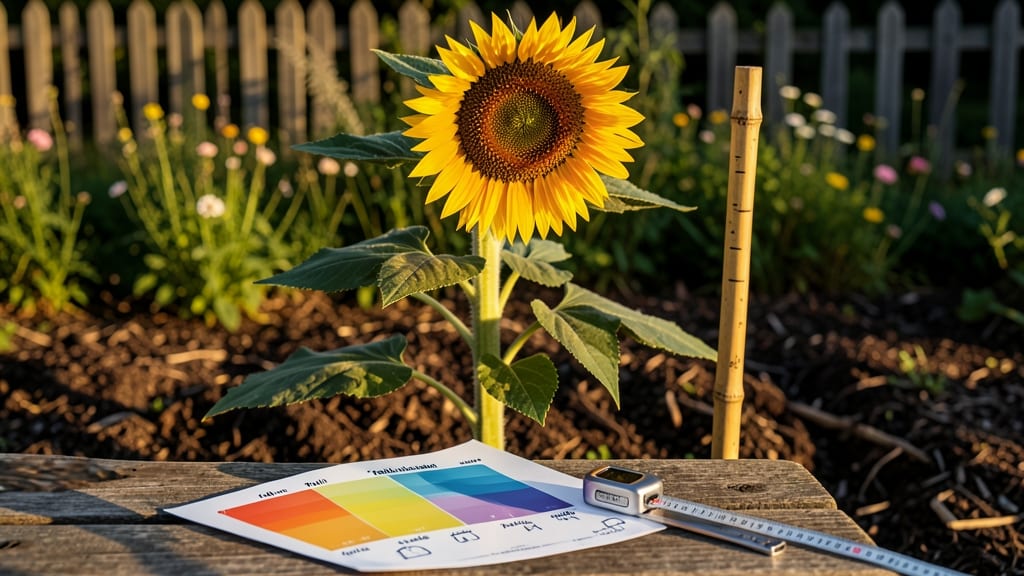
How much sun do sunflowers need to thrive? They require 6 to 8 hours of direct sunlight daily to grow tall and produce those iconic blooms 🌻—less light means fewer flowers and weaker stems.
Picture this: you’ve just planted your sunflower seeds in April, dreaming of a towering summer display. But by July, your plants are stretching awkwardly toward the sky, leaves pale and stems thin. That’s the classic sign of insufficient light—a problem that’s easier to fix early than after the fact.
Why does sunlight matter so much? Sunflowers are powerhouses that convert light into energy for growth and blooming. Skip the full-sun requirement, and you’ll end up with leggy plants that flop over or produce tiny, underwhelming flowers.
But here’s the good news: with the right placement and a few simple adjustments, even partial shade can work—if you know the tricks.
In this guide, I’ll break down exactly how much sun sunflowers truly need, how to spot light deficiencies, and what to do if your garden isn’t getting enough. You’ll leave here with a clear plan to grow sunflowers that reach for the sky—and stay strong doing it.

Sunflower sun requirements: the science behind 6+ hours of direct sunlight
Sunflowers (Helianthus annuus) are nature’s solar panels, converting sunlight into energy through photosynthesis at an astonishing rate. Their massive leaves and towering stems demand 6-8+ hours of direct sunlight daily to produce those iconic blooms.
Without enough light, they’ll stretch toward the sun like a starving child, growing leggy stems and tiny, underwhelming flowers. This isn’t just about aesthetics—it’s about survival and reproduction.
The biological imperative behind sunflower sun needs starts with their chlorophyll. Sunflowers pack more of this light-absorbing pigment than most plants, allowing them to soak up blue and red wavelengths efficiently. These wavelengths drive flower development and seed production.
In partial shade, photosynthesis slows, leading to weaker stems that can’t support those heavy flower heads—often resulting in snapped stems or flopped blooms.
But here’s the twist: not all sunflowers are created equal. Dwarf varieties like ‘Teddy Bear’ can tolerate 4-6 hours of sun, while giant varieties like ‘Russian Giant’ demand 8+ hours to reach their full 10-16 foot potential.
The difference? Genetics dictate how efficiently they convert light into growth. Even within the same species, sunflower cultivars vary in their light tolerance thresholds, making variety selection critical for your growing conditions.
Climate plays a sneaky role in sunflower sunlight needs. In desert regions like Arizona or Nevada, sunflowers receive intense UV radiation with 12+ hours of daylight in summer. Here, they thrive with morning sun and afternoon shade to prevent scorching.
Meanwhile, in temperate zones like the Pacific Northwest, 6-8 hours of summer sun (June-August) is often sufficient because the light is less harsh. The key is light intensity, not just duration.
Sunflowers also track the sun (heliotropism) as seedlings, turning their faces eastward at dawn and westward by dusk to maximize energy absorption. This behavior stops once the flower bud forms, but it’s a clear sign they’re light-hungry.
If your sunflowers aren’t tracking or are growing in a north-facing garden, supplement with reflective surfaces like white walls or mirrors to bounce extra light onto their leaves.
Partial shade can trick sunflowers into thinking they’re in a low-light environment, triggering a survival response: they grow taller and thinner to reach sunlight, but at the cost of structural integrity. This is why leggy stems and small flowers are red flags.
Even 6 hours of partial shade (e.g., dappled light under trees) can reduce flower size by 30-50% compared to full sun. For container-grown sunflowers, rotate pots weekly to ensure even light exposure on all sides.
In USDA Zones 3-5, where summers are shorter, prioritize early-maturing varieties (e.g., ‘ProCut’ or ‘Islander’) to ensure they get enough <
How to adjust sunflower care when sunlight is limited (or too intense)
Not all gardens get the 6+ hours of direct sunlight sunflowers crave. If your space has partial shade or even too much scorching sun, don’t toss those seeds just yet. With smart adjustments, you can still coax healthy blooms—even in tricky light conditions.
The key lies in understanding how to supplement natural light and protect delicate stems when the sun gets too intense.
For shady spots, focus on reflective surfaces and container mobility. Place pots on wheels near south-facing windows or use mirror panels to bounce extra light onto your plants.
Even a 30-minute daily rotation can make a difference in stem strength. Meanwhile, intense sunlight demands shade strategies like drip irrigation and mulching to keep roots cool.
⚠️ callout warning ⚠️
Sunflowers in full sun need deep, infrequent watering—not daily shallow drinks. Overwatering leads to root rot and leaf scorch, especially when paired with intense afternoon sun. Always check soil moisture 2 inches down before watering. Morning watering is critical to reduce evaporation and fungal risks.
Fix: Use drip irrigation with a timer to deliver 1 inch of water weekly (adjust for clay soil). Mulch with straw or wood chips to retain moisture and cool roots.
When sunlight is limited, prioritize dwarf varieties like 'Teddy Bear' or 'Moulin Rouge', which tolerate 4-6 hours of sun. Pair them with tall plants like corn or sunflowers themselves to create a natural windbreak that reflects extra light.
For containers, rotate pots weekly so all sides get even exposure. Even a small balcony with south-facing access can work if you move pots to follow the sun’s arc.
Protecting sunflowers from too much sun starts with shade cloth. Use 30-50% shade fabric during peak afternoon hours (12 PM–4 PM) to block 90°F+ temperatures. Secure it 3 feet above plants to allow airflow.
Pair this with white mulch, which reflects up to 30% of sunlight away from soil. For extreme heat, mist leaves lightly in early morning to boost humidity without promoting disease.
Adjust your watering schedule based on sunlight extremes. In low-light conditions, water every 3-4 days to prevent stress. Under scorching sun, water deeply every 2 days but avoid wetting foliage.
Always water at soil level to keep leaves dry. For container sunflowers, use self-watering pots to maintain consistent moisture without overdoing it.
Finally, fertilize wisely when adjusting for light. In shady spots, use a balanced 10-10-10 fertilizer every 4 weeks to compensate for slower growth. Under intense sun, switch to a low-nitrogen, high-phosphorus blend (like 5-10-10) to encourage root development and flower production.
Always apply fertilizer in the early morning to avoid leaf burn.
With these tweaks, your sunflowers can thrive—whether basking in full sun or stretching toward reflective surfaces in a shady corner. The secret? Observe, adapt, and protect—just like a seasoned gardener would! 🌱