
Plants
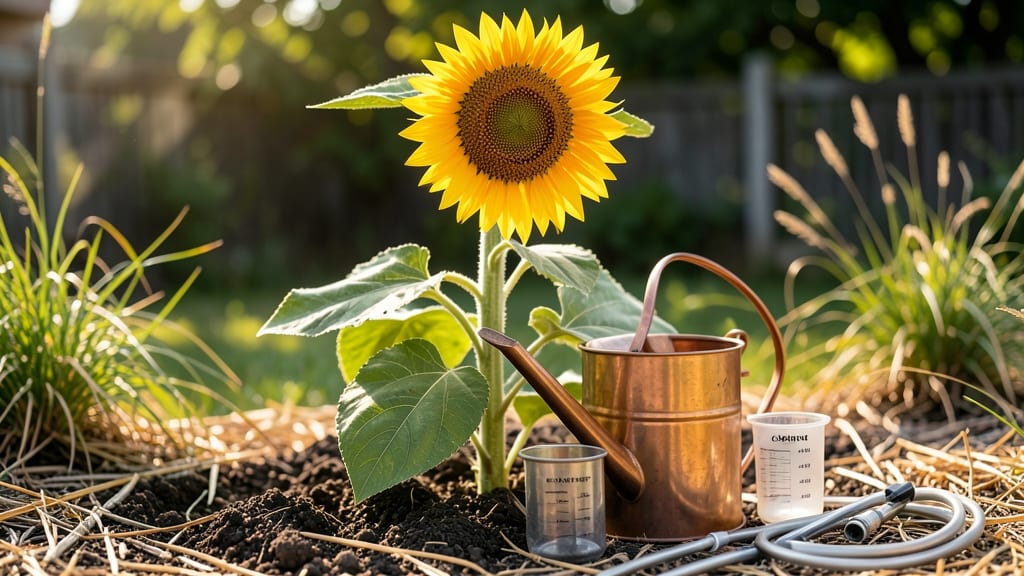
A sunflower plant needs about 1-2 inches of water per week once established, but the real secret is how you deliver it—deep soaks that encourage strong roots, not light sprinkles that leave the soil thirsty.
Picture this: you’ve just planted your 🌻 seeds in April, and the soil feels like a sponge. Too much water now drowns the roots; too little stunts their growth.
But here’s the twist—once those towering stalks hit 3 feet, they’ll actually resist overwatering, craving drought-like conditions to bulk up their stems.
This guide cuts through the guesswork, showing you exactly when to water (morning, always), how deep to go (past those 6-inch roots), and how to spot the subtle signs of thirst or rot before it’s too late.
By the end, you’ll know the 3-stage watering system that turns wilting seedlings into sun-soaked giants—no more shriveled blooms or soggy stems in sight.
Sunflower watering requirements by growth stage: from seed to towering bloom
Sunflowers may seem low-maintenance with their towering presence, but their water needs shift dramatically as they grow. New seedlings need consistent moisture to establish roots, while mature plants develop surprising drought tolerance. Understanding these stages is key to avoiding root rot or stunted growth.
Let’s break down exactly how much water your sunflower plants need at each phase of their journey from seed to skyward bloom.
Most gardeners make the mistake of assuming sunflowers are drought-proof once established. While they do tolerate dry spells after maturity, their early growth stages demand precision. Overwatering here leads to fungal diseases like powdery mildew, while underwatering causes weak stems that can’t support their own weight.
The secret lies in maintaining 1-2 inches of soil moisture at all times—adjusting only for climate extremes.
🌱 Germination Stage (Days 1-14): This is the most critical watering window. Seeds need consistent moisture to sprout, but not soggy soil. Aim for ½ inch of water every 2-3 days, keeping the top inch of soil damp. Use a spray bottle for delicate seedlings to avoid dislodging them. Too much water here can cause seeds to rot before they germinate.
🌱 Vegetative Growth (Weeks 3-8): As your sunflower sprouts its first true leaves, it enters rapid growth mode. Increase water to 1 inch per week, delivered through deep watering sessions. Young plants need moisture at 1-2 inch soil depth to develop strong taproots. In hot, dry climates, you may need to water every 2-3 days, while humid regions can stretch this to every 5 days.
| Growth Stage | Water Frequency | Soil Moisture Depth | Climate Adjustments |
|---|---|---|---|
| Germination (Days 1-14) | Every 2-3 days | Top ½ inch | Use spray bottle; avoid soggy soil |
| Vegetative (Weeks 3-8) | 1 inch per week | 1-2 inches deep | Hot climates: every 2-3 days |
| Flowering (Weeks 9-12) | 1-1.5 inches per week | 2-3 inches deep | Drought: reduce to 2x/week |
| Mature (Weeks 13+) | Every 7-10 days | 3+ inches deep | Established plants tolerate dry spells |
During the flowering stage (weeks 9-12), sunflowers need slightly more water—1-1.5 inches per week—to support bud development. This is when you’ll see the most dramatic growth, and consistent moisture prevents buds from drying out.
In arid climates, morning watering is critical to reduce evaporation. For container-grown sunflowers, check soil moisture daily, as pots dry out faster than in-ground plants.
Once sunflowers reach maturity (week 13+), their water needs drop significantly. Established plants can survive on 7-10 days between waterings, with soil moisture extending 3+ inches deep. This is when their deep taproot shines—it accesses water from lower soil layers.
However, even mature plants benefit from occasional deep soakings during prolonged droughts to maintain seed quality if you’re growing them for harvest.
Your local climate plays a huge role in sunflower watering. In humid regions, you can reduce frequency slightly, as natural rainfall supplements your efforts. But in dry, desert-like conditions, increase watering by 30-50% to compensate for rapid evaporation.
Always water at the base of the plant rather than overhead to prevent fungal diseases like powdery mildew, which thrives in wet foliage.
Pro tip: Use your finger to test soil moisture. Push it 1-2 inches deep—if it feels dry, it’s time to water. For container sunflowers, lift the pot: if it feels light, water immediately.
This simple check prevents both overwatering and underwatering. Remember, sunflowers are resilient once established, but their early stages demand your attention to grow those iconic towering blooms.
For sunflowers grown in containers or raised beds, watering needs increase by 20-30% due to faster drying. These plants also benefit from mulching with straw or wood chips to retain moisture.
In-ground sunflowers, however, develop stronger roots when watered less frequently, encouraging deeper growth patterns that support their massive height.
One common mistake is assuming all sunflowers have identical water needs. Dwarf varieties like 'Teddy Bear' need slightly more frequent watering than giant varieties like 'Mammoth' because their roots are shallower. Always match your watering schedule to the specific variety you’re growing. With
Signs of overwatering vs. underwatering sunflowers: how to diagnose and fix common mistakes
Sunflowers send you clear visual SOS signals when their roots are drowning or dehydrating. The trick is learning to read between the yellowing leaves and drooping stems—both can mean trouble, but for opposite reasons. Let’s decode these clues so your 🌻 stays healthy and happy.
First, check the soil moisture 1-2 inches deep. Stick your finger in—the ideal texture should feel like a wrung-out sponge, not bone-dry or muddy. This simple test reveals whether your watering habits are helping or hurting. For container sunflowers, the soil dries faster, while in-ground plants hold moisture longer.
How Much Water Does a Sunflower Plant Need?
- 🌱 Strong root growth
- 🌿 Vibrant foliage
- 🌻 Larger blooms
- 💧 Disease resistance
- 🔴 Root rot from overwatering
- 💦 Wilting from underwatering
- 🍄 Fungal infections
- 🌡️ Stunted growth
Keep soil consistently moist (like a damp sponge). Water daily in containers, every 2-3 days in-ground.
Water deeply every 3-5 days. Let top 1-2 inches dry between waterings to prevent rot.
- 🟡 Yellow lower leaves
- 🌧️ Soggy soil
- 🍄 White mold on stems
- 🤏 Crispy leaf edges
- 🌿 Drooping foliage
- 💧 Dry, cracked soil
If your sunflower’s leaves turn yellow but stay crisp, it’s underwatered. However, if they’re soft and mushy with a foul smell, you’ve overwatered and risk root rot.
For containers, ensure pots have drainage holes—sunflowers hate soggy feet! In-ground plants need well-draining soil mixed with compost to prevent waterlogging.
Fix overwatered sunflowers by letting the soil dry completely between waterings. For underwatered plants, give them a deep soak in the morning and mulch around the base to retain moisture. Avoid evening watering—wet foliage at night invites fungal diseases like powdery mildew.
Pro tip: Gently tug on the stem—if it resists, roots are healthy. If it pulls out easily, it’s time to adjust your watering routine. Sunflowers are surprisingly resilient once they reach 3 feet tall, but early stages are critical.
Watch for these early warning signs to keep your sunflowers thriving until harvest.
Remember, consistency is key. Sunflowers prefer deep, infrequent watering over shallow daily sprinkles. Master this balance, and you’ll grow sunflowers that stand tall and proud—not wilted or wobbly.