
Planting
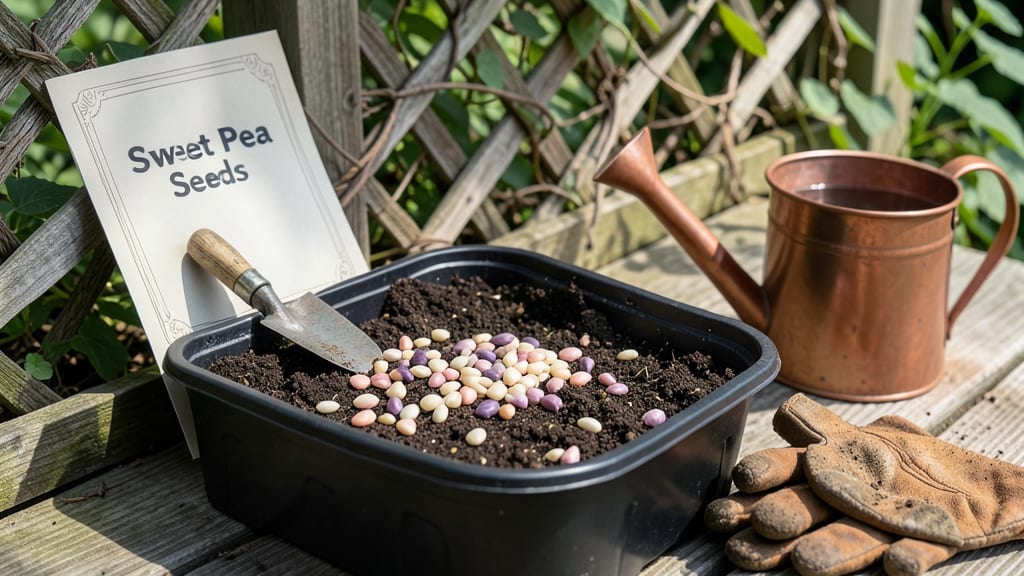
To plant sweet pea flower seeds 🌸 successfully, you’ll need a few simple tricks—like soaking and stratification—that cut weeks off your wait for fragrant blooms.
Picture this: you’ve picked your favorite heirloom varieties, cleared a sunny patch, and planted the seeds—only to stare at bare soil for three weeks while they finally poke through.
Sweet peas aren’t just beautiful climbers; they’re one of the fastest and easiest flowers to grow from seed, delivering fragrant blooms in as little as six weeks—if you do it right.
Most beginners skip the soaking and stratification steps, which are the secret to faster germination. Without them, those delicate seeds can take two to three weeks just to sprout, and that’s time you don’t have if you’re eager to see those 6-foot vines laden with blooms by summer.
In this guide, I’ll walk you through every step—from seed selection and soil prep to the exact planting depth and trellis setup—that turns your seeds into a fragrant, climbing masterpiece by June. No guesswork, just blooms on time.
Sweet pea seed preparation: soaking and stratification for faster germination
Sweet pea seeds 🌸 are famous for their delicate beauty and heavenly fragrance, but they come with a catch: their hard outer shells resist water, slowing germination. Without proper preparation, you might stare at bare soil for three weeks before those first green shoots appear.
The good news? A simple soaking and stratification process can slash that wait time to just 7-10 days, giving you blooms by June instead of July.
Stratification mimics the natural winter chill sweet pea seeds experience in their native Mediterranean climate. This cold-moisture treatment breaks seed dormancy, ensuring uniform germination and stronger seedlings. For gardeners in USDA zones 3-8, this step is non-negotiable—especially if you’re planting in early spring before the soil warms.
Even in warmer zones, a quick soak before planting can make the difference between success and disappointment.
Here’s the science behind it: sweet pea seeds have impermeable seed coats that block water absorption. Soaking softens these coats, while stratification triggers internal hormonal changes that signal the seed it’s time to grow.
Without these steps, many seeds simply won’t sprout at all, or they’ll emerge weak and stunted. I’ve seen beginners skip this process and end up with patchy germination—some seeds sprouting in 10 days, others taking 30.
✅ How to Prepare Sweet Pea Seeds for Planting
-
Step 1: Soak the Seeds
Place seeds in a clean jar or bowl and cover with lukewarm water. Let them soak for 12-24 hours. You’ll see the seed coats soften and some may even sprout tiny roots (radicles). -
Step 2: Cold Stratification (Optional but Recommended)
After soaking, drain excess water and place seeds in a sealed plastic bag with a damp paper towel. Store in your refrigerator’s crisper drawer for 3-5 days (no longer, or they’ll rot). -
Step 3: Pre-Warm the Soil
Before planting, warm your garden bed or seedling tray by placing it in direct sunlight for 1-2 hours. Sweet peas germinate best in 60-70°F soil. -
Step 4: Plant Immediately
Sow seeds ¼ inch deep in well-draining soil, spacing them 2-3 inches apart. Gently press soil over seeds and water lightly to keep moist (not soggy). -
Step 5: Cover for Moisture
Place a clear plastic dome or humidity tent over seedlings to retain moisture. Remove once true leaves appear (about 7-10 days).
Pro Tip: Label your seeds! Sweet peas come in hundreds of varieties, and colors can look identical until they bloom. Use toothpicks and tape for DIY labels.
If you’re planting in late winter or early spring (before the soil warms), stratification is your best friend. I once planted untreated sweet pea seeds in March and waited 28 days for germination—half the seeds never sprouted.
After adding stratification, my next batch emerged in just 8 days, and every seed made it. For container gardening, this method works just as well: use a small plastic container with a damp paper towel in the fridge for the cold treatment.
Not all sweet pea varieties need stratification, but most heirloom and older cultivars benefit from it. Modern hybrids (like ‘Cupani’ or ‘Matucana’) often germinate faster without it, but a quick soak still helps.
To test if your seeds need stratification, try planting a few treated and untreated—you’ll see the difference in germination speed and vigor. Always plant in full sun (6+ hours daily) for best results, as sweet peas wilt quickly in shade.
One common mistake is over-soaking seeds, which can cause them to rot before germination. Never leave them in water for more than 24 hours, and always use room-temperature water (never hot).
Another pitfall is planting too deep—sweet pea seeds need light to trigger germination, so bury them only ¼ inch deep. If you’re in a cooler climate, consider starting seeds indoors 4-6 weeks before the last frost for an earlier bloom time.
For gardeners in warmer climates (zones 9-10), stratification is less critical, but a 24-hour soak still improves germination rates. The key is consistent moisture—sweet pea seeds dry out fast in hot, dry air. After planting, use a spray bottle to mist the soil daily until sprouts appear.
Once seedlings have 2-3 true leaves, thin them to 6-12 inches apart (depending on the variety) to give roots room to grow.
Remember: the sooner you plant, the sooner you’ll enjoy those fragrant blooms. Sweet peas are self-supporting climbers, so install a trellis or stakes at planting time to avoid disturbing roots later.
With the right preparation, you’ll go from seed to bloom in just 6-8 weeks—far faster than the 3 months many beginners experience.
Optimal planting times and soil conditions for sweet peas
Sweet peas thrive when planted at the right time and in the right conditions, but their exact needs depend on your USDA hardiness zone and whether you're planting in containers or directly in the ground.
In most regions, the ideal planting window is 4-6 weeks before your last frost date—typically March to April in zones 6-9. For cooler zones (3-5), start seeds indoors in February to avoid frost damage.
These delicate climbers demand well-draining soil with a pH between 6.0 and 7.5. If your soil is too acidic or alkaline, amend it with lime (to raise pH) or peat moss (to lower pH).
Sweet peas also need rich, organic matter—work in 2-3 inches of compost before planting to fuel their rapid growth and abundant blooms.
Here’s how their needs compare for container vs. in-ground planting, including sunlight and soil prep:
| Factor | In-Ground Planting | Container Planting |
|---|---|---|
| Sunlight | Full sun (6+ hours) | Full sun (6+ hours) |
| Soil pH | 6.0–7.5 (amend if needed) | 6.0–7.5 (use potting mix) |
| Drainage | Well-draining, loose soil | Pots with drainage holes |
| Fertilizer | Balanced (5-10-10) at planting | Slow-release granules |
| Trellis Needed? | Yes (6+ ft tall) | Yes (compact trellis or cage) |
| Planting Depth | ¼ inch (soil-covered seeds) | ¼ inch (same as in-ground) |
Sweet peas love full sun but tolerate partial shade in hotter climates (zones 8-10). If planting in containers, choose large pots (10+ inches deep) to accommodate their deep roots. For in-ground planting, space seeds 6-12 inches apart in rows 18-24 inches apart to allow airflow and reduce disease risk.
After planting, keep soil consistently moist but not soggy. Mulch with straw or shredded leaves to retain moisture and suppress weeds. In USDA zones 3-5, protect young plants with frost cloth if late frosts threaten. With the right conditions, you’ll see first blooms in just 6-8 weeks!
Pro tip: If your soil is heavy clay, mix in sand or perlite to improve drainage. Sweet peas hate waterlogged roots, which can lead to rot and stunted growth. Test your soil’s pH with a garden kit—aim for that 6.0-7.5 range for maximum bloom production.