
Vegetables
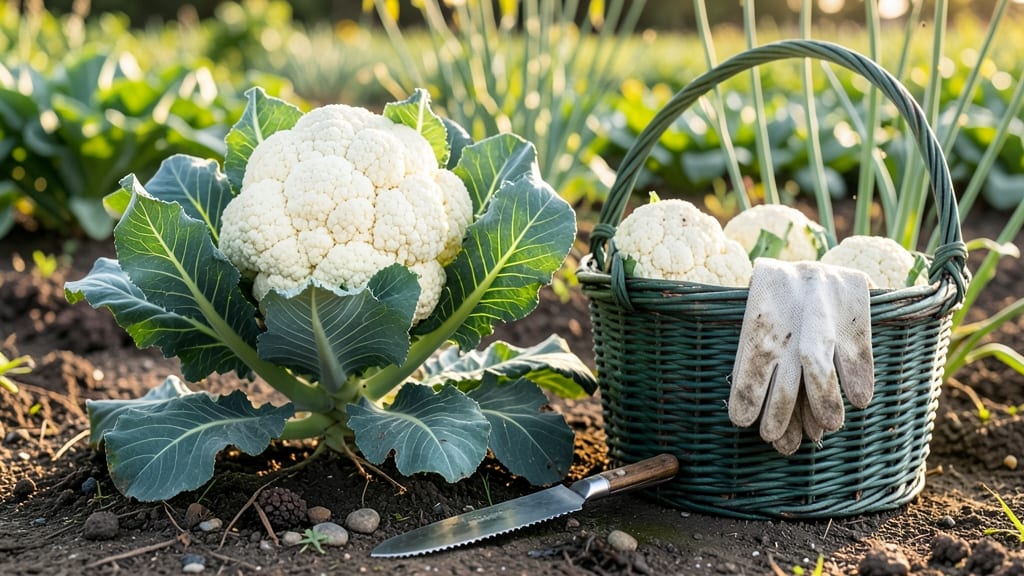
Cauliflower is harvested when the head is firm, compact, and vibrant—typically between 60 and 90 days after planting, depending on your variety and climate.
Picking cauliflower at the wrong time means tough, bitter heads or wasted energy—here’s how to spot the exact moment for harvest before it bolts or overgrows.
Look for a head that’s 6-8 inches wide, with tightly packed curds and leaves still snug around the edges. If the florets start separating or turn yellow, you’ve missed the window.
In this guide, I’ll walk you through the perfect signs of ripeness, regional timing differences, and how to handle post-harvest care for the freshest taste.
Key visual signs cauliflower is ready for harvest (before it’s too late)
Timing your cauliflower harvest is everything—wait too long, and you’ll end up with woody, bitter florets that taste more like cardboard than creamy goodness. The key lies in spotting 3 critical visual cues that signal peak ripeness: head size, color consistency, and leaf condition.
These signs work for white, purple, and Romanesco varieties, though color intensity varies.
Most gardeners miss the harvest window because they focus on days-to-maturity rather than physical maturity. A 75-day-old plant might still be weeks away from harvest if conditions like temperature or sunlight were suboptimal. Always prioritize what you see over what’s on the seed packet.
Here’s what to look for when inspecting your cauliflower heads—these visual checkpoints will help you avoid both underripe and overripe mistakes:
The head size is your first clue—most varieties reach harvest when they’re 6-8 inches wide, but Romanesco stays smaller (4-6 inches) while purple varieties can grow larger (8-10 inches). Measure with your hand: a mature head should span from your thumb to pinky when fingers are spread wide.
Next, check the curd firmness. Press gently—ready cauliflower should feel solid like a baseball, not mushy or hollow-sounding. If florets separate when touched, you’ve waited too long. This is especially critical for green cauliflower, which softens faster than white varieties.
Color consistency is non-negotiable. A ripe head should be uniform in hue—no pale patches or yellowing at the edges. Purple cauliflower, for example, should be deep violet throughout, while white varieties should be creamy off-white. Any browning signals oxidation from overripeness or stress.
Don’t overlook the outer leaves. They should remain green and tightly wrapped around the head, acting like a protective blanket. If leaves start yellowing or curling back, the plant is signaling it’s time to harvest—before pests or heat damage set in.
This is your last chance to salvage a good head.
Finally, inspect the stem. It should be upright and firm, not leaning or softening at the base. A wobbly stem often means the plant is bolting (flowering prematurely), which ruins the head’s texture.
In hot climates, this happens faster—watch for stems elongating or flowering stalks emerging from the center.
Pro tip: Harvest on a cool morning after dew has dried. Use a sharp knife or pruners to cut the stem 1-2 inches below the head, leaving a few outer leaves attached.
This protects the plant from sunburn and may encourage a second harvest of side shoots in some varieties.
Miss these signs, and you’ll end up with tough, bitter florets or wasted energy. But nail them, and you’ll enjoy sweet, tender cauliflower at its peak—ready for roasting, steaming, or raw in salads. 🥬
How to avoid overgrown cauliflower: 5 critical mistakes gardeners make
Even with perfect growing conditions, cauliflower can quickly become overgrown and inedible if you ignore these 5 common mistakes. The biggest culprit? Waiting too long to harvest based on calendar days instead of physical maturity.
Many gardeners assume a 60-day variety is ready at day 60, but temperature swings, sunlight variations, and soil quality can shift that timeline by weeks.
I’ve seen purple cauliflower heads explode to 12 inches—way past ideal—while nearby Romanesco varieties stayed stunted. The key is adjusting your harvest timing based on variety-specific cues and local climate patterns. Let’s break down the mistakes that lead to overgrowth and how to fix them.
Cauliflower is harvested when the head reaches 60-90 days (depending on variety) AND meets these 3 conditions:
- ✅ Firm, compact head (no gaps between florets)
- ✅ Uniform color (no yellowing or browning)
- ✅ Green outer leaves (not wilting or curling)
Miss these signs, and you’ll get woody, bitter florets instead of tender harvests. Check daily in peak growing months!
The first mistake is ignoring weather patterns. Cauliflower grows fastest in cool (60-75°F) temperatures—any hotter, and it bolts (sends up a flower stalk). I once grew green cauliflower in July only to watch it flower in 10 days.
Solution: Plant early spring or late summer in warm climates, or use shade cloth to protect plants during heatwaves.
Second, many gardeners overcrowd plants, thinking more seeds = bigger harvests. But cauliflower needs 18-24 inches of space per plant. Crowding leads to smaller, uneven heads that mature at different times.
I’ve seen purple varieties split open from competition. Thin seedlings to 12-18 inches apart at the 3-leaf stage for even growth.
Third, neglecting variety-specific timing causes overgrowth. Romanesco matures in 60-70 days but stays 4-6 inches wide, while purple varieties take 75-90 days and can reach 10 inches. Check seed packets for days-to-maturity, then subtract 10-14 days for cooler climates.
In my zone 6a garden, I harvest Romanesco in July but wait until September for purple varieties.
Fourth, poor soil fertility delays maturity. Cauliflower needs high nitrogen early (for leaf growth) and balanced fertilizer later (for head formation). I’ve seen plants take 30 extra days to mature when soil tests low in nitrogen.
Side-dress with compost or 10-20-10 fertilizer when plants are 4-6 inches tall, then switch to low-nitrogen fertilizer at flowering stage.
Finally, harvesting at the wrong time of day stresses plants. Cutting in hot afternoon sun causes exposed heads to oxidize and turn yellow within hours. Always harvest on cool mornings after dew dries.
Use a sharp knife to cut the stem 1-2 inches below the head, leaving outer leaves intact to protect the curd. This simple habit extends freshness by 3-5 days in storage.