
Trees
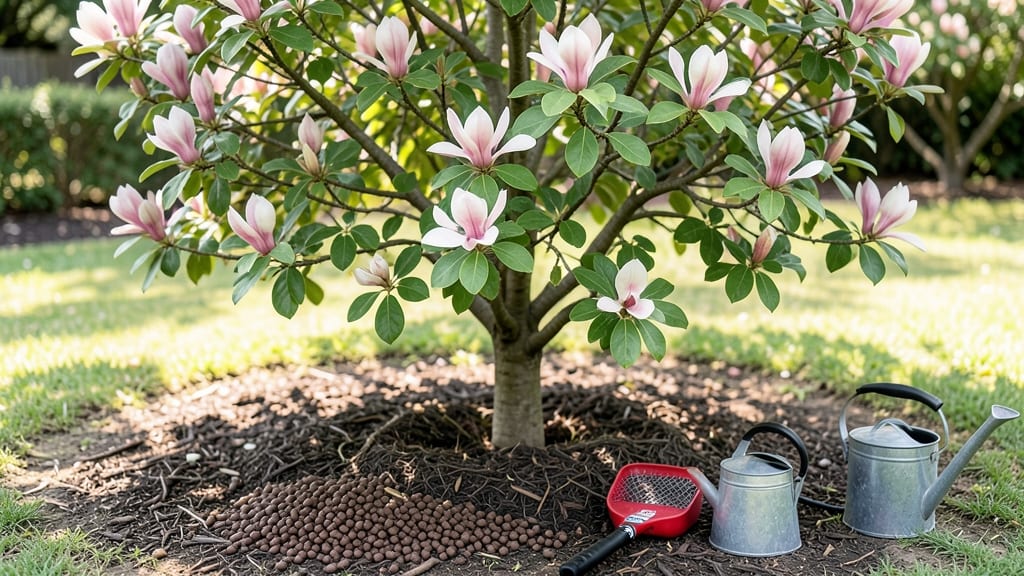
Fertilizing flowering trees at the right time is the secret to vibrant blooms that last all season — and missing the window can leave you with sparse, weak flowers instead.
If you’ve ever watched your 🌸 flowering trees put out half the blossoms they did last year, you’re not alone. The culprit is often poor timing—whether you fertilized too early (when roots are still dormant) or too late (triggering late-season growth that cuts blooms short).
Most flowering trees need their first feeding in early spring, right as buds begin to swell, and a second light application in late summer to support next year’s blooms.
But not all trees follow the same schedule—spring bloomers like cherries and magnolias have different needs than summer favorites like crape myrtles.
In this guide, I’ll break down the exact month-by-month schedule for your zone, the signs your tree is hungry (or overfed), and how to choose the right fertilizer for maximum blooms without burning the roots.
Best times to fertilize flowering trees for maximum blooms
Timing your fertilizer application for flowering trees is like scheduling a meeting with nature—get it wrong, and you miss the opportunity entirely. The two critical windows for fertilization are early spring and late summer/early fall, but why?
These periods align with your tree’s natural growth cycles and nutrient absorption phases.
In early spring, as buds begin to swell, your tree is waking from dormancy and preparing for its blooming phase. This is when roots are actively seeking nutrients to fuel new growth.
Conversely, fertilizing in late summer/early fall gives roots time to absorb nutrients before the tree enters dormancy, storing them for next year’s blooms.
🌱Miss these windows, and you risk feeding your tree at the wrong time—like offering a meal when it’s already full or asleep. Over-fertilizing in late summer can stimulate soft, late-season growth that won’t harden off before winter, making it vulnerable to frost damage.
| Season | Best Time | Why It Matters | Fertilizer Type |
|---|---|---|---|
| Spring | Early spring (March-April) | Roots revive; nutrients fuel bud break and blooms | Balanced (10-10-10) or slow-release |
| Summer | Late summer (August-September) | Supports root growth for next year’s blooms | Low-nitrogen (5-10-10) or organic |
| Fall | Skip fertilization | Tree enters dormancy; avoid stimulating new growth | None |
| Winter | Skip fertilization | Dormant roots cannot absorb nutrients | None |
For spring fertilization, aim to apply fertilizer 4-6 weeks before your tree’s expected blooming season. For example, if your cherry blossoms typically bloom in April, fertilize in early March. This timing ensures nutrients are available when buds need them most.
In late summer, focus on root feeding rather than top growth. Use a low-nitrogen fertilizer (like 5-10-10) to encourage root development without promoting late-season foliage that could suffer in frost. Think of it as a pre-winter snack for your tree’s roots.
🌿Pro tip: Test your soil’s pH before fertilizing. Most flowering trees thrive in slightly acidic soil (pH 6.0-7.0). If your soil is alkaline, opt for acid-loving fertilizers like those designed for azaleas or rhododendrons, which often share similar pH needs.
Regional variations matter too. In warmer climates (Zones 8-10), you might extend your late-summer feeding into October, but avoid fertilizing after the first frost in cooler zones (Zones 3-6). Always check your USDA Hardiness Zone for local adjustments.
Over-fertilizing is a common mistake that can burn roots or lead to excessive foliage at the expense of blooms. Stick to the recommended rates on your fertilizer’s label, and consider organic options like compost or bone meal for a slower, more natural nutrient release.
🌳Visual cue: If your tree’s leaves are dark green and lush but blooms are sparse, it’s likely getting too much nitrogen. Adjust to a phosphorus-rich fertilizer (like 10-20-10) to encourage flowering instead.
Finally, pair fertilization with deep watering to help nutrients reach the roots. Water 1-2 inches deep before and after applying fertilizer, especially in dry climates where soil can become compacted and nutrient uptake is slower.
Signs your flowering tree needs fertilizer (and when to avoid it)
If your flowering tree isn't putting on its usual show, it might be screaming for nutrients. Yellowing leaves, especially on new growth, are a classic sign your tree is hungry.
Look for smaller-than-usual blooms or branches with fewer flowers than last year—this often means the tree is struggling to produce energy for flowering. Even stunted growth or weak stems can indicate nutrient deficiencies, particularly nitrogen or phosphorus.
Don’t overlook leaf discoloration beyond just yellowing. Purple or red tinges on foliage often signal phosphorus deficiency, while brown leaf edges may point to potassium issues. These visual cues help pinpoint which nutrients your tree needs most.
For example, a magnolia tree with sparse blooms might need a phosphorus boost, while a cherry blossom with weak stems could benefit from nitrogen.
⚠️ callout warning ⚠️
⚠️ When NOT to Fertilize Flowering Trees
Fertilizing at the wrong time can damage roots or reduce blooms. Avoid fertilizing:
- Late summer/fall: New growth won’t harden off before winter, risking frost damage.
- During drought: Fertilizer burns roots when soil is dry.
- After planting: Wait 6-12 weeks to avoid shocking young roots.
- Winter months: Dormant trees can’t absorb nutrients.
✅ Best times: Early spring (before buds swell) and light applications in summer if growth is weak.
Another red flag is thin or sparse foliage, especially if leaves appear pale or dull. This often means your tree isn’t getting enough nitrogen for leaf production or micronutrients like iron.
Check the soil around your tree—if it’s hard or compacted, roots may struggle to access nutrients even if the tree looks healthy above ground. Slow recovery after pruning is another clue; healthy trees bounce back quickly, while nutrient-deficient ones take longer.
Before reaching for fertilizer, rule out other issues. Overwatering or poor drainage can mimic nutrient deficiencies by suffocating roots. Test your soil’s pH level—most flowering trees prefer slightly acidic soil (pH 6.0-7.0).
If the pH is off, nutrients like iron or manganese become unavailable, even if they’re present in the soil. Soil tests (available at garden centers) are a game-changer for diagnosing hidden problems.
If you’ve confirmed your tree needs nutrients, act quickly but strategically. Slow-release fertilizers are ideal for flowering trees—they provide steady nutrition without the risk of over-fertilization.
Apply half the recommended dose in early spring, then monitor for improvements. Organic options like compost or fish emulsion are gentler and improve soil structure over time. Avoid granular fertilizers near the trunk; spread them 6-12 inches away and water deeply to help roots absorb nutrients.
Remember, less is often more with flowering trees. Over-fertilizing can lead to excessive leafy growth at the expense of blooms or even root burn. If your tree’s leaves turn dark green and glossy after fertilizing, you’ve likely overdone it.
Always follow package instructions and adjust based on your tree’s response. Patience and observation are key—healthy blooms take time to return after addressing nutrient needs.