
Light Requirements
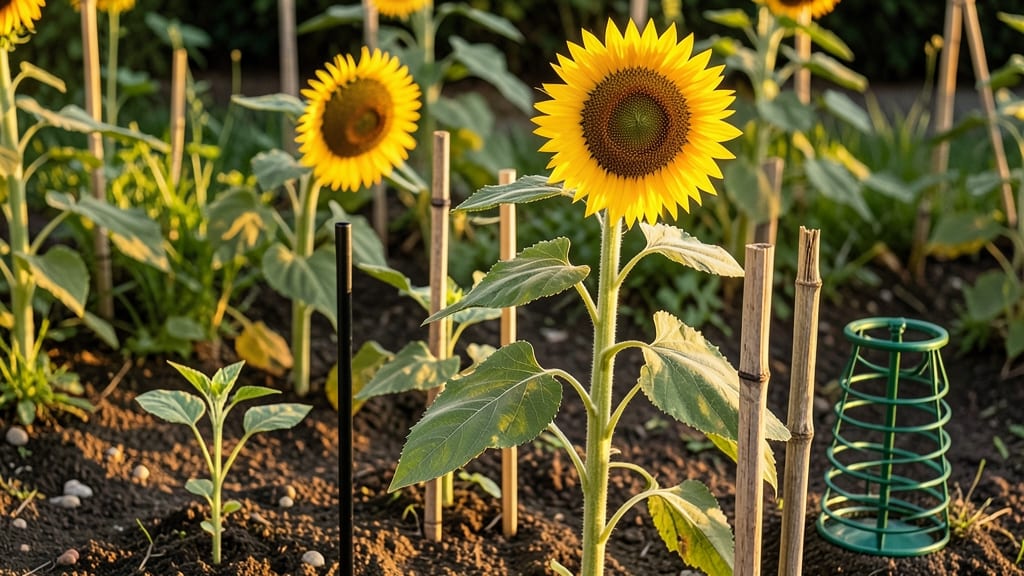
Do sunflowers need to be staked to keep their towering 🌻 heads from toppling in wind or rain, but the answer isn’t one-size-fits-all?
Picture this: a 10-foot sunflower swaying in a summer storm, its stem bending like a bow. Without support, those heavy blooms can snap under their own weight—or worse, uproot entirely.
But here’s the catch: not every sunflower needs a stake. Variety, soil, and even your garden’s wind exposure play a role.
Before you grab a bamboo stake, ask yourself: Is your sunflower a dwarf variety that stays under 3 feet? Does it grow in rich, well-drained soil where roots anchor deeply?
Or are you in a breezy spot where even sturdy stems wobble? The right support—or no support at all—depends on these factors.
In this guide, I’ll walk you through three key signs your sunflowers need staking, plus the best ways to support them (or skip it entirely) without sacrificing those iconic summer blooms.
When to stake sunflowers: 3 key signs your plants need support
Sunflowers are the showstoppers of summer gardens, but their towering flower heads can become top-heavy as they grow. While some varieties stand strong on their own, others need support stakes to prevent snapping. The key is assessing your plants early—before they reach their full height.
I’ve learned that waiting until the last minute often means too little too late, so let’s explore the three critical signs that tell you when it’s time to stake.
First, consider the variety you’re growing. Tall sunflowers like Mammoth or Russian Giant often need staking, while dwarf varieties like Teddy Bear typically don’t. But even within the same variety, individual plants can vary in their need for support.
That’s why checking for these signs—rather than relying on variety alone—is essential for success.
🌱 3 Key Signs Your Sunflowers Need Staking
- 🌿 Stems lean or bend under the weight of the flower head—even slightly. This is your first warning that the plant can’t support itself.
- 📏 Height exceeds 4 feet without visible thickening of the stem. Taller sunflowers need staking earlier to prevent breakage.
- 🌬️ Wind exposure is high in your garden. Even sturdy stems can’t withstand gusts without support, especially in exposed areas.
Pro Tip: Check stems for hollow spots—a sign of weak structural support. If you tap the stem and hear a hollow sound, it’s time to stake immediately.
Let’s dive deeper into the first sign: stem lean or bend. I’ve seen sunflowers that appear perfectly upright in the morning but lean dramatically by afternoon. This isn’t just about aesthetics—it’s a red flag that the plant’s stem strength can’t handle the flower head weight.
The heavier the bloom, the more likely the stem will snap, especially if it’s still thin. For example, a 6-foot-tall sunflower with a 12-inch-wide head can weigh up to 5 pounds—that’s a lot for a delicate stem to bear!
Next, height matters. While some sunflowers naturally grow thick, sturdy stems, others—like the Autumn Beauty variety—can reach 8 feet tall with relatively thin stems. If your plants are already 4 feet tall and their stems are pencil-thin, it’s time to act.
I recommend staking at this stage to give the plant a fighting chance. Waiting until they’re fully grown means risking a broken stem, which can’t be fixed once it happens.
Don’t overlook environmental factors, either. If your garden is in a windy location or near large trees that create drafts, your sunflowers are at higher risk of toppling. Even if the stems look strong, the constant swaying can weaken them over time.
I’ve had to stake sunflowers in my backyard after just 3 feet of growth because of the wind—something I wouldn’t have predicted without paying attention to their surroundings.
Here’s how to test stem strength at home: Gently grasp the base of the stem and apply slight pressure toward the ground. If the stem bends more than 10 degrees or feels hollow when tapped, it’s time to stake.
This simple test can save you from heartbreak later in the season. I’ve used this method for years, and it’s saved more than a few sunflowers from disaster.
Another factor to watch is soil and spacing. Crowded plants compete for nutrients, leading to weaker stems. If your sunflowers are planted too closely together—closer than 12 inches apart—they’ll grow tall and spindly, making them prime candidates for staking.
Proper spacing gives each plant room to develop a thicker, stronger stem, reducing the need for support. I always space mine 18-24 inches apart to avoid this issue.
Finally, consider the stage of growth. Early staking—when plants are 2-3 feet tall—gives them time to adjust and grow around the support. Late staking, after the plant has already leaned, can cause damage to the stem or roots as you try to position it upright.
Think of staking as a preventative measure, not a last-resort fix. The earlier you intervene, the better the outcome for your sunflowers.
If you’re still unsure whether to stake, observe your sunflowers for a few days. Do they bounce back when gently pushed, or do they stay bent? Do they wilt in the heat or sway in the wind?
These are all clues that your plants could benefit from support. Trust your observations—your sunflowers will thank you with healthier stems and longer-lasting blooms.
Remember, not all sunflowers need staking, but those that do will reward you with stronger growth and showier flowers. By paying attention to these three key signs, you’ll know exactly when to provide support—and when to let your sunflowers stand tall on their own.
Best staking methods for sunflowers: DIY vs. store-bought solutions
Choosing the right staking method for your sunflowers depends on their variety height and growing conditions. Tall varieties like 'Mammoth' sunflowers (10-14 ft) need sturdy support, while shorter types may thrive without it. Let’s explore homemade vs. commercial options to keep your sunflowers standing tall.
For DIY solutions, bamboo stakes are my go-to because they’re affordable and reusable. Simply drive a 3-foot stake into the soil beside each plant when stems reach 12-18 inches tall.
Tie stems loosely with soft cloth or old t-shirts to avoid damaging the delicate bark as they grow.
Commercial options like spiral supports or tree collars offer adjustable height and flexibility. These work well for windy gardens or when planting sunflowers in clusters. The key is securing the support before heavy blooms form—once the flower head matures, it can weigh 2-5 pounds, making toppling likely.
| Method | Cost | Setup Difficulty | Best For | Materials Needed |
|---|---|---|---|---|
| Bamboo Stakes | $5-$10 (DIY) | Easy | Tall varieties (6+ ft) | Bamboo stakes, soft ties, mallet |
| Spiral Supports | $10-$20 each | Moderate | Wind-prone areas | Adjustable spiral stakes, garden twine |
| Trellis System | $15-$30 (DIY) | Hard | Space-saving clusters | PVC pipes, wire mesh, zip ties |
| Cage Supports | $20-$40 | Easy | Dwarf/bush varieties | Metal cages, garden staples |
*Costs based on materials for 5-10 plants. DIY options reuse household items.
If you’re growing sunflowers in containers or small spaces, a trellis system made from PVC pipes and wire mesh is a game-changer. Assemble a frame around your plants and weave stems through the mesh as they grow.
This method saves space and lets you grow multiple sunflowers in a compact area while keeping them upright.
For windy climates, consider tree collars or flexible spiral stakes. These wrap around the stem and expand as the plant grows, providing 360-degree support. Install them early—when stems are 6-12 inches tall
Remember, over-staking can restrict growth, so only use supports when necessary. Monitor your sunflowers weekly: if stems lean more than 30 degrees or show signs of bending, it’s time to add support before blooms form. With the right method, your sunflowers will stand proud and tall all season long. 🌻