
Watering
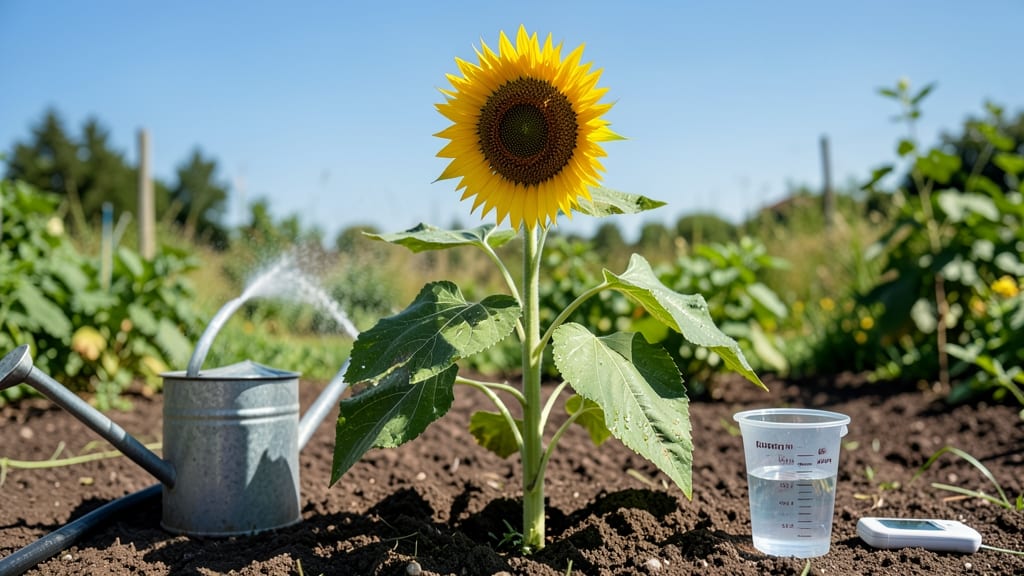
A sunflower needs how much water does a sunflower need per day—1 to 2 gallons—to fuel those towering stalks 🌻, but the real secret isn’t just the amount, it’s when and how you deliver it.
Picture this: your sunflowers wilt by noon, their leaves curling like they’re begging for help, only to snap back by evening. That’s not thirst—it’s a watering mistake most gardeners make. Too little, too late, or too much at once, and you’re sabotaging their growth before they even bloom.
Here’s the game-changer: sunflowers thrive on deep, infrequent watering that encourages strong root systems. A quick sprinkle won’t cut it, especially in USDA Zone 6a where heat and wind dry out soil fast.
I’ll show you how to time it right, spot the warning signs of over- or under-watering, and even hack your watering routine for drought-prone summers.
By the end, you’ll know exactly how much to water, when to adjust for rain or heatwaves, and why mulching could save you hours of work every week. Let’s get those sunflowers drinking the right way.
Daily water requirements for sunflowers: deep roots demand smart hydration
Sunflowers may look sturdy, but their deep taproots need consistent moisture to reach their full 10-foot+ potential. Unlike drought-tolerant succulents, sunflowers thrive on predictable hydration—too little causes wilting, while too much leads to root rot.
The key? Watering that matches their growth stage, soil type, and climate zone.
New seedlings need daily moisture to germinate, while mature plants can stretch their watering schedule to 5-7 days in well-draining soil. Humid climates like USDA Zone 8 may require 20% less water than arid regions like Zone 4.
Let’s break down the science-backed schedule to keep your sunflowers hydrated without drowning.
🌱 PRO TIP: Always water at the base of the plant (not the leaves) to prevent fungal diseases like powdery mildew. Use a soil moisture meter or the finger test (insert 2 inches deep—if dry, water).
| Growth Stage | Water Frequency | Daily Amount | Soil Type Adjustments | Climate Notes |
|---|---|---|---|---|
| Seedling (0-2 weeks) | Daily | ½–1 gallon | Sandy: More often; Clay: Less | Humid: Reduce by 30% |
| Vegetative (2-6 weeks) | Every 2-3 days | 1–2 gallons | Sandy: Double amount | Arid: Early morning only |
| Flowering (6-10 weeks) | Every 3-5 days | 2–3 gallons | Clay: Reduce by 20% | Humid: Skip if rain > ½ inch |
| Mature (10+ weeks) | Weekly | 3–5 gallons | Sandy: Deep soak weekly | Drought: Mulch heavily |
💧 KEY: Adjust for container plants (water daily) and rainy seasons (skip 1 day per ½ inch of rain).
During the seedling stage, focus on keeping the soil consistently moist (not soggy). Use a spray bottle for fine misting or a small watering can to avoid disturbing delicate sprouts. Once seedlings reach 2 inches tall, switch to deep watering at the base to encourage root growth.
In vegetative growth (weeks 2-6), sunflowers drink the most. This is when they’re building their massive stalks and leaves. Water early in the morning to reduce evaporation and fungal risks. If your soil is sandy, you’ll need to water twice as often—sand drains faster than clay.
When buds form (flowering stage), reduce frequency but increase volume. Sunflowers need 2–3 gallons per watering to support their heavy blooms. Look for drooping petals by noon—this is a sign they’re thirsty. In clay soil, water less often but deeper to prevent waterlogging.
🌡️ CLIMATE MATTERS: In arid zones (e.g., Arizona, California), water only in the morning to prevent rapid evaporation. In humid climates (e.g., Florida, Pacific Northwest), skip watering if you’ve had ½ inch of rain in the past 24 hours. Use a rain gauge to track precipitation.
Mature sunflowers (10+ weeks old) are the most drought-tolerant but still need weekly deep watering. Their taproots can reach 6 feet deep, so aim for 3–5 gallons per session.
If your area experiences prolonged drought, mulch with straw or wood chips to retain moisture and cool roots.
Finally, never water at night—this invites fungal diseases like powdery mildew. Stick to morning watering (before 10 AM) to give leaves time to dry. For container-grown sunflowers, check soil moisture daily since pots
Signs your sunflowers are thirsty (or drowning): troubleshooting watering mistakes
Your sunflowers might be sending SOS signals through their leaves and stems—if you know what to look for. Wilting midday is the most obvious clue, but it’s often misread as heat stress when the real culprit is inconsistent watering.
Even worse, overwatering can drown roots without obvious signs until it’s too late.
I’ve seen gardeners lose entire sunflower patches because they ignored these 5 key symptoms: drooping petals, yellowing lower leaves, cracked stems, moldy soil, or stunted growth. Each one tells a different story about your watering routine—and how to fix it fast.
⚠️ Sunflower Watering Reality Check
How much water does a sunflower need per day? The answer isn’t one-size-fits-all. Young plants need 1 gallon daily in morning watering, while mature sunflowers thrive on 2 gallons every 5-7 days—but only if the soil drains well. Shallow watering (like sprinklers) wastes water and encourages weak roots. Nighttime irrigation? That’s a fungal recipe. Aim for deep, infrequent watering at soil level to mimic natural rain.
Pro Tip: Stick your finger 2 inches into the soil. If it’s dry, water deeply. If it’s soggy, wait 2-3 days.
Let’s start with the most common mistake: underwatering. When sunflowers wilt by noon but perk up by evening, they’re not heat-stressed—they’re thirsty. This happens when roots can’t reach moisture fast enough, often because you’re watering too lightly.
The fix? Deep watering 2-3 times per week, soaking the soil 6-8 inches deep each time.
On the flip side, overwatering shows up as yellowing leaves starting at the base. This isn’t nutrient deficiency—it’s root suffocation from soggy soil.
If your sunflowers’ lower leaves turn yellow while the upper ones stay green, you’re likely watering too often or using containers without drainage holes. Pull back to every 7-10 days and check for moldy soil or a foul smell.
Here’s a quick recovery checklist for both issues: ☑️ Underwatered? Water deeply at the base (not overhead) and mulch to retain moisture. ☑️ Overwatered? Stop watering for 3-4 days, then resume with well-draining soil or raised beds. ☑️ Cracked stems? It’s too late—remove the plant and adjust watering for the rest.
One symptom that catches gardeners off guard is stunted growth. If your sunflowers stay short and bushy instead of shooting up, they’re either underwatered or nutrient-starved from poor root development. Combine deep watering with a balanced fertilizer (like 10-10-10) every 4-6 weeks to encourage vertical growth.
Remember: sunflowers are resilient, but they hate inconsistency. Stick to a routine, monitor soil moisture, and your towering giants will reward you with bold blooms and happy roots. 🌻