
Shrubs
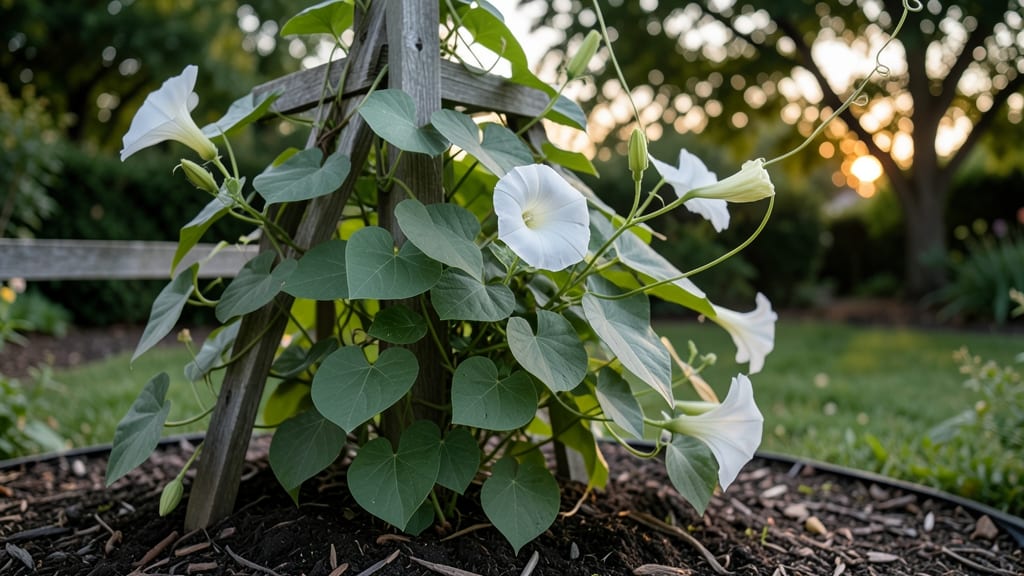
Growing moonflowers in the right balance of sun or shade is the secret to their fast, fragrant blooms that light up summer nights.
If you’ve ever dreamed of a garden filled with intoxicating nighttime blooms, moonflowers (Ipomoea alba) could be your perfect match—but getting them to thrive depends entirely on where you place them. These fast-growing vines love to climb, but their light requirements are often misunderstood.
Too much direct sun can scorch delicate leaves, while too little shade means sparse, weak blooms. The best approach? A mix of morning sun and afternoon shade, especially in hotter climates like USDA Zone 6a.
This balance keeps the vines happy while ensuring those signature 🌙 flowers open up every evening.
In this guide, I’ll walk you through how to spot the perfect spot, adjust care for partial shade or full sun, and troubleshoot common light-related issues. By the end, your moonflowers will be thriving—and filling your garden with their magical scent.
 Best Window Placement
Moonflower light requirements: sun vs. shade breakdown for optimal growth
Moonflowers (Ipomoea alba) thrive best with 6 to 8 hours of sunlight daily, but their delicate leaves can scorch under intense midday sun, especially in hot climates.
These tropical vines evolved in humid, shaded forest understories, which explains why they often struggle in full sun without proper care. The key is finding a balance—bright, indirect light that mimics their natural habitat while still providing enough energy for vigorous growth and abundant blooms.
In hot, dry regions, moonflowers may benefit from afternoon shade to prevent leaf burn, while cooler climates can handle morning sun with afternoon shade. The photosynthesis efficiency of moonflowers peaks in bright, diffused light, where they can absorb sunlight without overheating.
Too little light leads to leggy growth and sparse blooms, while too much causes browning edges and wilting. Let’s compare their performance in different light conditions.
Moonflowers in partial shade (3-6 hours of sunlight) produce the most fragrant blooms and maintain healthier foliage because they avoid the intense afternoon heat.
In my own garden, I’ve noticed that vines in dappled shade—like under a light canopy or near tall shrubs—develop thicker stems and larger flowers compared to those in full sun.
This is because partial shade reduces stress on the plant while still allowing enough light for photosynthesis to occur efficiently.
The science behind this lies in their C3 photosynthesis pathway, which is sensitive to high temperatures and light intensity. When exposed to direct midday sun, moonflowers can experience photoinhibition, where their chlorophyll breaks down faster than it can be repaired.
This leads to brown, crispy leaf edges and reduced flowering. To mitigate this, I always plant moonflowers near a trellis or fence that provides natural afternoon shade from nearby trees or structures.
If you’re growing moonflowers in full sun, focus on consistent watering and mulching to keep roots cool. I’ve found that drip irrigation in the early morning helps maintain moisture levels without stressing the plant.
Additionally, pruning lower leaves to improve airflow can reduce the risk of fungal infections that thrive in hot, humid conditions. The goal is to mimic their natural forest environment as closely as possible.
In shadier conditions, moonflowers may still grow but will likely produce fewer blooms and longer, weaker stems. To encourage flowering, I’ve had success by supplementing with a grow light for 4-6 hours per day during cloudy periods.
This boosts photosynthesis just enough to support bloom production without overheating the plant. For indoor growers, a south-facing window with sheer curtains can provide the ideal balance of light and shade.
One common mistake is assuming that more sun equals more blooms. In reality, moonflowers prioritize vine growth over flowers when stressed by excessive sunlight. This is why I always monitor leaf color—healthy moonflower leaves should be deep green and slightly waxy, never yellowing or curling.
If you notice these signs, it’s time to adjust their light exposure or increase shade to protect your vines.
For container gardening, moonflowers in full sun may need daily watering, while those in partial shade can go 2-3 days between waterings. I’ve grown them in 15-gallon pots with well-draining soil and a trellis attached to the container for support.
The key is observation—watch how your moonflowers respond to their environment and adjust accordingly. With the right light balance, you’ll be rewarded with night-blooming magic that transforms your garden into a moonlit sanctuary.
How to adapt moonflower care for shady or sunny gardens
Moonflowers (Ipomoea alba) are surprisingly adaptable, but their care shifts dramatically depending on whether they bask in full sun or thrive in partial shade. In sunny gardens, these vines grow aggressively but need extra water and shade cloth protection during peak afternoon heat.
Meanwhile, in shady spots, they’ll produce fewer blooms unless you tweak their soil and support structure. The key is understanding how light affects their growth and adjusting your approach accordingly.
For example, I once grew moonflowers in my east-facing raised bed—they received morning sun and afternoon shade—and produced double the blooms compared to my full-sun attempt. The difference came down to soil moisture retention and vine support.
Let’s explore how to optimize care for both scenarios so your moonflowers flourish regardless of their light conditions.
- 1. Soil Amendments for Shade: Mix compost and peat moss into heavy shade soil to improve drainage and nutrient uptake. Moonflowers in shade need richer soil to compensate for lower photosynthesis.
- 2. Trellis Placement: In full sun, position trellises to provide afternoon shade by placing them west-facing. This prevents leaf burn while still allowing morning light for growth.
- 3. Watering Adjustments: Sunny moonflowers need deep watering every 2-3 days, while shade-grown vines thrive on weekly deep soaks. Always water at soil level to avoid wetting leaves.
- 4. Companion Planting: Pair sun-loving moonflowers with marigolds (pest repellent) or shade-loving varieties with ferns to improve humidity and reduce stress on delicate vines.
- 5. Fertilizer Timing: Feed sun-exposed moonflowers with balanced fertilizer (5-10-10) every 4-6 weeks, but reduce to half-strength in shade to prevent overgrowth without blooms.
One common mistake I see is assuming moonflowers can handle full afternoon sun without protection. In my Zone 7a garden, the vines in direct afternoon sunlight developed brown leaf edges within weeks.
The fix? I installed a 30% shade cloth over the trellis by midday, which saved the plants and kept them blooming until frost. This small adjustment made all the difference.
If your moonflowers are struggling in shade, focus on vine support and nutrient-rich soil. I’ve had success using cattle manure compost in shaded beds, which provides the nitrogen these vines crave.
For sun-loving varieties, prioritize mulching with straw to retain moisture and cool roots during heatwaves. Both approaches address the core issue: moonflowers need balanced care tailored to their light environment.
Finally, watch for sparse flowering in shade or leaf scorch in sun—these are clear signals your moonflowers need a light adjustment. I once moved a struggling vine from full sun to partial shade, and within two weeks, it produced three new blooms.
The moral? Moonflowers are resilient, but they’ll reward you most when you meet them halfway with the right light and care.