
Fertilization
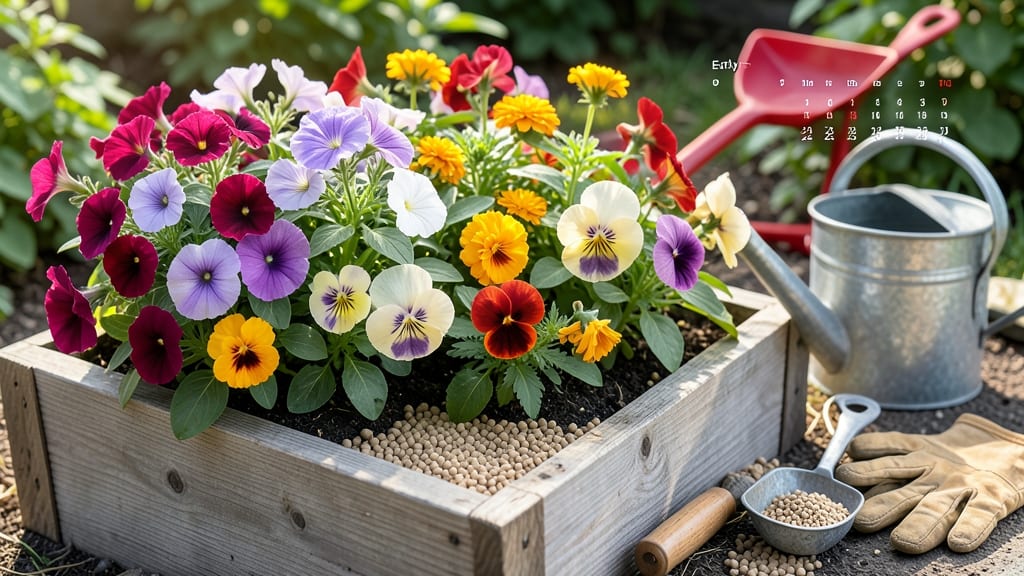
To fertilize flowers at the right time means catching them when they’re hungry—not when they’re sleeping or stressed.
Picture this: you’ve just planted your spring bloomers 🌸, and you’re eager to see them thrive. But applying fertilizer too early or too late can backfire, leaving you with leggy stems or skipped blooms. The key is understanding when your flowers are ready to soak up nutrients for maximum impact.
Most flowering plants need a feeding kickstart in early spring as they break dormancy, followed by lighter applications every 4–6 weeks through summer. Fall and winter? That’s when they rest—and fertilizing then is a common mistake that can harm roots.
Below, I’ll break down the exact timing for annuals, perennials, and bulbs, plus how to read your plants’ signals so you never over- or under-feed again.
Ready to turn your garden into a nonstop bloom machine? Let’s dive into the science-backed schedule that keeps your flowers vibrant from first bud to last petal.
Seasonal fertilizing schedule for flowering plants: month-by-month guide
Timing your flower fertilizer applications is just as important as choosing the right product.
Flowers follow seasonal growth cycles, and feeding them at the wrong time can lead to wasted nutrients or even plant stress. Annuals, perennials, and bulbs all have different needs, but the core principle remains: fertilize when plants are actively growing and blooming, not during dormancy.
In early spring, focus on root development and bud formation by applying a balanced fertilizer. Summer is peak bloom season, so light, frequent feedings keep flowers vibrant. Fall bloomers like chrysanthemums need support in late summer, while bulbs like tulips should be fertilized in late summer for next year’s flowers.
Let’s break it down month by month to maximize your blooms.
| Month | Action | Notes | Plant Types |
|---|---|---|---|
| February | Prep Soil | Add compost to beds; avoid fertilizing dormant plants. | Perennials, bulbs |
| March | Light Feed | Use balanced fertilizer (10-10-10) when new growth appears. | Annuals, perennials |
| April | Full Feed | Apply high-phosphorus fertilizer (e.g., 5-10-5) at bud stage. | All flowering plants |
| May | Light Feed | Continue with balanced fertilizer every 4-6 weeks. | Annuals, summer bloomers |
| June | Light Feed | Switch to bloom booster (e.g., 7-9-5) for peak color. | Summer flowers |
| July | Light Feed | Reduce frequency; avoid over-fertilizing in heat. | All blooming plants |
| August | Post-Bloom Feed | Fertilize fall bloomers (e.g., mums) with light feed. | Late-season flowers |
| September | None | Pause fertilizing; focus on watering and deadheading. | All plants |
| October | None | Prep bulbs for winter with bulb-specific fertilizer. | Bulbs, perennials |
In March, as soon as soil warms to 60°F, apply a balanced fertilizer (like 10-10-10) to stimulate root growth. This is especially critical for perennials and bulbs like daffodils, which need energy to push through dormancy.
For annuals planted in early spring, like pansies, a light feeding helps them establish quickly.
By April, shift to a high-phosphorus fertilizer (e.g., 5-10-5) when you notice bud formation. Phosphorus encourages strong blooms, so this is the month to see your hard work pay off. Roses and hydrangeas respond beautifully to this timing, while vegetable flowers like nasturtiums also benefit.
Summer months (June–July) are all about maintenance feeding. Use a bloom-boosting formula (e.g., 7-9-5) every 4-6 weeks to prolong flowering.
However, avoid fertilizing during extreme heat or drought—plants can’t absorb nutrients effectively. Petunias and geraniums thrive with this approach, while sunflowers may need less frequent feeding once they’re established.
For fall-blooming flowers like chrysanthemums or asters, late summer (August) is your last chance to fertilize. Use a light feed to encourage new buds without promoting late-season growth that could be damaged by frost. After September, pause fertilizing entirely—plants enter dormancy, and feeding can harm roots.
Bulbs like tulips and daffodils need a special touch in late summer. Apply a bulb-specific fertilizer (high in phosphorus) in August to build next year’s flowers. This isn’t a heavy feed—think of it as a nutrient top-up rather
Signs your flowers need fertilizer (and when to skip it)
Your flowers might be whispering for help without you realizing it. Yellowing leaves between veins, stunted growth, or sparse blooms are classic signs they’re hungry—but they could also signal other issues like overwatering or pests.
The key is learning to read these signals carefully. For example, petunias with pale green leaves often need phosphorus, while roses with weak stems may crave nitrogen for stronger stems and more buds.
Don’t assume every yellow leaf means fertilizer time, though. Check the leaf edges first—if they’re crispy and brown, you might be overwatering or dealing with leaf burn from too much fertilizer. Root damage from over-fertilizing can also cause wilting or stunted roots, even if the foliage looks healthy above ground.
Always dig a small test hole to check root health before reaching for the fertilizer bottle.
Never fertilize flowers during these critical periods:
- 🌱 Dormancy (Fall/Winter): Perennials and bulbs store energy underground—feeding them then forces weak growth that won’t survive frost.
- 💧 Transplant Shock (First 2-3 Weeks): Newly planted flowers need time to establish roots; fertilizer can burn tender roots.
- 🌡️ Extreme Heat/Drought: Plants can’t absorb nutrients in 90°F+ heat or dry soil, leading to leaf burn or root damage.
- 🌧️ Heavy Rain or Flooding: Excess water washes away nutrients, making fertilizer ineffective or harmful.
Pro Tip: Always water thoroughly 24 hours before and after fertilizing to prevent nutrient burn.
Pay attention to bloom frequency too. If your geraniums or zinnias are producing fewer flowers than usual, they might need a phosphorus boost (the middle number in NPK ratios).
However, if flowers appear but drop prematurely, the issue could be underwatering or poor drainage rather than a lack of nutrients. Always rule out environmental stressors first.
For container-grown flowers, like pansies in pots, check the soil every 2 weeks. If it’s dry 1 inch below the surface and the plant looks leggy, it’s time for a light feed with a balanced fertilizer.
But if the soil smells sour or the pot feels unusually heavy, you’ve likely overwatered—and fertilizing will only make things worse.
One of my biggest mistakes? Fertilizing fall-blooming chrysanthemums in September. I thought they needed extra nutrients, but they were already preparing for dormancy. The result? Soft stems that flopped over by October.
Now I wait until late August for a light feed and stop entirely after Labor Day. Your flowers will thank you with stronger roots and next year’s blooms!
When in doubt, test your soil with a simple pH kit (most garden centers sell them for under $10). Flowers generally prefer a slightly acidic to neutral pH (6.0–7.0). If your soil is off, correcting the pH before fertilizing will give you better results.
And remember: organic fertilizers like compost tea release nutrients slowly, reducing the risk of over-fertilizing compared to synthetic granules.